Episode 11: Breaking the Chain of Command
Resistance among military officers takes courage. Most officers have earned their promotion from following orders. To say “No” an officer might be risking their career. In this episode, we showcase the stories of two officers, also pilots, who disobeyed orders during the Vietnam War: Charlie Clements, U.S. Air Force and John Kent, U.S. Navy. We explore how they made the decision to rebel and the consequences of that non-conformity.
Check out the show notes.
Guests/Subjects
- Charlie Clements: Cadet in the Air Force Academy, graduated second in class of 1967. Served as a C-130 pilot in SE Asia until the invasion of Cambodia when he refused to fly, resulting in psychiatric hospitalization and medical discharge with 10% mental disability. He’s a former president of Physicians for Human Rights and the Unitarian Universalist Service Committee. He now lives in Maine and he returned to Vietnam in April 2025 for the 50th anniversary of war’s end. We interviewed Charlie in 1991.
- John Kent: Graduate of US Naval Academy at Annapolis. The Navy sent him to Miramar Station in San Diego for his F8 flight training. Leader in anti-war activism through the Concerned Officers Movement. Started the San Diego chapter. He has written many of the Wikipedia articles about the GI anti-war movement. Lives in the Culver City area today.
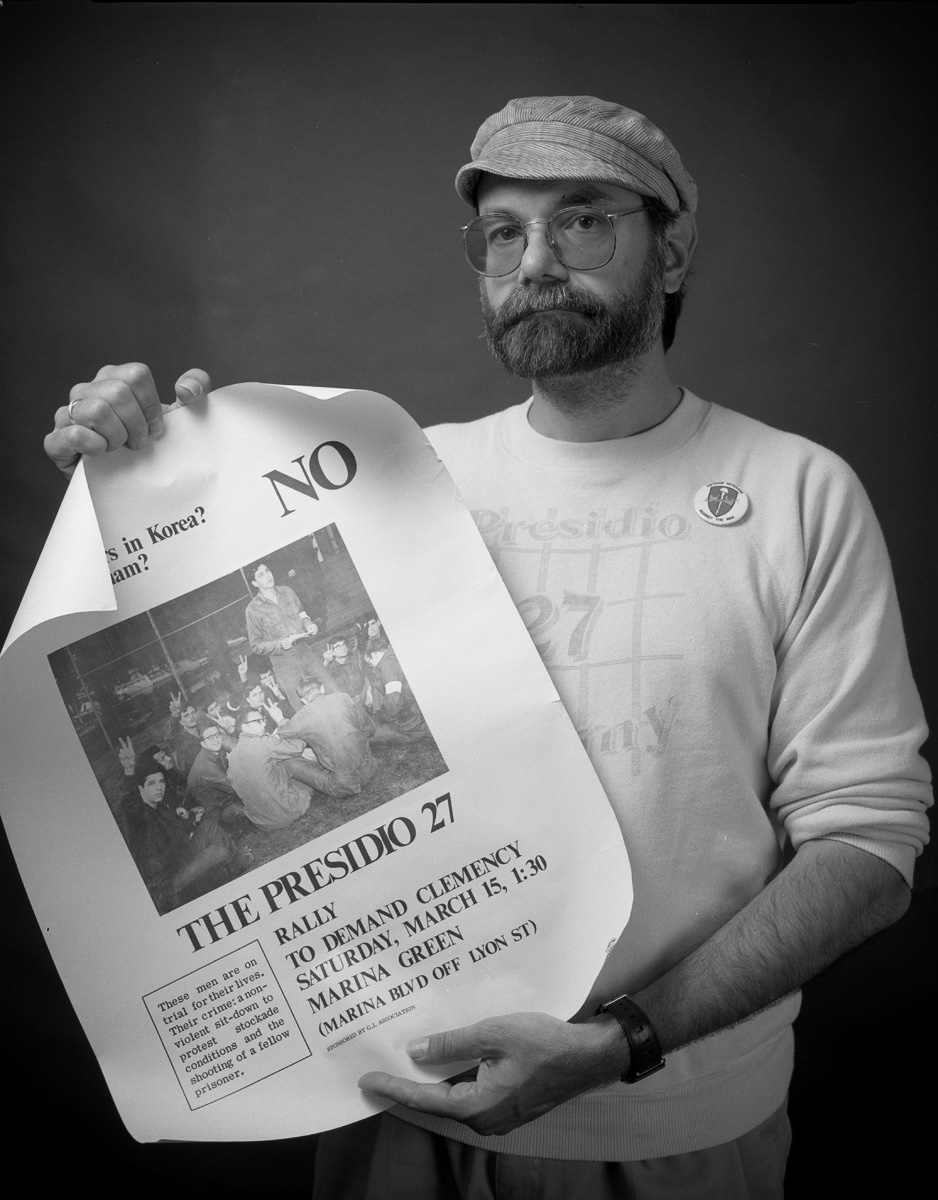
- Randy Rowland: Enlisted Army 1967-69. AWOL 45 days while preparing a second CO application. Imprisoned at Presidio. Took part in Presidio 27 Mutiny. Court-martialed and sentenced to 21 months. Released from Leavenworth after serving 18 months. Rec’d Dishonorable Discharge.
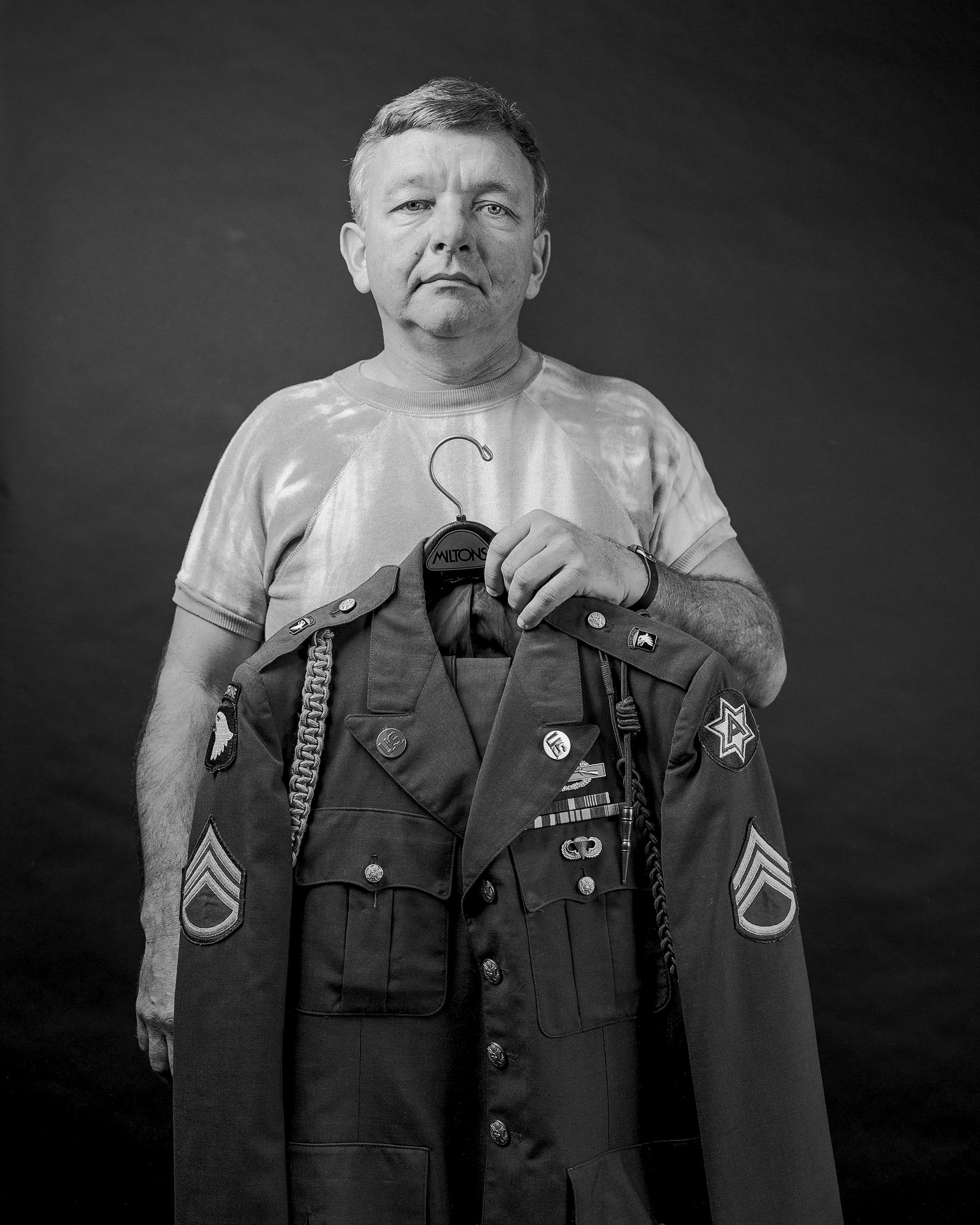
- Dennis Stout: Enlisted Army 1966-69. Served in VN with 101st Airborne. Recommended for two Bronze Stars, Silver Star, Distinguished Service Cross and Battlefield Commission to 2nd Lt. While in VN tried to report 14 war crimes. Immediately upon discharge went public.
- Terry Savery: Air force buddy of Charlie Clements. Terry lived in California during the war and was just a few weeks out of the Air Force after getting CO status. Featured in Witness to War.
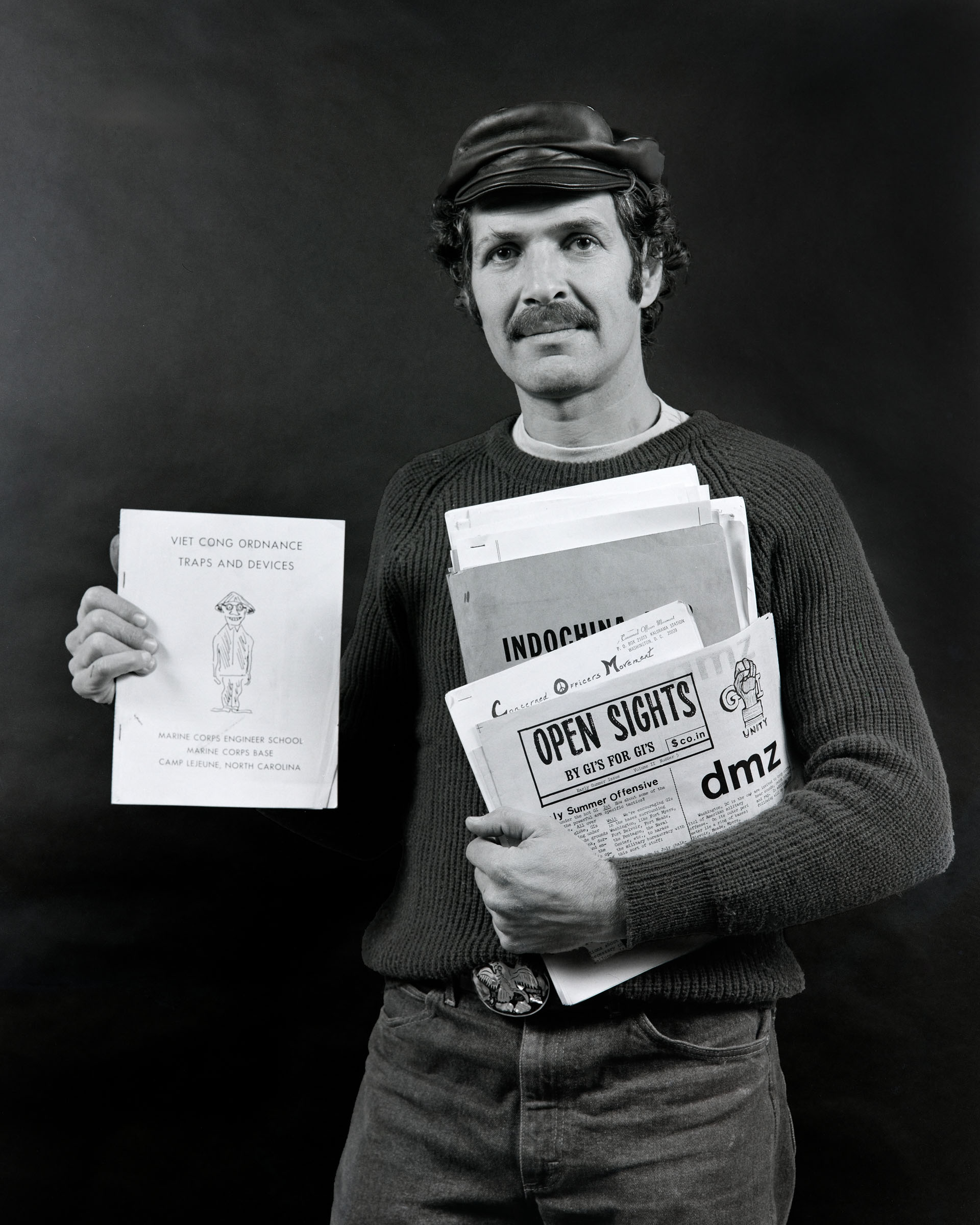
- Jim Packer: Enlisted as a career soldier, Marines 1966-71. Officer Candidates School. Served in VN 1967-68 installing minefields in DMZ. Rec’d Purple Heart and Bronze Star with V. Joined Concerned Officers Movement upon invasion of Cambodia. Repeatedly threatened with court-martial and stripped of security clearance. Became a lawyer after the war, and was one of the founding members of the Smedley Butler Brigade, a peace and anti-war veterans group in Boston.
Background and extra material:
- Military Hierarchy Chart | EdrawMax Template
- Academy award-winning documentary short film: Witness to War (1984) Video Link
- One man’s journey of conscience from Vietnam to El Salvador, WITNESS TO WAR is the Academy Award winning story of Dr. Charlie Clements, who was a pilot in Vietnam until he refused further combat missions.
- President Nixon’s Cambodia Incursion Address – April 30, 1970
- 60 Minutes: An American Tragedy – Jan 9, 1977 (Video link)
- Short 14 minute CBS news piece on the 1970 deadly college campus protest, when Ohio National Guard troops opened fire on demonstrators.
- Jackson State Shooting Article: featuring video interview with Dr. Gene Young on Democracy Now (about May 15, 1970 shooting)
- Phoenix Program: Wikipedia entry, CIA document
- About 1971’s campaign in San Diego known as the “Constellation Vote” lead by anti-war activist David Harris
- Stop Our Ship – Wikipedia
- In memory and in honor of draft resister David Harris – People’s World
- Photo of Former Navy airmen John Huyler and John Kent distribute Constellation Vote literature at Naval Supply Center
- The Connie Vote: The USS Constellation and the Peace Movement in San Diego, 1971 | The Bob Fitch Photography Archive – Spotlight Exhibits
- Video of USS Constellation in Tonkin, ITN 1964
- ANTIWAR OFFICERS SEE RETALIATION – The New York Times (1970)
- Race riot at sea — 1972 Kitty Hawk incident fueled fleet-wide unrest
- Robert Hager, Reuters Video – Black Market Saigon, 1969
- This is Saigon – ABC Video report (has Good Morning Vietnam)
- Vietnam War ’65 | Rare Footage of Saigon During Viet Cong Insurgency | ITN Reports (1965) (has radio audio)
Songs:
- “I-Feel-Like-I’m-Fixin’-to-Die Rag” – Country Joe McDonald – 1967
- “Suicide is Painless” (MASH Theme) – Johnny Mandel & Michael Altman – 1970
- “It Could Have Been Me” – Holly Near – 1974
- “Catch 22 Main Theme” – Harry Gregson-Williams – 1970
- “The U.S. Air Force Song” – United States Air Force Concert Band and Singing Sergeants
- “The Flag Officer’s March” – U.S. Navy Band – 2018
Listen to A Matter of Conscience:
Follow A Matter of Conscience:
Website: https://amatterofconscience.com/
Credits:
Producers and Hosts: Willa Seidenberg, Bill Short and Polina Cherezova
Associate Producer: Dylan Purvis
Interns: Lizzy Liautaud and Dylan Ralls
Sound Designer:Polina Cherezova
Music Arrangements:Danny Seidenberg
Fiscal Sponsor: The International Documentary Association
Special thanks to the Kazan McClain Partners Foundation




Episode 11
Bill Short 00:07
Hello and welcome to A Matter of Conscience: GI Resistance During the Vietnam War.
Bill Short 00:31
I’m Bill Short.
Willa Seidenberg 00:32
And I’m Willa Seidenberg. The U.S. military operates under a strict chain of command from the president down through the officer ranks to the lowest enlisted service member. Discipline, protocol, and a rigid hierarchy define the relationship between officers and those who serve under them. Most of the GI resisters we interviewed for A Matter of Conscience were from the enlisted ranks — the ones who make up the backbone of the military. They take their orders from non-commissioned and commissioned officers. There’s always been inherent tensions between the enlisted members and officers, but it sharpened dramatically during the Vietnam War.
Willa Seidenberg 01:23
On this episode of A Matter of Conscience, we hear from two men who were junior officers and who showed courage in risking their careers to say no to their roles in Vietnam.
Charlie Clements 01:35
The theme in growing up for me was doing what was expected. So, I was a good high school student, I was a good cadet, I was a good graduate student, I was a good pilot, and I was going to be a good officer.
Willa Seidenberg 01:50
That’s Charlie Clements, one of the officers we’ll hear from in this episode. And as always, we want to warn our listeners that you’ll hear profanity and disturbing descriptions of war.
Willa Seidenberg 02:03
Bill, how does someone get to be an officer?
Bill Short 02:07
There are four ways that I know of that you can become an officer in the U.S. military. The first and probably the most preferred way is to go to one of the academies, like Annapolis, West Point, or the U.S. Air Force Academy. The second way, which is probably more common for most officers, is to go through OCS, Officers Candidates School once you’re in the military. Now, you can enlist for three years and go to OCS, or if you were a draftee like me, and you came out of Advanced Individual Training, AIT, after basic, you might be offered the chance to go to OCS, if you did well in AIT. The third way is through ROTC, Reserve Officer Training Corps, which is connected to universities and colleges. You do four years of training at the university or college, and then you commit to a five-year tour with the U.S. military. The fourth way, and one of the least common ways, but was more common during combat, especially during Vietnam, is for a battlefield commission. That’s where a sergeant who has shown exemplary command ability is then offered what’s called a battlefield commission. So, you skip OCS, you skip ROTC, you skip the academy. It’s kind of like you are given the rank as a reward for time and grade. So it’s through experience, not through education.
Willa Seidenberg 03:40
And who typically went to the ROTC programs or the military academies?
Bill Short 03:47
Well, usually young men fresh out of high school who maybe wanted to do military service, like John Kent, one of our interviewees featured in this episode. He went to the U.S. Naval Academy at Annapolis so he didn’t have to pay for college.
John Kent 04:01
That would have been a burden on my parents. They had four kids all wanted to go to college, so I knew it would be a big relief to them if I was able to go in on a full scholarship, which that’s what Annapolis does. They pay for everything.
Bill Short 04:16
Acceptance into the military academies was highly competitive, but once you got in, the government gave cadets a free ride in exchange for serving in the military for at least five years.
Willa Seidenberg 04:28
So when you were a soldier during the war, how did you view the hierarchy of the military?
Bill Short 04:35
Well, actually learned about the hierarchy in the military firsthand when I was in middle school and I lived in a Air Force neighborhood, kind of a suburb of Wright Patterson Air Force Base. So it was filled with officers and enlisted men. And I had a friend whose father was an NCO, a sergeant in the Air Force, and he asked me to go to the swimming pool with him one day. Well, the pool happened to be the enlisted men’s pool at the enlisted club, which is very different from the officers club. So when my mom found out, she was mortified, because she said, Your dad has a position in the Air Force, even though he’s a civilian engineer, he has an equivalent rank of a colonel in the Air Force. So you don’t go to the enlisted club. If you’re going to go to a pool at Wright Patterson Air Force Base, you’re going to go to the officers club, or you’re not going to go at all.
Willa Seidenberg 05:26
Yeah, Randy Rowland had a similar story. We heard from him in our episode about the Presidio 27. Randy was what you’d call a military brat. His father was a nuclear chemist, a career officer in the Air Force.
Randy Rowland 05:42
The only thing that when I actually enlisted in the military that I was determined to do is I wasn’t going to be an officer.
Willa Seidenberg 05:47
One incident made a big impression on Randy when his family was stationed in Japan. It had to do with an enlisted man named Fred who served under Randy’s dad.
Randy Rowland 05:59
And Fred had given me a tie stay or it’s kind of a three-sided thing. It’s like, got little barbs on it. You use it to keep your tie in place. To me, Fred had done this genuinely nice thing, and my father approved what Fred had done, but was talking about Fred in such a way that it was, like, so condescending that I remember just, it’s my earliest memory of hypocrisy. I think of being kind of outraged at hypocrisy and at class division.
Bill Short 06:26
The anti-war TV comedy series MASH tackled the class division issue. MASH takes place in a Mobile Army Surgical Hospital during the Korean War. The series started in 1972 while the Vietnam War was still going on, and it ran for 11 seasons. In one episode, a general’s enlisted son is wounded and taken to the MASH unit. One of the main characters is a surgeon named Hawkeye. He operates on the general’s son and saves his life. The general shows his thanks by setting up an officers club.
MASH TV series 07:08
General Maynard Mitchell will officially open the officers club at 2100 hours today.
Bill Short 07:13
The enlisted men aren’t happy about the club, and neither is Hawkeye. All doctors in the military are officers, but Hawkeye doesn’t like military protocol or the hierarchy, and when the general’s wounded son shows up at the officers club, Hawkeye gets to make his point,
MASH TV series 07:30
General, I’m sorry, sir, perhaps you don’t realize it, but your wife gave birth to an enlisted man, and it is officers only.
Bill Short 07:52
There were good and committed officers serving in Vietnam. They commanded respect and sometimes devotion from the soldiers in the ranks, like my first company commander. We believed he knew what he was doing and he would protect us from unnecessary harm.
Bill Short 08:12
But many others were viewed with disdain. Dennis Stout was in an army unit he called a promotion battalion. They would get a stream of new officers from the prestigious war college, West Point.
Dennis Stout 08:23
Which in the army are called ring knockers, because they have a habit of tapping their West Point ring to bring attention to them that they’ve been to West Point when they’re with non-West Point officers.
Bill Short 08:32
In order to get promoted, the officers had to serve in a combat infantry unit.
Dennis Stout 08:37
Our killing the enemy was just to facilitate their promotion. Mainly, it was just to find the enemy and engage them, because that made the numbers look much better. And when we couldn’t find the enemy, they would have us dig up graves to count them as enemy. They also put us on a basis where if your unit does not get enough body count, you go down on the priority list for resupply.
Bill Short 08:59
Even in my unit, there was always pressure to compete with other battalions in my division for the highest body count. It became a numbers game, just like a sporting event.
“Witness to War” 09:20
But I couldn’t help but wonder what I, Charlie Clements, was doing as a doctor in the front lines of the war in El Salvador.
Willa Seidenberg 09:27
This is a clip from the award-winning short film Witness to War. It’s based on a book of the same name. It’s about Charlie Clements. He brought desperately needed medical care to war-torn El Salvador during the 1980s. We interviewed Charlie in 1991 because his path to Central America started during the Vietnam War.
MUSIC 09:50
Willa Seidenberg 09:58
Charlie grew up with a father who was an officer in the Air Force. And from the time he was a little boy, he was groomed to go into the Air Force.
Charlie Clements 10:07
There was probably no way I could have done anything else except to go to the Air Force Academy, because I so badly needed the approval of my parents and my brother had gone there and gotten a great deal of respect.
Willa Seidenberg 10:17
In 1963 Charlie enrolled in the Air Force Academy.
Charlie Clements 10:21
We were instilled with a tremendous sense of duty, sense of discipline and a sense of honor and ethics. One could take a pencil from somebody else, and if you didn’t return it, that was considered an honor violation, and you would have to turn yourself in, and you would leave the academy, and it was a black and white world. You were either an honor code violator, or you weren’t for the most minor infractions. So there was no gray.
Willa Seidenberg 10:52
Almost all of Charlie’s teachers at the Academy had already served in Vietnam.
Charlie Clements 10:57
Very prestigious for them to have these medals on their chest. And here, these men who were 40 years old, 35 maybe 30, but who had children and families, were now being sent to Vietnam for a second time, and I had not been once. I didn’t particularly mind going to Vietnam. I thought it was my duty. In my class at the Air Force Academy, there was a great eagerness. The real fear was that the war would be over with before we got there.
Willa Seidenberg 11:28
Charlie was disdainful of anti-war protesters. He’d sometimes come in contact with them at football games.
Archival Sound 11:35
Final game of the season is at Boulder against arch rival the University of Colorado.
Willa Seidenberg 11:39
The Air Force cadets would march into the stadium when the academy played its big rival, Colorado State University.
Charlie Clements 11:47
Having people throw things at us, jeering us on the streets afterwards, or whatever. Those people never did anything but hardened my resistance, and I never would have listened to anything they were saying. The people who had an effect on me that I remember, not at the time, but there was always a silent vigil on Wednesdays, and people would stand there lining the sidewalks quietly, and you have to walk between them, and they didn’t have signs, and they didn’t jeer you, and they didn’t make you feel badly, except they were always there. It was raining, they were there. It was cold, it was there. They were always there. The effect of that later, they were the ones I would remember, not the ones who protested, or made me the object of their of their protests.
Bill Short 12:36
When he got leave, Charlie went to Vietnam and the Philippines to talk to pilots. He was trying to figure out what kind of pilot he wanted to be.
Charlie Clements 12:43
And it was pretty clear that the fighter pilots were macho, mindless. Something about their bravado and machismo just was a turn-off. I didn’t think the war was wrong, but it did seem to be an atmosphere of a lot of insanity, and in the midst of that, there seemed to be people had a clearly positive sense of who they were and what they did. And these were the rescue pilots and the helicopters.
Bill Short 13:11
When Charlie went to pilot training, he was clear about one thing. He didn’t want to kill anybody.
Charlie Clements 13:17
There were no helicopter assignments available, so I chose a C130 assignment, which was a transport aircraft. It did some medical evacuation, and I kinda rationalized that would be a more positive role in the midst of all this.
Bill Short 13:29
Charlie’s air base was in Taiwan. He was a co-pilot on missions to Vietnam. They would go into country for three weeks, then come back, rest up and go out again. It was then he started to realize that many things weren’t as they were supposed to be.
Charlie Clements 13:44
We weren’t counted against the troops stationed in Vietnam. They could say there’s 500,000 troops in Vietnam. Maybe there was another million of us outside Vietnam who would go in there every day and participate. But we weren’t counted. I began to see things that at first didn’t bother me, and then later, that same thing would begin to bother me, and it largely had to do with lying, because lying was a hard thing because of these rigidities.
Bill Short 14:12
The pilot he flew with would regularly pad his flying hours, just one of the many details they would falsify.
Charlie Clements 14:19
We would pick up cargo, fly it from one place to another place, to another place, to another place, then go back later and retrack that same route and take the cargo back again. And I would ask, what are we doing that for? And they’d say, Well, we have to fly so many cargo ton miles, or they’ll send the planes home because the civilians were making these silly decisions. It was always the civilians who were the problem.
Bill Short 14:42
Soon, Charlie was seeing corruption at every turn. It was especially rampant in the black market.
Archival Sound 14:48
The black market is everywhere. On the street in Saigon…
Charlie Clements 14:49
The sergeants running NCO clubs and PXS were giving greenbacks to the Vietnamese in this very complicated operation where they were counterfeiting money and changing on the black market, we were facilitating that whole thing. And I was really shocked by all of that.
Willa Seidenberg 15:08
Those greenbacks Charlie mentions are slang for U.S. dollars. Charlie started hanging out in Saigon with some CIA and intelligence officers.
Charlie Clements 15:18
One of them told about how they were assassinating this Vietnamese congressman who was calling for peace, and that they knew he was pinko, and they had a plan to eliminate him. And then a couple nights later, they celebrated when they had done that, and I began hearing about the Phoenix program.
Archival Sound 15:35
Perhaps the least understood and most effective counterinsurgency concept during the Vietnam War was the Phoenix program, while all other special operations missions were directed against communist military targets, Phoenix was specifically a means of neutralizing the Viet Cong political infrastructure inside South Vietnam.
Willa Seidenberg 15:56
The Phoenix program was coordinated by the CIA. It used assassination, torture and brutal interrogation tactics on prisoners. The program viewed all Vietnamese as targets, even if they were civilians. One time at the officers club, Charlie ran into a fighter pilot who he’d roomed with at the Air Force Academy. The pilot was boasting that he’d been given the prestigious Top Gun award. It was created during the Vietnam War to improve the United States’ poor performance in air combat assignments.
Charlie Clements 16:32
And I asked him how he got it, and he said, they were going out on a mission. They were coming back. They saw a bunch of gooks in the field. He thought it was a free fire zone. He radioed permission, and they said, Yes. And they strafed the field and crisped 31 gooks. And I said, How’d you know they weren’t farmers? He said, Didn’t matter. He said they were in a free fire zone. You know, began to understand that these planes had circled for a couple hours. They’d say to these people, this is a free fire zone, you have to leave it. They’d farmed that land for hundreds of years. You know that land was the only thing they knew, they wouldn’t leave. And they would napalm them or strafe them, or whatever.
Willa Seidenberg 17:09
Strafing refers to when low-flying planes or helicopters repeatedly attack a target, usually with machine gun fire. More revelations piled up. Charlie found out the U.S. was secretly bombing Cambodia, a neutral country, and Washington had a hand in the ouster of Cambodia’s leader, Prince Sihanouk. Then Charlie realized he was ferrying troops in preparation for a full-scale invasion of Cambodia.
Charlie Clements 17:41
I was furious. I didn’t know what to do exactly, but I couldn’t believe that, you know, we had overthrown this leader and were invading this other country. So I had a cold, and I declared myself unfit to fly.
Archival Sound 17:52
Good evening, my fellow Americans.
Bill Short 17:55
On April 30, 1970, President Nixon went before the American people in a televised address. He announced what many in the military knew was already happening.
Archival Sound 18:05
Tonight, American and South Vietnamese units will attack the headquarters for the entire communist military operation in South Vietnam. This key control center has been occupied by the North Vietnamese and Viet Cong for five years in blatant violation of Cambodia’s neutrality. This is not an invasion of Cambodia.
Bill Short 18:32
College campuses across the nation erupted in protest. One at Kent State University turned deadly when Ohio National Guard troops opened fire on demonstrators. The National Guard fired 67 bullets at the protesters. Four students were killed and nine others were wounded. And a little more than a week later, there was another shooting at Jackson State College in Mississippi, a historically black college. Police fired on protesters, killing two black students and wounding 12 others. Five National Guard troops were indicted for the shootings at Kent State but no one was found criminally liable for the students’ deaths. In the Jackson State case, a federal grand jury failed to produce an indictment against any of the police officers involved in the shooting.
MUSIC 19:24
Willa Seidenberg 19:56
Charlie had taken an emergency leave and attended his brother’s wedding in Kansas. The next day is when Nixon announced the Cambodia incursion. Charlie was at a low point. He sought refuge in California, where he met up with an Air Force buddy, Terry Savery. Terry was just a few weeks out of the Air Force after getting his conscientious objector status. Together, they went to an anti-war rally at San Francisco State University. In Witness to War, Terry Savery describes how Charlie ended up speaking to the boisterous crowd.
“Witness to War” 20:32
Very quietly and humbly, walked up onto the stage and began speaking in a very low tone of voice, the first low tone of voice that he come across that loudspeaker all day, and very quietly addressed that crowd.
Charlie Clements 20:44
I said, I’m a lieutenant in the Air Force, and I’m not going to fly anymore, and I’ve seen a lot of terrible things. I’m saying, No. You know, don’t make GIs the enemy. I said, some people don’t have the guts to quit. I don’t, but I’m not going to fly any more missions.
“Witness to War” 20:58
He said, it in such a way that the crowd, to my utter amazement, I still am stunned to this day, quieted down, and they gave him a big round of applause when he finished.
Willa Seidenberg 21:06
Charlie had decided he wasn’t going to fly, but he wasn’t trying to get out of the Air Force. He’d been back on base just a few days when they sent him out on another mission.
Charlie Clements 21:17
I went and told my commander. I said I wasn’t going to fly anymore, and then I thought things I was seeing was wrong, and so I was asking for a transfer to a unit that didn’t have anything to do with Vietnam. Remember, logical, very gentlemanly. And nodded and said that he thought I should see the psychiatrist.
Willa Seidenberg 21:35
The Air Force assigned him to administrative duties at his base in Taiwan. Charlie found it awkward being around the other men in his Tactical Airlift Squadron.
Charlie Clements 21:45
They isolated me and they knew something strange. Anybody who went to see a psychiatrist was bizarre. I was also a decorated pilot, and here I was grounded, and I’d been given this kind of bogus job in the squadron.
Willa Seidenberg 21:56
The Air Force sent Charlie back to San Antonio to see another psychiatrist who was a major. He made a point of telling Charlie he was a West Point graduate and showed him his paratrooper wings.
Charlie Clements 22:08
Don’t worry, Clements. He said, we’ll have you back in Saigon in a week. You’re in the old three-year slump. And I just said, you know, you’re pretty fucked up if you think I’m going back. I said, I don’t think you understand what’s going on.
Bill Short 22:20
Charlie got worked up and started talking about the Phoenix program, secret bases in Laos and Cambodia, the black market, and coups.
Charlie Clements 22:28
I think he thought I was totally whacked. He had no basis to evaluate any of this information. It sounded preposterous.
Bill Short 22:36
The major said he couldn’t help him, but he gave him an envelope and an address for him to visit across town.
Charlie Clements 22:41
I went across town, I gave this envelope, and they gave me a pair of pajamas, and I had gone in the back door of a psychiatric ward, and I couldn’t make any telephone calls, I couldn’t have any visitors. Was given medications to take, and if I didn’t take the medications, I was told I would be strapped down and injected. If I didn’t want to talk to the other patients, many of whom were pretty out there.
Bill Short 23:06
Charlie was now in the hospital at Lackland Air Force Base. He’d never been around mental patients, and understandably, was feeling antisocial.
Charlie Clements 23:15
If I wanted to sit and read, the other patients would claim that I was unfriendly, and the patients had to vote on you, and you had to kind of tell how sick you had been and tell how you were improving, and then they’d vote you from a 4A to a 4B, which means now you could eat with a knife. It was a pretty tough first 10 days. I didn’t have any frame of reference, this pill ever gave me made me very groggy.
Willa Seidenberg 23:37
Charlie was beginning to think maybe he was crazy. But he realized he wasn’t when that same major came to see him.
Charlie Clements 23:45
And he said that if I would agree to go back to Saigon, that they would drop all this psychiatric stuff. And that was a turning point for me, because I knew if I was crazy, I was crazy because I chose to be. And soon after, a friend of mine kind of broke into the ward. He knew I just kind of disappeared. We were supposed to have dinner the night. I just heard he finally found me.
Bill Short 24:10
There’s a scene in the movie Catch-22 that echoes Charlie’s experience. The 1961 book by Joseph Heller takes place during World War II. The film adaptation was released in 1970 during the Vietnam War, and its themes of military absurdity resonated with audiences.
FILM 24:29
Okay, let me see if I got this straight. In order to be grounded, I’ve got to be crazy, and I must be crazy to keep flying, but if I have to be grounded, that means I’m not crazy anymore, and I have to keep quiet.
FILM 24:42
You’ve got it. That’s Catch. 22.
Willa Seidenberg 24:52
By 1970, the Vietnam War was so unpopular with the American public and soldiers that President Nixon started pulling ground troops and relying more on the air war. So it’s no coincidence that more pilots like Charlie Clements were beginning to say, No. We’ve recently gotten to know naval veteran John Kent, so we interviewed him in 2025. He was the number two collegiate-ranked wrestler in the nation in the mid 1960s. And when he attended the U.S. Naval Academy at Annapolis, he was on track to become part of the Olympic wrestling team.
John Kent 25:46
I’d always wanted to be a pilot, to fly. That’s one of the things that Annapolis does, is produce the pilots for the Navy and the Marine Corps. I even aspired to be an astronaut. That was when people were starting to talk about going to the moon and even going to the moon.
Willa Seidenberg 26:17
Annapolis is also home to St John’s College, a liberal arts school where students were protesting the war. John didn’t pay much attention to them, but during his junior year at Annapolis, he got fixed up on a blind date.
John Kent 26:32
And it turned out this woman was a college student and an anti-war activist, and so for the entire date, we debated the war. We stayed up all night. And you think two young kids stay up all night, they’re screwing. Well, no, we were debating the Vietnam War. And we went back and forth and back and forth. And I realized I don’t know shit about this. This woman was running circles around me.
Willa Seidenberg 26:59
When he graduated from Annapolis in 1968, the Navy sent John to Beeville, Texas for training to be a jet fighter pilot. One day, his class was told that a major in the Marine Corps would come talk with them.
John Kent 27:15
We’re all excited because this guy’s just come back from Vietnam. He’s going to tell us what it’s like, you know, and he’s telling the story about going out on a bombing run.
Willa Seidenberg 27:24
The major was dropping bombs near Hanoi, and he also dropped a sidewinder missile. Sidewinders are air-to-air missiles that have an infrared heat-seeking guidance system. The pilot had one missile left, which he had to get rid of before landing back on the aircraft carrier. Usually, pilots would drop them into the ocean because it’s too dangerous to land on an aircraft carrier with armed munitions.
John Kent 27:53
But he said he wanted to have some fun. So, he’s describing going out over the countryside of Vietnam, and then he sees this old man on a bicycle, and this is exactly how he described it. And the bicycle is filled with vegetables and produce that have come out, probably out of his garden or his fields, and he’s riding them to market. And this guy says, Oh, this perfect target. With one push of a button, he sends his heat-seeking missile into this old man on a bicycle, and he said, and I reported it as a munitions vehicle.
Willa Seidenberg 28:29
What really got John is that the whole class laughed and applauded when the pilot told his story.
John Kent 28:35
And I’m sitting in the back of this classroom going, Holy shit. What kind of people are these that I’m training with?
Bill Short 28:45
John was slated to be deployed to Vietnam in 1970, where he would fly an F8 Crusader fighter jet.
John Kent 28:53
The F8 was the last of the single-seat fighters, and we used to be kind of proud of that. You know, you were the last of the gunslingers.
Bill Short 29:01
But John was having doubts about the war. He happened to be in Washington, DC, during the big moratorium to end the war held in November of 1969. It was his first anti-war protest, and he went with his father, who also had questions about the war.
John Kent 29:18
And it was a really profound experience for me, because here I am training to go to Vietnam, leaving within a few months, and there are people you know, giving these profoundly moving speeches about why the Vietnam War was an atrocity and an imperial war, and that nobody should be participating in this. I remember at certain points in some of the speeches coming to tears. I told my dad, I can’t go to Vietnam.
Bill Short 29:47
John’s father said he would support him no matter what he decided to do. But John was in crisis.
John Kent 29:53
It is tough when you’ve, like, built your whole life around becoming something. I was a good jet pilot, and I was a good fighter pilot, and then you have to wrestle with all of that and realize that they’re going to use that talent for something really evil, for building an empire on the bones of, you know, millions of Vietnamese people. And it just was a very wrenching process for me to break with all of that and come out against the war.
Bill Short 30:24
As John Kent was wrestling with what to do, the Navy sent him to Miramar Air Station in San Diego for his F8 flight training. That’s where he started connecting with people in the anti-war movement.
John Kent 30:36
Then at a certain point, I realized I needed to start organizing against the war, and I also needed to make a move to tell the military that I wasn’t going to participate. And that was the hardest part.
Bill Short 30:56
John became so distracted by his conflicted feelings that he had a near mishap on the runway. He almost taxied his plane underneath another one, and he realized he was endangering himself and his fellow pilots. That’s when he told the military he wasn’t going to Vietnam. At first, the Navy tried to get him back on track, having spent hundreds of thousands of dollars to train him.
John Kent 31:19
And they said, we’re not wasting that and you’re going to straighten out and fly right.
Bill Short 31:25
The Navy sent him to counselors and to a psychiatrist.
John Kent 31:28
And I kept saying, no, no, no, I’m not doing it. I am not going to go kill Vietnamese people for the U.S. empire. Just got more and more intense. Once they realized I wasn’t going to do it, then they started the wheels turning to take my wings.
MUSIC 31:44
Willa Seidenberg 31:55
Across the country, in Washington, DC, career Marine Officer Jim Packer was also getting disillusioned by the war.
Jim Packer 32:04
When they invaded Cambodia, it was just horrendous. The feelings inside, they’re not ending this thing at all. They’re escalating it again.
Willa Seidenberg 32:13
Jim saw an article in the newspaper about some anti-war Navy officers. He got in touch with them and started meeting with them and others who had also seen that same story.
Jim Packer 32:25
It was more like a rap group. It was just good to talk about what the hell was happening, what we could do. We gave ourselves a name. The next thing you know, people just started hearing about us, and it’s all by grapevine.
John Kent 32:38
I had read in some article that a group of officers in Washington, DC, had come together and called themselves the Concerned Officers Movement and were opposing the war.
Willa Seidenberg 32:48
Here’s John Kent again.
John Kent 32:50
And I said, That’s what I want to do. I want to join that group. And so I wrote them a letter, and they wrote back and said, Go for it. You be the San Diego chapter of the Concerned Officers Movement.
Jim Packer 33:07
We’d start getting these letters in from all these guys all over the country. And what we would do is, whoever showed up at the weekly meeting, we’d say, here’s five, here’s ten. How many can you write? Because we answered everybody individually.
Willa Seidenberg 33:14
Jim says as soon as people were identified as being part of the Concerned Officers Movement, they would be transferred or discharged.
Jim Packer 33:24
The normal way of dealing with dissent in the military isn’t to court-martial you. It’s to either discharge you or to transfer you. We had so many guys transferred to Alaska. We had a chapter in Alaska.
Willa Seidenberg 33:37
In San Diego, John Kent put an article in the local underground newspaper.
John Kent 33:43
Within a very short period of time, we had a going organization of dozens of naval and marine officers that were opposed to the war.
Willa Seidenberg 33:52
With that, the San Diego chapter of the Concerned Officers Movement was off and running. John met anti-war activists, and they organized a campaign to stop an aircraft carrier from going to Vietnam.
Archival Sound 34:06
The USS Constellation is a fighting carrier. From these decks are planes of bomb North Vietnam. But now it’s the ship that’s under attack by war protesters who don’t want her to go back to Southeast Asia.
John Kent 34:18
And we decided that would be a great target for an anti-war effort, and then lots of other anti-war forces, students, and activists of all kinds, joined with this effort in San Diego. And it became quite a big campaign, which morphed into what became the Stop Our Ship movement.
Bill Short 34:40
In 1971, anti-war activist David Harris led a campaign in San Diego to take a straw poll of residents and Navy personnel. They asked them to vote on whether the USS Constellation should go to Vietnam or stay home. T
Archival Sound 34:56
Their weapons in this war are unusual. A light plane that flies over the city with a banner asking people to vote against sending the carrier back to sea. There were also hundreds of T-shirts, thousands of bumper stickers, and of course, the balloting.
John Kent 35:11
We had ballots all over the city with people on street corners, stopping just people walking around the city, or going in and out of the military bases, we would stop and ask if they wanted to vote. And the vote was overwhelming. Like 80% of the people that voted, voted to keep the ship home, which in a military town like San Diego was unheard of.
Bill Short 35:38
Of course, the Navy wasn’t going to keep the ship in San Diego, but even on the day that it left port, the demonstrators were in small boats trying to block its passage.
Archival Sound 35:47
So the peace group didn’t stop the carrier Constellation. It’s on its way to Vietnam, but they do believe they’ve accomplished their mission, making the public aware of their frustration over that ship.
Bill Short 35:57
When the constellation sailed, nine sailors from the crew went AWOL, known in the Navy as jumping ship.
John Kent 36:04
So we scattered out among the city trying to find a place where they could, you know, get sanctuary and publicly hole up, so to speak, and keep out of the clutches of the military.
Bill Short 36:16
They found sanctuary in a Catholic church, and local activists slept there overnight to protect the nine sailors.
John Kent 36:22
Unfortunately, the military sent in their goons and rousted everybody and arrested the nine guys. However, the end result was quite surprising. All nine of them got honorable discharges and got discharged almost within a week or two, and I still am not exactly sure why, probably because they were worried about all the publicity.
Willa Seidenberg 36:46
A year or so later, tensions boiled over among Black sailors on the USS Kitty Hawk.
John Kent 36:52
The U.S. Navy, historically, is probably the most racist military arm of the United States military.
Willa Seidenberg 36:59
During Vietnam, the Navy had the smallest proportion of Black service members of all the branches of the military, and Black enlisted soldiers got the dirtiest and toughest jobs. After the Kitty Hawk incident, there was racial violence on three other ships, including the USS Constellation.
John Kent 37:20
What happened on the Kitty Hawk was a real mutiny, and it isn’t acknowledged as that by the officialdom, but it was. And what happened on the Constellation was near mutiny, and it was directly related to these campaigns to stop these ships and the anti-war movement.
Willa Seidenberg 37:37
The SOS or Stop Our Ship movement didn’t stop ships from going to Vietnam, but it made its presence felt on aircraft carriers. The group handed out thousands of stickers to sailors as they returned to their ships from leave.
John Kent 37:53
And they would take them on board, and then the marine guards on board the ship would find these stickers all over the place. They even appeared in the captain’s bathroom, what you call the head on a ship. So the captain’s head had stickers all over his mirror in his bathroom. Nobody knows how they got there, but they were all over the whole ship. Everywhere that the officers went, they would see these anti-war stickers. So it was a wonderful subversive effort.
Willa Seidenberg 38:20
To get out of the Navy, John applied for conscientious objector or CO status. The Navy flatly turned down his application and gave him orders for Alaska, but his lawyer appealed to a federal court.
John Kent 38:35
The day I was supposed to report to Adak, Alaska was the day of my hearing in front of the federal judge, and the very same day, I’m in court in San Diego, and the whole anti-war movement at this point had found out and was part of supporting my case. And so there were hundreds of people outside the federal court, and the whole inside was packed.
Willa Seidenberg 38:58
The Judge upheld John’s case and ordered him discharged from the Navy.
John Kent 39:04
The Navy tail between its legs, had to discharge me and give me all my back pay and eat crow because they wanted me to go to Adak and freeze my butt off. And instead, they had to discharge me as honorably.
Bill Short 39:19
John Kent has stayed active in political and social justice causes since the end of the war. He’s written many of the Wikipedia articles about the GI anti-war movement.
John Kent 39:29
The GI movement, or the resistance to the Vietnam War, was really underrepresented in Wikipedia. The resistance to the Vietnam War within the U.S. military, which was profound, there was a huge amount of resistance, and it wasn’t represented.
Bill Short 39:48
John lives in the Culver City area of Los Angeles today.
Willa Seidenberg 39:58
Charlie Clements was discharged from the Air Force with a 10% mental disability.
Charlie Clements 40:05
I was 25 years old. Had no idea what I wanted. I never asked myself what I wanted. I’d always done what other people expected, and so I just decided to leave the country and kind of put things back together.
Willa Seidenberg 40:17
For a while, Charlie crewed on sailboats and traveled all over the world. He taught physics in Fiji and then realized he wanted to become a doctor. When the Vietnam War ended in 1975, he enrolled in medical school at the University of Washington.
Charlie Clements 40:35
Had begun reading about Vietnam. Had begun trying to understand how someone so well-informed and so well-educated and with such good intentions could be so terribly wrong. And that was the beginning of my political education.
Willa Seidenberg 40:55
After medical school, Charlie was doing his residency at a family medicine clinic in Salinas, California. That’s an area home to many farm workers. Two important things happened there. He met some Quakers, and he was treating refugees from the civil war in El Salvador.
Charlie Clements 41:16
As they told their stories, I found out that the woman who described chest pain was really not only describing the chest pain of having lost a breast that had been chopped off by a machete, but of having to flee the country and leave her children behind.
Willa Seidenberg 41:28
Charlie heard stories from the refugees about government death squads that were killing teachers, doctors, and priests. When he saw an American general on TV saying the United States was sending advisors to El Salvador.
Charlie Clements 41:43
I thought, my God, it’s happening again.
Bill Short 41:46
Charlie gradually adopted the Quaker faith, and as he was learning more about the war in El Salvador, he made a decision to go there.
Charlie Clements 41:55
A Quaker tradition is bearing witness, being in a place on time of strife, and being beside people. And I decided I’d use my skills as a physician and my belief in bearing witness and going to Salvador, if somehow what I saw and observed helped people make decisions that we didn’t have around Vietnam, then maybe it wouldn’t have to develop into that.
Bill Short 42:15
None of the relief agencies wanted to sponsor him because they thought it was too risky for his safety. He ended up making contact with the FMLN, an anti-government guerrilla group. He was able to practice medicine in areas controlled by the guerrillas. It was a tough year. He saw the horrors of the war firsthand, and he treated civilians who had been injured by bombings and napalm, just like in Vietnam.
Charlie Clements 42:39
We were trying to treat children with napalm burns and doing skin grafts with razor blades and suturing amputations with dental floss, and just didn’t have anything.
Bill Short 42:50
When more doctors came on board, Charlie realized he could better spend his time fundraising in the United States. He undertook a punishing schedule, visiting cities all over the country to tell people what was happening in El Salvador. He felt like he had deserted his patients, but he was also dealing with his own pain and trauma.
Charlie Clements 43:10
I still have no regrets about being a Vietnam veteran. It is Vietnam that made me where I am today, in the sense of that transformation process, and had I not gone to Vietnam, I wouldn’t have the consciousness that I do today. I’m very lucky. I was able to take a negative experience in my life and turn it into something positive. I think there’s a lot of veterans that have not been able to do that.
Willa Seidenberg 43:37
Charlie Clements has stayed active in human rights work. He’s a former president of Physicians for Human Rights and the Unitarian Universalist Service Committee. He now lives in Maine, and he returned to Vietnam in April of 2025 during ceremonies to mark the 50th anniversary of the end of the war.
Willa Seidenberg 43:59
Jim Packer became a lawyer after the war. He continued to work on social justice issues and was one of the founding members of the Smedley Butler brigade, a peace and anti-war veterans group in Boston.
Bill Short 44:19
Next time on A Matter of Conscience.
Roy Barrington 44:22
We were one of the units where they’d send us out on a recon and we’d go out a hundred yards and sit down. We wouldn’t go looking for it. We liked it being peaceful.
George Silver 44:32
We decided that we didn’t see shit anymore, and we didn’t alert anybody to the possibility that there was another soldier in the area, and that other soldier didn’t really attack our guys, and we didn’t attack them, and we’ve saved a hell of a lot of lives.
Bill Short 44:48
The stories of GIs who risked everything by opposing the war while they were serving in Vietnam,
Bill Short 44:58
This podcast is independently produced with crowd-sourced funds. We thank the dozens of people who donated, and you can join them by going to our website, amatterofconscience.com. You can also see a glossary of terms and show notes for this episode. If you like what you hear in this episode, please give us a review and tell others about it.
Willa Seidenberg 45:21
This episode was written, edited, and produced by Willa Seidenberg, with help from Bill Short. Polina Cherezova is the sound designer and Dylan Purvis is the Associate Producer. Many thanks to Country Joe McDonald for giving us permission to use his song as our theme music, and to Holly Near for use of her song, It Could Have Been Me. Original Music arrangements are by Danny Seidenberg. The clip about the Phoenix program is from the documentary, War in the Shadows by Valorous TV. We thank the Kazan McClain Partners Foundation for their generous support. Our fiscal sponsor is the International Documentary Association. Thanks also to Denise Abrams, Bill Belmont, Susan Schnall and Veterans for Peace, Sam Short, and David Zeiger. And finally, a big, big thank you to all the veterans who shared their important stories with us.