Episode 10: Leaving America Behind: Deserters and the War
More than half a million soldiers abandoned their posts during the Vietnam War, seeking refuge primarily in Canada and Sweden. In this gripping episode of A Matter of Conscience: GI Resistance During the Vietnam War, we plunge into the emotional and personal sacrifice of desertion. Hear the extraordinary journeys of four men: Mike Wong, who crossed the border into Canada; Gerry Condon, whose path wound from Canada to Sweden and back again; Michael Sutherland (formerly Lindner) and Steve Kinnaman, two men granted asylum in Sweden and who never returned to their homeland. We’ll also explore the secret routes to freedom—the ‘underground railroad’ to Canada, guided by historian John Boyko, and the resilient deserter community in Sweden, as shared by its unofficial historian, Jim Walch, a conscientious objector who made Sweden his permanent home.
Check out the show notes.
Guests/Subjects
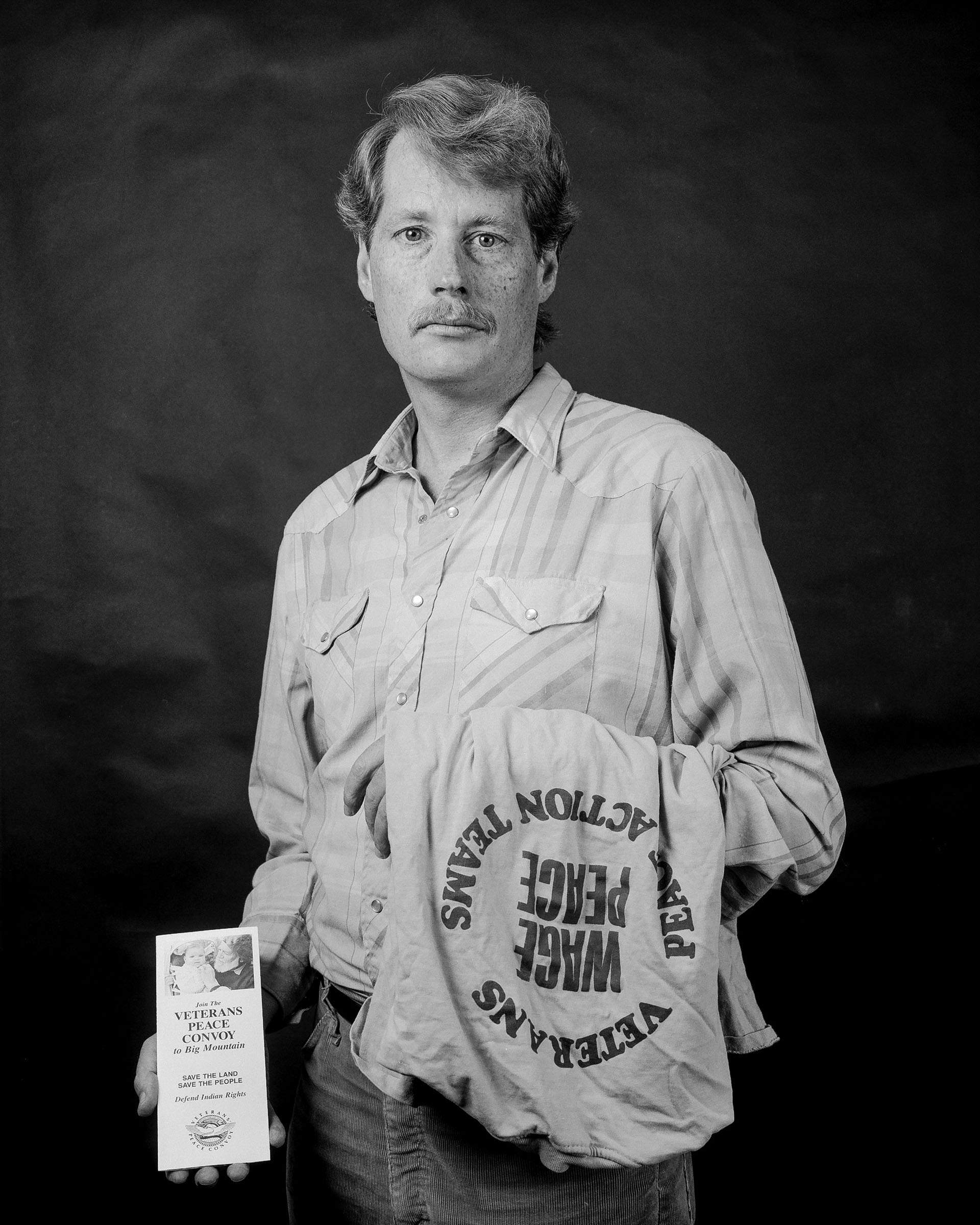
- Gerry Condon: Enlisted Army 1967. Green Beret, deserted to Canada, then Sweden, then back to Canada. Returned to the U.S. in 1975. He has been active in anti-draft, veteran, and peace organizing. He is a past president of Veterans for Peace and a current member of its board of directors.
- Steve Kinnaman: Drafted Army 1966. AWOL in Laos for four years. Granted asylum in Sweden in 1971. Still lives in Stockholm.
- Michael (Lindner) Sutherland: Enlisted Navy 1966. Assigned to the USS Intrepid. He and four others went AWOL in 1967 in Japan. Became known as the Intrepid Four. Traveled through the Soviet Union to Sweden where they were granted asylum. Still lives in Stockholm.
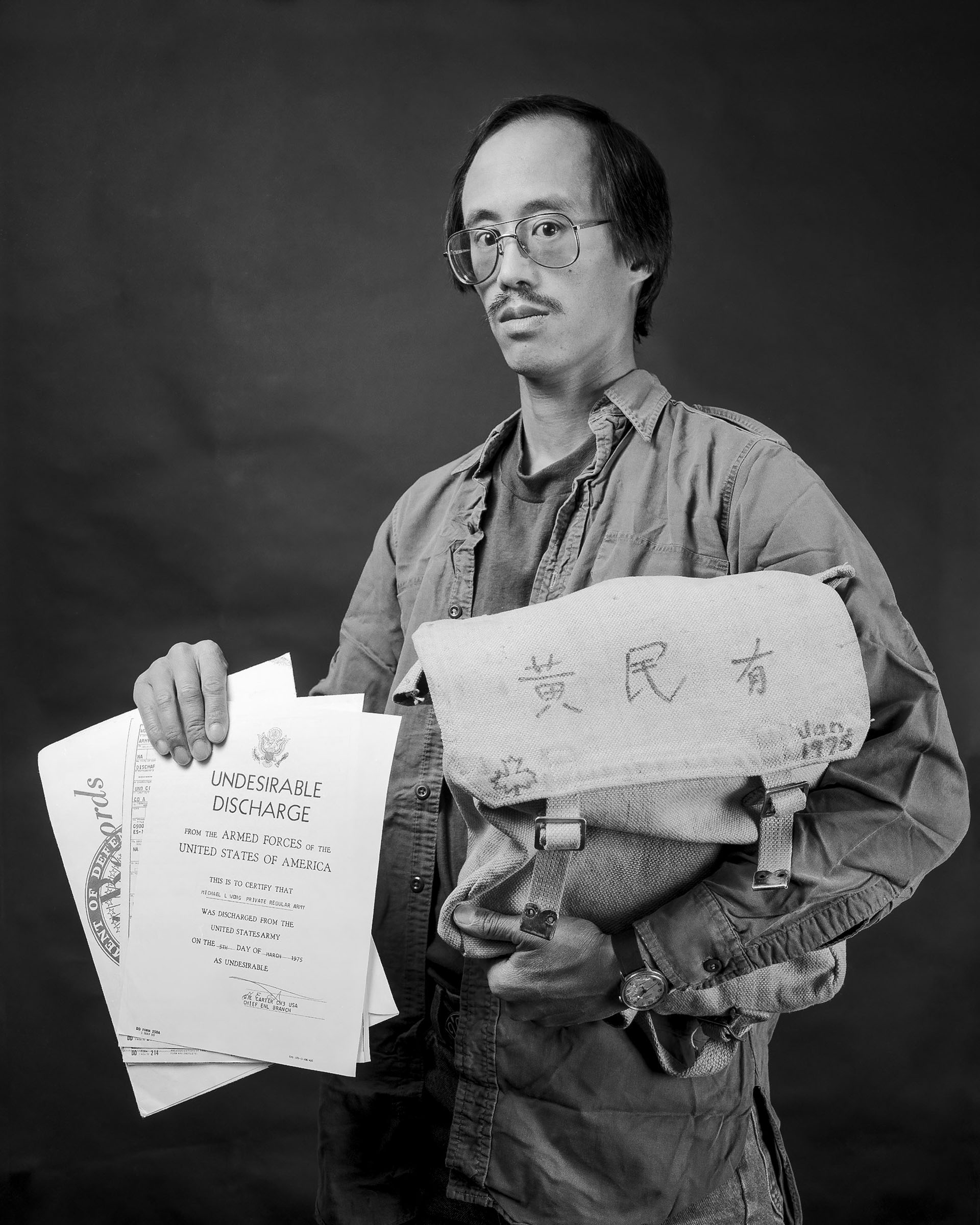
- Mike Wong: Drafted Army, 1969. Deserted to Canada. Returned to the U.S. in 1975. He is a retired social worker and a member of Veterans for Peace Board of Directors.
- John Boyko: Canadian historian and author of The Devil’s Trick: How Canada Fought the Vietnam War.
- Jim Walch: Conscientious Objector, moved to Sweden in 1965. Worked with the Swedish Peace and Arbitration Society which helped American deserters in Sweden. Still lives in Stockholm.
Background and extra material:
The Devil’s Trick: How Canada Fought the Vietnam War, by John Boyko. Knopf Canada, 2021.
Northern Passage: American Vietnam War Resisters in Canada, by John Hagan. Cambridge: Harvard University Press, 2001.
Canadian Prime Minister Pierre Trudeau.
Operation Chaos: The Vietnam Deserters Who Fought the CIA, the Brainwashers, and Themselves, by Matthew Sweet. NY: Henry Holt and Co., 2018
‘Sweden Might Be a Haven, But It’s Not Heaven’: American War Resisters in Sweden During the Vietnam War, by Carl-Gustaf Scott. Immigrants & Minorities. Historical Studies in Ethnicity, Migration and Diaspora, Volume 33, 2015.
Vietnam’s Prodigal Heroes: American Deserters, International Protest, European Exile, and Amnesty by Paul Benedikt Glatz, Lexington Books, Lanham, MD 2021
Chance and Circumstance: the Draft, the War, and the Vietnam Generation, by Lawrence M. Baskir and William A. Strauss. NY: Vintage Books, 1978
Sweden, by Matthew Turner. Historical novel based on the Intrepid Four. The Mantle, 2018.
Sweden Peace and Arbitration Society (SPAS)
President Ford’s conditional amnesty to draft evaders, 1974.
President Jimmy Carter’s unconditional pardon to draft evaders, 1977.
Swedish Prime Minister Olof Palme
The Execution of Private Slovik, 1974 film starring Martin Sheen.
Songs:
- “I-Feel-Like-I’m-Fixin’-to-Die Rag” – Country Joe McDonald – 1967
- Private Eddie Slovik – Roy West – 1977
- Anchors Aweigh – US Navy Song
- “Dok Dinh,” classical music from Laos – Performed by the Musiciens du Palais Royale de Luang Prabang.
- Grupperna Vietnam är nära – Performed by De förenade FNL
Listen to A Matter of Conscience:
Apple Podcasts Spotify Buzzsprout
Follow A Matter of Conscience:
Website: https://amatterofconscience.com/ Instagram Tiktok
Credits:
Producers and Hosts: Willa Seidenberg and Bill Short Sound Designer: Polina Cherezova
Associate Producer: Dylan Purvis
Music Arrangements: Danny Seidenberg
Fiscal Sponsor: The International Documentary Association
Special thanks to the Kazan McClain Partners Foundation



Episode 10 Transcript
Willa Seidenberg 00:00
Hello listeners. Before we start this episode, we have a plea. We have more stories that we want to bring you, but we’re running out of funds. If you’ve already given and you can afford to give more, or if you haven’t donated yet, please visit our website amatterofconscience.com, for a link on how to make your tax-deductible donation. And thank you.
Bill Short 00:29
Hello and welcome to A Matter of Conscience: GI Resistance During the Vietnam War. I’m Bill Short.
Willa Seidenberg 00:45
And I’m Willa Seidenberg. During World War II, 49 servicemen were sentenced to death for desertion, but only one was executed.
Film: The Execution of Private Slovik 00:56
What’s your name? Private, Slovik, sir. Eddie Slovik.
Willa Seidenberg 00:59
Eddie Slovik was executed by firing squad in 1945, the only U.S. serviceman put to death since the American Civil War. This is a scene from the 1974 film about his case, starring Martin Sheen.
Film: The Execution of Private Slovik 01:15
If I leave now, would it be desertion? Absolutely. Well, I guess that’s what I’m gonna have to do, sir.
Music: Private Eddie Slovik by Roy West 01:24
Willa Seidenberg 01:45
Slovik told his commanding officer that he didn’t want to go to the front lines with his rifle company, which was expected to have high casualties. In those days, being a conscientious objector wasn’t easy, and there was a considerable social stigma associated with COs.
Music: Private Eddie Slovik by Roy West 02:03
Bill Short 02:18
The Defense Department reported that more than 500,000 soldiers deserted during the Vietnam War for moral and political reasons, because they came to oppose the U.S. involvement in Vietnam. No one was threatened with death for desertion during Vietnam. But that doesn’t mean the decision to leave was easy.
Mike Wong 02:37
It was questions of manhood, giving up your family, giving up your country, giving up your friends, giving up everything that you knew, giving up your entire life.
Bill Short 02:48
Mike Wong deserted from the Army in 1970.
Mike Wong 02:51
I went to Canada with the assumption that I would be there for the rest of my life, that I would be an exile for the rest of my life, that I would be a criminal, wanted by the FBI for the rest of my life, and that I could never come home again. That was my assumption.
Bill Short 03:08
In this episode, we will hear from soldiers who deserted to both Canada and Sweden. And before we get started, be warned: you’ll hear some profanity in this episode.
Airplane sound 03:23
It’s a pleasure to welcome you to Stockholm, Sweden with the local time is….
Willa Seidenberg 03:27
In September of 2025, we visited Sweden, a country where quite a few Vietnam War deserters landed when they fled their duty stations.
Willa Seidenberg 03:42
In Stockholm, we met up with two former deserters who chose to spend their lives in Sweden: Steve Kinnaman and Michael Lindner, who now goes by the last name Sutherland. We settled into Steve’s cozy living room on a rainy afternoon to talk. The two have an easy and playful relationship, having known each other for some 50 years.
Michael Sutherland & Steve Kinnaman 04:08
…always a lot of fun. Mike, Mike, you’re embarrassing me.
Willa Seidenberg 04:16
In between sarcasm and laughter, Steve and Michael have remarkable stories.
Michael Sutherland 04:22
I’m Michael Sutherland, formerly Michael Lindner. I was born in 1948. After high school, I didn’t have anything happening for me, no college or anything like that, so the chances of me being drafted were pretty good. Enlisted in the Navy in ’66.
Steve Kinnaman 04:46
David Kinnaman, but I call myself Steve, because of what I’m about to tell you. From Indiana, and I was stationed in Thailand in 1966.
Bill Short 04:59
Like all vets from the Vietnam era, Steve grew up hearing about the heroes of the Second World War.
Steve Kinnaman 05:05
I actually did not believe the United States could do something wrong. It just wasn’t in my head.
Bill Short 05:10
Steve was drafted into the Army in 1966.
Steve Kinnaman 05:14
I was in the Signal Corps. That was before satellites. They had to have these signal bases around the world to adjust for the curvature of the world. So, we were relaying messages, and that’s where I first found out that we were lying about the war.
Bill Short 05:30
When Michael Sutherland joined the Navy, he was hopeful that he’d learn a trade.
Michael Sutherland 05:34
We didn’t learn anything in basic training. There was no schooling. They were concentrating on breaking us down kind of morally, so that we’d be more susceptible to the bullshit. And, the people there were just despicable, most of them. So, it was a rude awakening.
Bill Short 05:56
After boot camp, Michael was stationed on the USS Intrepid, a storied aircraft carrier that had served in World War II.
Michael Sutherland 06:18
The first five months, I washed trays in the scullery. That was some job. Eighteen hours a day.
Bill Short 06:26
Finally, Michael was transferred to the flight deck, where he was a bridle runner.
Michael Sutherland 06:31
The bridle is the attachment between the catapults and the airplane. And the catapults are driven by steam, so they’d be built up a head of steam, and then when it comes up to a certain amount, then they’re good to go. And if it’s hooked up to the airplane, then they can launch.
MUSIC: Anchors Away 06:49
Bill Short 07:01
Being on the flight deck brought the war into sharp focus.
Michael Sutherland 07:06
Seeing the planes leave the ship a couple times a day with bombs, coming back without bombs, you know, giving the thumbs up, you know, they hit their target. They just like, land and then kill everybody. And that just did not sit well with me, and I couldn’t ignore the fact that I was a part of it.
Bill Short 07:28
Once he was on the flight deck, Michael met three other guys who would change his life: Craig Anderson, John Barilla and Rick Bailey. They’d all been grumbling about the war, and when the ship docked in Yokosuka Harbor in Japan, they took the train to Tokyo.
Michael Sutherland 07:43
And we’re sitting in a cafe, shooting the bull. And then all of a sudden, Rick comes over and talks to John. He says, John, I’m not going back. And he got quiet, and John says, me neither. And right after that, Craig, who’s sitting right across from me, says, me neither. I said, Okay, well, the train’s going, I mean, it stopped here, right in front of you, Michael, all you got to do is get aboard.
Willa Seidenberg 08:15
That was the start of a wild adventure, and the four men became known as the Intrepid Four. That first night, the young sailors slept in a train station. They were just so relieved to be out of the Navy.
Michael Sutherland 08:29
We were giddy. We were happy. We were scared. We didn’t know what we were going to do, you know. And so there we were, kind of hiding and dodging headlights, you know, into the shadows and stuff like that. And so, Rick says, John, your get out of the Navy dance. So, he does his get out of the Navy dance. And I mean, like we were absolutely out of our minds. I promise you.
Archival Sound 08:56
These four American sailors shocked the nation this week by announcing, in this film scene on television that they had deserted their ship.
Willa Seidenberg 09:04
From that first night on, Michael, John, Rick, and Craig were hiding from the Navy. Here’s Rick Bailey speaking at the time.
Archival Sound: Rick Bailey 09:13
Throughout history, the name deserter has applied to cowards, traitors, and misfits. We are not concerned with the categories or the labels; we have reached the point where we must stand up for what we believe to be the truth.
Willa Seidenberg 09:27
Michael says, everyone they met in Japan wanted to help.
Michael Sutherland 09:31
They were so fed up with war and the whole thing with the Vietnam War and its proximity to them. I mean, nobody liked it. I mean, the Japanese were totally against it.
Willa Seidenberg 09:46
From Japan, the Intrepid Four were taken by boat to Russia and then to Sweden, in a caper that could be an international spy thriller. To hear the whole story of their journey from Japan to Sweden, listen to the bonus episode we’re releasing along with this episode.
Bill Short 10:13
Meanwhile, Steve Kinnaman has his own crazy story of his desertion from the U.S. Army. He was stationed at what he calls a cushy base in Bangkok. He had his own bungalow in town and spent a lot of time hanging out in the local bars.
Steve Kinnaman 10:28
I met all these European backpackers. Probably they’re the reason I deserted, because they sort of turned me around. Because after I found out that I didn’t have any good arguments, I didn’t, I couldn’t meet anything that they said, because I realized how little I knew.
Bill Short 10:44
The youth movement developing around the world found expression among European young people who wanted adventure and freedom. The so-called “hippie trail” led many of them to travel by land across Europe to Asia, seeking out places off the beaten path. They would hitchhike, smoke pot, and stay in youth hostels. Their worldview had an impact on Steve.
Steve Kinnaman 11:06
I really came to realization that we were wrong. We were not the good guys. We were really doing something terribly wrong.
Bill Short 11:14
A real turning point came when Steve got a pass and went to Laos. He attended a wedding between a French backpacker and a Vietnamese local.
Steve Kinnaman 11:21
It was all these Vietnamese families there, and it was just like a picnic in the park, and these are the people we’re killing. I mean, it was that simple for me. It was, it really turned a switch. Said, no, no, no way am I going to do this. There’s no way this can be right.
Bill Short 11:39
Steve went back to his base, but he was basically at war with the Army. After an argument with an officer, he was put on restriction.
Steve Kinnaman 11:47
It was on a weekend. I actually met a guy I knew who was in the administration office, and he says, you know, Kinnaman, on Monday, you’re gonna get sent to Vietnam. I said, what? Yeah, they just changed your orders for combat duty in Vietnam.
Bill Short 12:04
Steve spent a weekend in turmoil.
Steve Kinnaman 12:06
I was having all these really bad, dark thoughts about who I was going to shoot and who I wasn’t going to shoot. So, I said, Well, okay, I’m going to go to Laos. I’m going to live there and just live day to day, and we’ll just see what’s going to happen. Goodbye to the family, goodbye to the country, goodbye to everything.
Bill Short 12:23
With so many soldiers going AWOL by that time, Steve says the military stopped looking for him after a while. He lived in Laos for four years and did some hitchhiking through Thailand.
Steve Kinnaman 12:35
After I came back from my hitchhiking in Thailand and came back to Laos, someone showed me a copy of Newsweek. He says, look, Sweden just accepted four deserters from the States.
Bill Short 12:47
The four deserters Steve mentions were the members of the Intrepid Four.
Steve Kinnaman 12:52
Then I knew that there was a place that was possible to go to, because before that, I didn’t know there was any place you could go. So that was just all I got to do is figure out how to get there.
Bill Short 13:04
Steve had made friends with a group of journalists who provided him with a fake passport, money and an airline ticket from Bangkok. He got on the airplane and had a bit of a scare when the plane stopped to refuel in Tashkent, Uzbekistan.
Steve Kinnaman 13:18
Of course, then you left your passport and they gave it back to you. And I remember the guard looking at me strange, and then when I went back, he looked at my passport and just looked at me, slapped in the face with it and gave it to me. Ain’t fooling me, motherfucker. This is not your passport, but actually the nervousness I felt was probably what saved me, because when I got to Sweden, I was so nervous, I put my passport, I dropped all my bags, and everything fell out on the floor, and the guy just sort of stamped me in. Didn’t even look at me.
Bill Short 14:01
Steve arrived in Stockholm late at night and couldn’t reach his local contacts. He had to spend the night on an outdoor bench.
Steve Kinnaman 14:08
And those days, you never did that in Sweden. It didn’t take long before I got a [knock, knock, knock], come with us. So, at the end of that discussion, I got to spend two days in Swedish prison. That was my welcome to Sweden. They interviewed me for two days.
Willa Seidenberg 14:44
The journey to Sweden for another deserter was not quite so harrowing.
Gerry Condon 14:49
My name is Gerry Condon. I was born April 8, 1947 in San Mateo, California, here in the San Francisco Bay Area, enlisted in the Army in 1967.
Willa Seidenberg 15:01
Gerry had been put on academic probation at the University of San Francisco. He was faced with the draft, and didn’t know of any alternatives, so he enlisted.
Gerry Condon 15:12
The Green Beret recruiter came around with a really big, effective pitch right in the middle of the time we were being abused in basic training. You know, he treated us like, hey, you know, over in the Green Berets, you know, it’s not all this bullshit. Light up the cigarette and tell a few dirty jokes.
Willa Seidenberg 15:31
Gerry volunteered to join one of the elite special forces units, the Green Berets. He figured the additional training would delay his deployment to Vietnam. He was grappling with some big doubts about the war.
Gerry Condon 15:46
I remember when I was standing in line at the Oakland Induction Center, outside waiting to get in for the induction physical. There were some anti-war protesters there. Well, they weren’t really protesting so much as they were leafleting and attempting to talk to the young men who were standing in line. And I guess as one small indicator that I was more prepared than others to ultimately resist, I was the only one in line who would talk to them.
Willa Seidenberg 16:18
All through the intense Green Beret training, Gerry says he suppressed his growing anti-war feelings.
Gerry Condon 16:25
I was talking to returning vets. I was hearing some pretty terrible stories about atrocities from guys who either witnessed them or were aware of them and were really appalled, or guys who witnessed them and participated in them and were bragging about it. It was pretty chilling.
Willa Seidenberg 16:46
Here’s a big indication of how his dilemma was literally eating at him. He developed a stomach ulcer, and he felt sorta schizophrenic.
Gerry Condon 16:56
I said you’re gonna have to decide who you are, you know, and who you’re gonna be, but my ideas about how to resist were pretty limited.
Willa Seidenberg 17:04
Gerry sent a statement to several newspapers. He wrote that he would refuse to do anything in the military. A major at the Special Warfare Center encouraged him to apply as a conscientious objector. The Army had him doing some busy work while his CO application was being processed, but when a new first sergeant came on the scene, he vowed to put Gerry in prison.
Gerry Condon 17:31
Eventually, I gave him an opportunity, because I came in late one morning. You know, showing up late for work is pretty serious offense, like I was AWOL,
Willa Seidenberg 17:40
The ACLU took an interest in his case. Gerry traveled from Fort Bragg in North Carolina to New York to meet with them. Then his case took a turn.
Gerry Condon 17:52
They told me that my CO discharge application had been turned down. I’d been reassigned to a replacement company in Vietnam, and that I should begin out-processing from Fort Bragg by reporting to the medical clinic. You know, they had a bunch of witnesses in there, and, you know, briefly said, because of my opposition to the war, and I can’t obey that order. So. they said, Okay, go out and stand in the hall. They had a guard on me, and they called me in, 10 minutes later, and they started reading the same order, word for word, except the last part. Instead of going to the medical clinic, they’d say, go to the dental clinic. I gave him exactly the same response.
Willa Seidenberg 18:30
When they called him in a third time to give him the same orders. Gerry realized what was going on.
Gerry Condon 18:37
I just interrupted him in the middle of it, and I said, this is ridiculous. You’re trying to stack up charges against me. I refuse to answer that. I demand to see my lawyer, and when I actually was arraigned at my court martial, all of the things about the CO discharge, being reassigned to Vietnam, that was all expunged, and all it said was, he refused orders to the medical clinic. He refused orders to the dental clinic, you know.
Willa Seidenberg 19:00
Gerry was convicted of disobeying an order, but he wasn’t around by the time they court martialed him because he’d gone to New York.
Gerry Condon 19:08
I had the support from these anti-war folks in New York. I was a little freaked out, but I basically felt great. I felt so liberated.
Willa Seidenberg 19:17
He decided to desert to Canada, and before he left, he applied for his passport. That turned out to be a fortuitous decision.
Bill Short 19:31
For many young American men fleeing from service in the Vietnam War. Canada seemed like a logical choice at that time. Most Americans didn’t have a passport. You didn’t generally need one to cross the border into Canada, and most soldiers didn’t have one. John Boyko is the author of The Devil’s Trick: How Canada Fought the Vietnam War. He got interested in writing the book when he was doing research at the John F. Kennedy Library in Massachusetts.
John Boyko 19:58
I learned that Canada was intricately involved in the Vietnam War, from the beginning of the American involvement in the 1940s and 50s right up until past the end of the Americans leaving in the 1970s.
Bill Short 20:08
It’s estimated that 40,000 young men went to Canada to avoid Vietnam, either as draft resisters or deserters. But 20,000 Canadians volunteered to fight with America in Vietnam, spurred on by anti-communist sentiment.
John Boyko 20:27
About 170 Canadians are on that great slash of marble in Washington on the Veterans Memorial. So the Canadians were involved in that way. They were involved in an economic way in that about $30 billion a year of arms were manufactured in Canada and sold to the Pentagon for use in Vietnam, everything from the Green Berets that were made in Winnipeg, the guidance systems, tanks, weaponry, Agent Orange was manufactured in Canada.
Bill Short 21:03
Despite profiting from the war, the Canadian government was sympathetic to draft dodgers. Here’s former Prime Minister Pierre Trudeau speaking to American reporters during a 1969 visit to Washington, DC.
Archival Sound 21:17
The status of being a draft dodger doesn’t enter at all into our immigration policy. You can have your draft card in your pocket if you’re dodging the draft, you’re not even asked about it, and you are admitted at the Canadian border.
Bill Short 21:38
But Canada’s policy was less lenient toward military deserters.
Archival Sound 21:42
Immigration does consider whether a prospective immigrant has any moral or legal commitment in the country of origin, and this applies, of course, not only to American immigrants, but to immigrants from all countries.
Bill Short 21:56
Draft evaders tended to be middle-class and college-educated. Working-class kids didn’t often have the knowledge or the means to avoid being drafted, but some of them later became deserters.
Willa Seidenberg 22:18
Mike Wong also grew up in the San Francisco area. He was raised by a single mother in a Chinese neighborhood. In high school, he enrolled in ROTC, Reserve Officers’ Training Corps.
Mike Wong 22:32
This was a very nonconformist thing to do at the time. Everybody went to gym, like all the top kids, the smartest kids, the strongest kids, the most athletic kids, all took PE and tried to get on one of the athletic teams. And it turned out there were a lot of Chinese taking ROTC because they were smaller and they couldn’t compete physically. And all of a sudden, this was something that I could excel in.
Willa Seidenberg 22:57
After high school, Mike’s mother made him go to college because she didn’t want him to be drafted. He reluctantly enrolled in the City College of San Francisco. A watershed moment came when he took part in a demonstration.
Willa Seidenberg 23:18
During a strike by black students at San Francisco State. Mike and other demonstrators had to barge through lines of police officers. He could see snipers on rooftops with their rifles trained on protesters.
Mike Wong 23:32
It was at that moment that I realized that, you know, we were being treated as the enemy, because I didn’t see ourselves as doing anything bad. We’re asking for equal rights for Blacks. I mean, it was real clear to me that this was right. It just made me really doubt, like everything that you know, I had believed up until that time.
Bill Short 23:52
Mike had been trying to delay graduation by signing up for classes then dropping them, but eventually, when he had the requisite credits, the school forced him to finish without a student deferment. He got his draft notice. Mike decided to enlist in the army so he could be a medic. He did well enough to become a squad leader, but was having big doubts about the war and hearing some horrible stories.
Mike Wong 24:18
We were in the line for the mess up, which was a real, real long line. These whispers started coming up the line, and we could see, you know, like people whispering to each other down and passing it on. You know, we’re wondering what’s going on. And when the whisper got up to me, what the guy in front of me said was, they’re killing women and children in Vietnam. And I said, who’s killing women and children, the Viet Cong? And he said, No, we are.
Bill Short 24:45
Mike was sent to El Paso for nursing training, but because he was so stressed out, he flunked the course, and then he got orders to Vietnam.
Mike Wong 24:53
The day I got Vietnam orders, I came back to the barracks, and this guy had blasting on his stereo. The I’m Fixin’ To Die Rag.
MUSIC: Fixin’ To Die Rag 25:02
Bill Short 25:03
Mike immediately called his mother, who wanted to get him information about going to Canada.
Mike Wong 25:15
I said, No, I want to stay here and fight it. I don’t want to run away. So, she said, Okay, I’ll get you information on applying for CO.
Willa Seidenberg 25:23
Mike was given a two-week leave before he was supposed to report for duty in Vietnam.
Mike Wong 25:27
And I came home to San Francisco, and I figured, if I’m going to resist anywhere, San Francisco is the place to do it, because that’s where I’ll have my family, and that’s where, like, the center of the anti-war movement is on the West Coast, and I’ll have a lot of support. And then the day that I was going to turn myself into the military and apply for CO, they came down with a new directive saying you cannot apply for CO while in transit, meaning that I’d have to wait till I got to my permanent duty station in Vietnam.
Willa Seidenberg 25:57
Mike ended up in the stockade, but his lawyer managed to get him released to his custody, and then Mike was supposed to report to the Oakland Army Induction Center, but he never showed up.
Mike Wong 26:10
I knew that Canada was my only remaining option. I knew that, but to go to Canada was to desert, you know, to run away. I didn’t really want to do that. To do that was to say, Okay, I’m a coward. I’m going to run away. And yet, there was no other choice. So I was just going around and around in circles. One minute I think, yeah, I’ll go to Canada. The next minute, I think, no, I’ll just go to Vietnam. And I finally decided that the worst thing that can happen with a coward is that he hurts himself, but a murderer not only hurts himself, he hurts other people too. So I decided that if those were my choices, that I would choose to be a coward.
Willa Seidenberg 26:52
So, Mike headed to Vancouver, British Columbia.
Mike Wong 26:56
I drove with some Chinese friends, and, of course, we all had short hair, and we looked very conventional. Then we said that we were just going to go to Vancouver for a day and go shopping, and we basically came in as tourists, and then they just dropped me off, and I stayed at a church, and it was a Chinese Church.
Willa Seidenberg 27:19
The day after Mike arrived in Canada, he contacted the Vancouver Committee to Aid American War Objectors.
Mike Wong 27:27
They had a whole underground railroad. They had homes that American draft dodgers and deserters could stay in, and so they had me stay in the home of this Canadian doctor in West Vancouver. It was really fun. I was staying in this very expensive home in a very nice suburb across the bay from Vancouver. Beautiful view of the bay.
Bill Short 27:53
The underground railroad that Mike referred to was part of a long tradition of Americans seeking refuge in our neighbor to the north. John Boyko identifies three periods in U.S. history, when Americans were divided to the point of civil war: the American Revolution, the Civil War between the Union and the Confederacy, and the Vietnam War.
John Boyko 28:15
There was a number of organizations that were created, and these were war resister organizations that would be in big cities, like Toronto or Montreal or Vancouver, and they would be in little towns. They would advertise, and there would war resisters that would come up here, would find them, because underground networks have always been the way you get the news out. And they would help them find work, find a job, find housing, and just equate them to, it’s not the United States now you can’t carry your gun, and just the cultural things that were Canadian.
Bill Short 28:50
John says that many religious groups and churches gave support to organizations helping resisters, even though often their congregations were not in favor of providing money and logistical help. Mike was one of many resisters who secured Landed Immigrant Status in Canada. Some went to university and became involved in politics and the cultural life of their adopted homes. But for a number of exiles, it was a hard scrabble life.
Mike Wong 29:18
We had very marginal jobs, and you know, we were just like finding our own way around. And so we kind of bumbled around a lot, I guess is the best way to describe it. And even though Canada is real similar to the United States, there were some differences in customs. Your accent is different, so you stick out, so you feel like a foreigner. And there was a lot of anti-American feeling at the time, and some of it even like got dumped on us, even though we didn’t represent American imperialism.
Bill Short 29:47
A good number of Canadians, especially young people, welcomed the resisters, but many, including those of older generations, were disdainful of them and the youth counterculture in general. Here’s Vancouver Mayor Tom Campbell speaking to the CBC in 1968.
Archival Sound 30:06
They want to take everything, give nothing. Half of them are American draft dodgers who won’t even fight for their own country, who are up here for protection. If they were in their homeland, they’d be in jail.
John Boyko 30:18
The majority of Canadians, at one point it was 68%, were against the draft dodgers coming up. But as the war went on, we in Canada, we were getting the same images on our television screens as the Americans were getting on theirs, and as more and more Canadians began to see the horrors of the war and the futility of the war, then those numbers accepting those draft dodgers changed.
Willa Seidenberg 30:52
The experience for deserters in Sweden was a bit different than in Canada.
Steve Kinnaman 30:57
When I first came to Sweden, I thought I had died and gone to heaven.
Willa Seidenberg 31:01
That’s Steve Kinnaman, who we heard from earlier.
Steve Kinnaman 31:04
I went to the social Bureau, and they gave me more money than I had earned the entire previous year. And then they said, well, that jacket isn’t very heavy. I had, like a summer jacket. It was the middle of winter. They said, Well, you need some winter clothes. They gave me almost the same amount again to go out and buy some winter clothes.
Willa Seidenberg 31:27
The welcome mat was extended by Prime Minister Olof Palme. He became prime minister of the Social Democratic Party in 1969, and a year before that, he marched in a protest against the war with the North Vietnamese ambassador to the Soviet Union.
Jim Walch 31:45
He inherited a Vietnam movement.
Willa Seidenberg 31:47
This is Jim Walch, a conscientious objector from Wisconsin who moved to Sweden in 1965 when he was just 19 years old. And he never left. During Vietnam, he says young Swedes were mobilizing in a different way.
Jim Walch 32:04
The Swedish Vietnam movement, called the FNL movement, which is from Nacional de Liberación or the National Liberation Front solidarity groups. There were teenagers who were out every single weekend for years and years and years, selling their bulletins and collecting money. And Swedes weren’t used to that, even if they could sympathize with what they were saying. They said, Well, we don’t act like that.
Willa Seidenberg 32:30
Palme started speaking out more and more. He made one of his strongest condemnations against the war after the U.S. Christmas bombings of Hanoi in 1972.
Voice of Translator: Olof Palme 32:44
We should call things by their proper names. People are being punished. A nation is being punished in order to humiliate, to force it to submit to force. That’s why the bombings are despicable.
Bill Short 33:00
It’s hard to calculate how many deserters or draft evaders there were in Sweden. Jim Walch and his group once went through the lists of people they had contact with. An estimated some 3,000 war resisters came through the country. Gerry Condon was one of them. Gerry had initially gone to Montreal in Canada, but he became disillusioned with the community there.
Gerry Condon 33:49
And then I met this lovely young American woman who was on the run herself, and we fell in love, and we decided to meet in Europe.
Bill Short 33:59
Gerry could easily go to Europe, because, as we told you earlier, he had secured his passport before deserting to Canada. He bummed around Germany and some other spots in Europe for six months when his mom told him that the FBI had visited her.
Gerry Condon 34:13
I just happened to call the next day, and she says, they know where you are. They’re getting closer. So I decided to go back to Germany and get my things. I’ve been postponing doing the obvious thing of going to Sweden.
Bill Short 34:29
Many soldiers ended up in Sweden after the 1968 Tet offensive.
Jim Walch 34:34
After Tet, they were scraping off the bases in Germany for people to send to Vietnam. They had joined the army for a four-year term with the promise that if they signed up for four years instead of two, you wouldn’t be sent to Vietnam. Of course, after Tet, there’s a shortage of people. And then they said, hey, the Army’s breaking their promise. I can break mine.
Bill Short 34:58
Jim worked with clergy groups and the Swedish Peace and Arbitration Society.
Jim Walch 35:02
Which is the world’s oldest existing peace organization, formed in 1883.
Bill Short 35:08
Jim and his fellow volunteers counseled the deserters and tried to help them assimilate to life in Sweden.
Jim Walch 35:14
We had all kinds of volunteers that took care of these people. Had any number of people sleeping on my sofas, you know, try to make people feel at home, feel safe, and that was my key word, was making a safe haven, because in any exile group, you’re going to have a high level of fear and anxiety.
Willa Seidenberg 35:34
Gerry Condon says, as the war dragged on, so did the Swedish public’s tolerance for the deserter community.
Gerry Condon 35:42
When exiles first started coming as early as ’67, they were truly welcomed as heroes. And I arrived there at late ’69 and it was relatively still relatively early, but you know, it’s kind of the second phase by early ’70s. If you did a word association and just said deserter, the next word would be drugs.
Willa Seidenberg 36:05
Gerry got involved in the deserter community in Stockholm. Many of them were from working class backgrounds, and they had a difficult time adjusting.
Gerry Condon 36:14
They had tough time learning the language. And it’s really tough to adapt to that culture, and that climate can be fairly depressing, fairly difficult, long, dark winters, introverted Swedish personality. So a lot of those guys did end up basically surviving by petty drug dealing, which they in turn, were supplied by larger Swedish dealers. But the whole soft drug youth culture was just coming to Sweden at that point, about five years behind the U.S. schedule, and Sweden already plagued with an alcoholism problem, really didn’t want to admit that this was a homegrown thing, and so it was blamed on the deserters.
Willa Seidenberg 37:01
Gerry remembers one newspaper headline specifically.
Gerry Condon 37:05
U.S. deserters refuse to kill in Vietnam, but they’re killing our children with drugs.
Jim Walch 37:11
The one thing I think that everyone should understand is that these American deserters and war resisters were teenagers. I mean, the average age of the front soldier in Vietnam was 19, not 26 like it was in the Second World War. So these young men weren’t even adults legally.
Willa Seidenberg 37:35
Jim Walch says many of the young deserters were homesick and confused, and deserter Steve Kinnaman says life in Sweden came as a shock for many young soldiers.
Steve Kinnaman 37:46
Moving to another country is a process, and it takes a few years. You go through different phases when you emigrate. First, you’re an idiot because nobody understands what you’re saying. Then, when you finally made yourself legible, you sound like a 10-year-old, and then they don’t understand your jokes, and you don’t understand their jokes.
Michael Sutherland 38:08
Especially sarcasm, oh yeah. I mean, like you say something that’s obviously sarcastic, just for the form of take you literally, and they’ll, they’ll look at you like that’s not like that at all. You’re not funny, terrible thing to say.
Bill Short 38:39
By 1974 the United States had stopped drafting young men and sending combat troops to Vietnam, but the country was in a negative mood in the wake of the Watergate scandal.
Archival Sound 38:50
I shall resign the presidency, effective at noon tomorrow, Vice President Ford will be sworn in as president.
Speaker 2 38:59
My fellow Americans, Our long national nightmare is over.
Bill Short 39:06
Gerald Ford assumed the presidency on August 9, 1974 and just about a month later, he offered war resisters conditional amnesty.
Speaker 2 39:17
I announced my intention to give these young people a chance to earn their return to the mainstream of American society.
Bill Short 39:26
Many in the anti-war community saw Ford’s proposal as a moral trade-off for unconditionally pardoning Richard Nixon for his role in the Watergate scandal. Amnesty activists called Ford’s plan inadequate, and it didn’t really offer much more than the remedies already available to resisters. Here’s Gerry Condon again.
Gerry Condon 39:48
They would have to sign loyalty oaths, implying guilt, which not too many people were anxious to do, and accept alternative service, which means maybe leaving your safe job and city and family in Toronto in order to, you know, go wash dishes for the Salvation Army somewhere, you know. And if they were deserters, then they also had to accept the special clemency discharge.
Willa Seidenberg 40:16
The special clemency discharge would require a review board to upgrade a deserter’s existing bad conduct or dishonorable discharge. Many evaders and deserters did return to the United States, including Mike Wong. He didn’t come back until 1975 and turned himself in at Fort Dix in New Jersey.
Mike Wong 40:38
I had long hair, and they cut it all. That was like their final punishment. You know, at least we can get revenge in some small way. And so we had to be in the army, and they put us back in uniform, march us around, have us do KP, and all this stuff. And they keep reminding us that we’re in the army again.
Willa Seidenberg 40:58
In 1977, then-President Jimmy Carter granted full pardons to draft evaders, but on the surface, it didn’t cover deserters. Steve Kinnaman worked in the deserter community in Stockholm. He says the Carter administration sent a delegation to speak with them.
Steve Kinnaman 41:17
And warned us, look, we’re going to make an amnesty program that doesn’t look like it, but it’s, it’s the real deal, but it was a difficult compromise with the military who doesn’t want to lose face, so they’re going to give you something called discharge under less than honorable conditions instead of dishonorable. You only had a window of what was it, six months, that you had to call into this number and register yourself. After that time, it expired, you weren’t eligible anymore. The job fell to us to inform people that this isn’t a trap.
Willa Seidenberg 41:52
The one hitch? Deserters had to go back to the United States to be discharged. For many years, Steve was so furious with his homeland that he would never think of returning. For seven years, his family thought he was dead, but eventually his uncle found out where he was, and Steve finally connected with his mother by phone. When the Carter amnesty was offered, he decided to end that chapter of his life.
Steve Kinnaman 42:19
I didn’t want it hanging over me, and I didn’t have to admit that I had done anything wrong.
Willa Seidenberg 42:30
Steve didn’t want to resettle in the United States. He’d had a family, and he’d built a life in Sweden, as did his buddy, Michael Sutherland.
Michael Sutherland 42:38
It turns into home after a while. You know, I met my wife maybe a month or two after I came here, and then you have kids, you get a place to live, you buy a car, you get the dog. And I really had nothing left in the States that pulled me. I had no interest in it at all, and just I had it was so easy for me to acclimatize myself to Sweden.
Willa Seidenberg 43:10
Michael Sutherland and Steve Kinnaman both still live in Sweden.
Bill Short 43:15
If you’re wondering, Michael changed his last name from Lindner to his mother’s maiden name of Sutherland at his daughter’s request when she got married. Steve Kinnaman was born David Kinnaman. He changed it to Steve Johnson when he was AWOL and got used to being called Steve. So, he kept it.
Willa Seidenberg 43:34
When Gerry Condon left Sweden, he went back to Canada, where he was managing editor of a publication by AMEX, the American Exile in Canada. He returned to the United States in 1975. He’s been active in anti-draft, veteran and peace organizing. He’s a past president of Veterans for Peace and a current member of its board of directors.
Bill Short 43:59
Mike Wong is a retired social worker and a member of Vets for Peace board of directors. He still lives in his hometown of San Francisco.
Willa Seidenberg 44:08
Swedish Prime Minister Olof Palme was assassinated in 1986. He was shot in the back at close range as he was walking home with his wife in central Stockholm. The reason for his assassination is unknown, and the identity of the assassin isn’t completely settled, but Swedish authorities have closed the investigation.
Bill Short 44:36
Next time on A Matter of Conscience:
John Kent 44:38
I was a good jet pilot, and I was a good fighter pilot, and then you have to wrestle with all of that and realize that they’re going to use that talent for something really evil.
Bill Short 44:50
The story of officers who joined the GI anti-war movement.
Bill Short 45:00
This podcast is independently produced with crowd-sourced funds. We thank the dozens of people who have donated, and you can join them by going to our website, amatterofconscience.com, any amount helps. You can also see a glossary of terms and show notes for this episode on our website. If you like what you heard in this episode, please give us a review and tell others about it.
Willa Seidenberg 45:27
This episode was written, edited and produced by Willa Seidenberg, with help from Bill Short. Polina Cherezova is our amazing sound designer and Dylan Purvis is our equally amazing associate producer. Many thanks to Country Joe McDonald for giving us permission to use his song as our theme music. Some of the original music arrangements are by Danny Seidenberg. We thank the Kazan and McClain Partners Foundation for their generous support. Our fiscal sponsor is the International Documentary Association. Thanks to Triana Silton for helping facilitate our trip to Sweden. Thanks also to Denise Abrams, Bill Belmont, Jack Lerner, Susan Schnall, and Veterans for Peace, Sam Short and David Zeiger. And as always, our biggest thanks go to the veterans who shared their stories with us.