Episode 6: Nine for Peace
In this episode of A Matter of Conscience, you’ll hear how churches and chains made an anti-war splash in 1968. Nine young men announced their resignation from the military by chaining themselves to church clergy during a 48-hour service to protest the Vietnam War. In their words: “They could not be a part of or support the oppressive and dehumanizing activities of the American military machine.” We’ll hear from two of the Nine for Peace participants: Keith Mather and Oliver Hirsch. You’ll also hear about two other collective actions taken around the same time: the Fort Hood 3 and the Fort Hood 43.
The Nine for Peace were: Jack Robinson from the Marine Corps, Oliver Hirsch from the Air Force, Dale Herrin and Paul Howard from the Navy, and Chuck Jones, George Dounis, Keith Mather, James Seymour, and Steve (Sunny) Anderson from the Army
Access the Show Notes at amatterofconscience.com/ep-6
Guests:
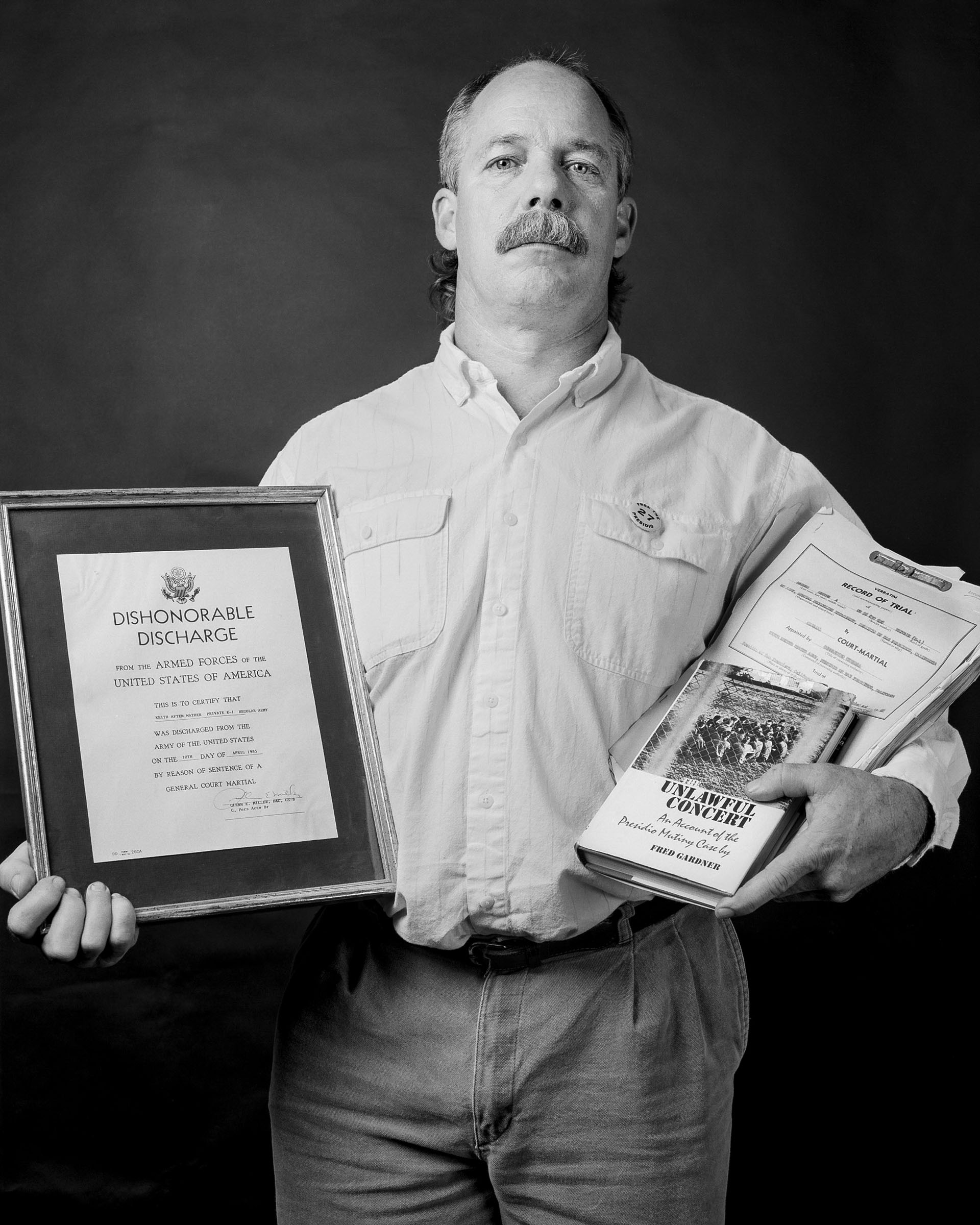
- Keith Mather: Drafted Army 1967-85. AWOL, participant in the Nine for Peace and Presidio 27 Mutiny. Escaped Presidio stockade and deserted to Canada. Secretly returned to the US in 1980, arrested in 1984. Imprisoned and court-martialed after serving 4 ½ months. He works for the San Francisco Department of Building Inspection and remains involved in anti-war work
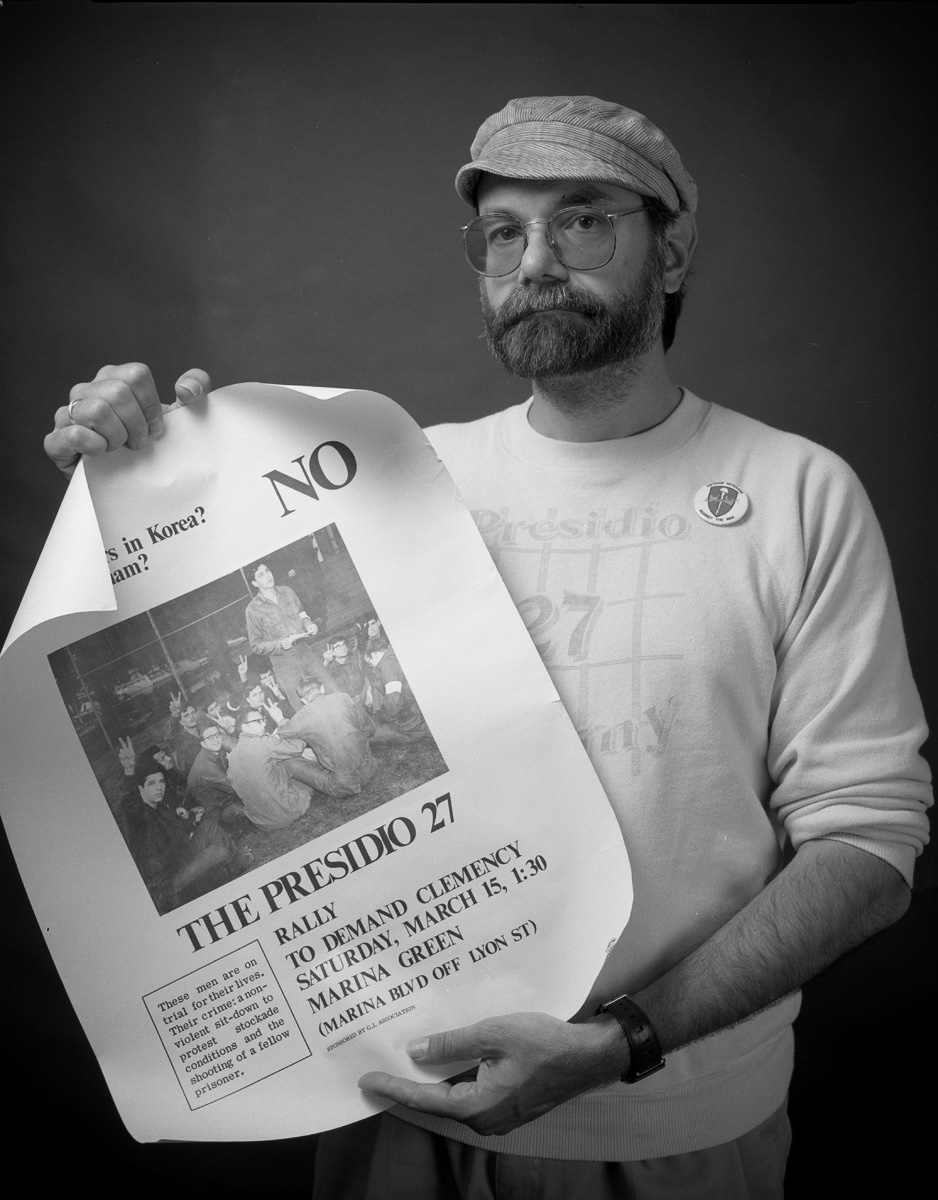
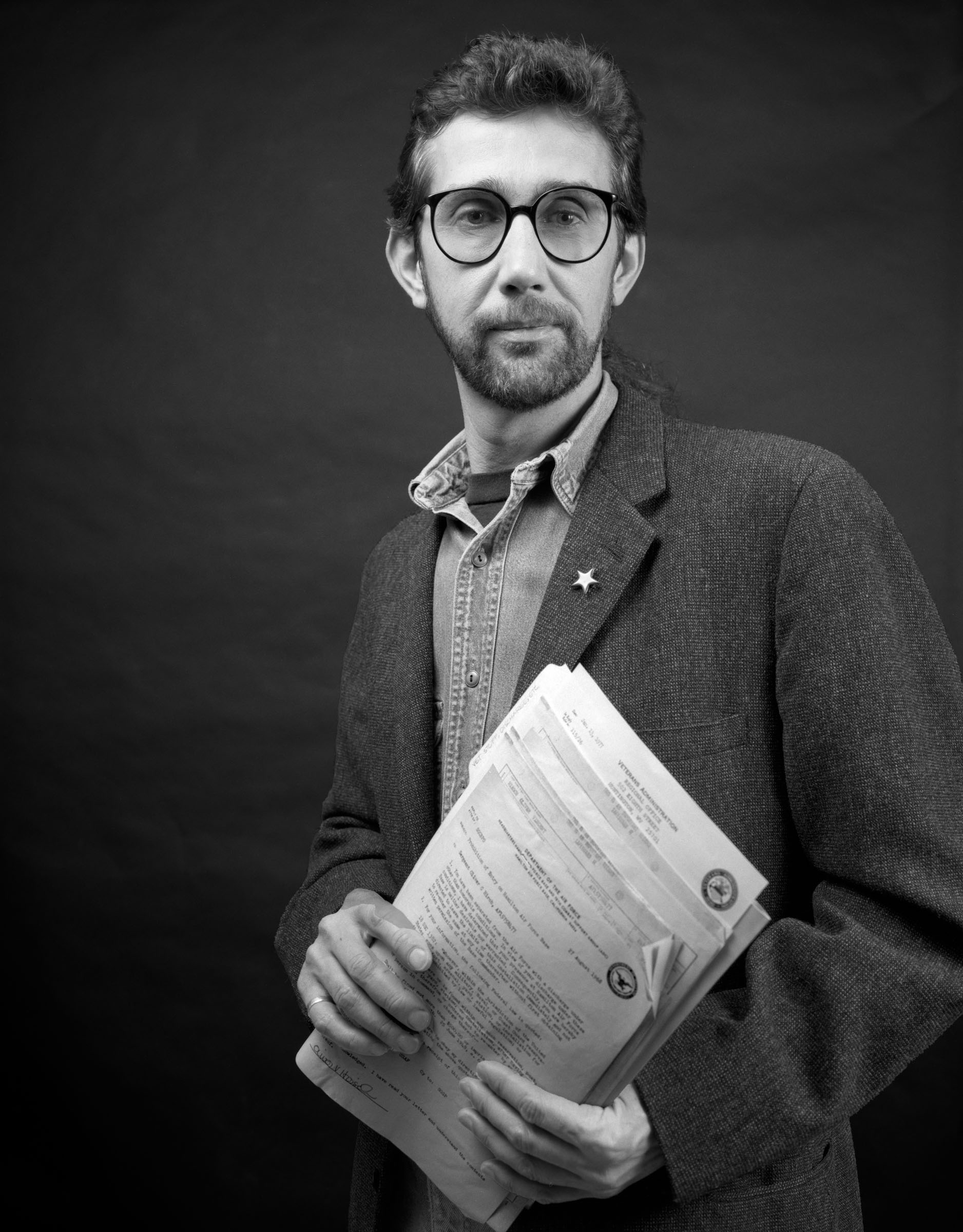
- Oliver Hirsch: Enlisted Air Force 1966-68. AWOL, member of the Nine for Peace. He was forced to waive any veteran’s benefits, was banned from five military installations and discharged with a “general under other than honorable conditions.” He established a SF organization to help soldiers resist deployment: GI Help. He also worked and politically organized in PNW lumber mills and WV coal mines. Later, he moved to NYC, where he became exhibitions director for Raices Latin Music Museum, a professor in exhibition design at NYU, and founder/owner of Hirsch Fine Arts Services. Deceased.
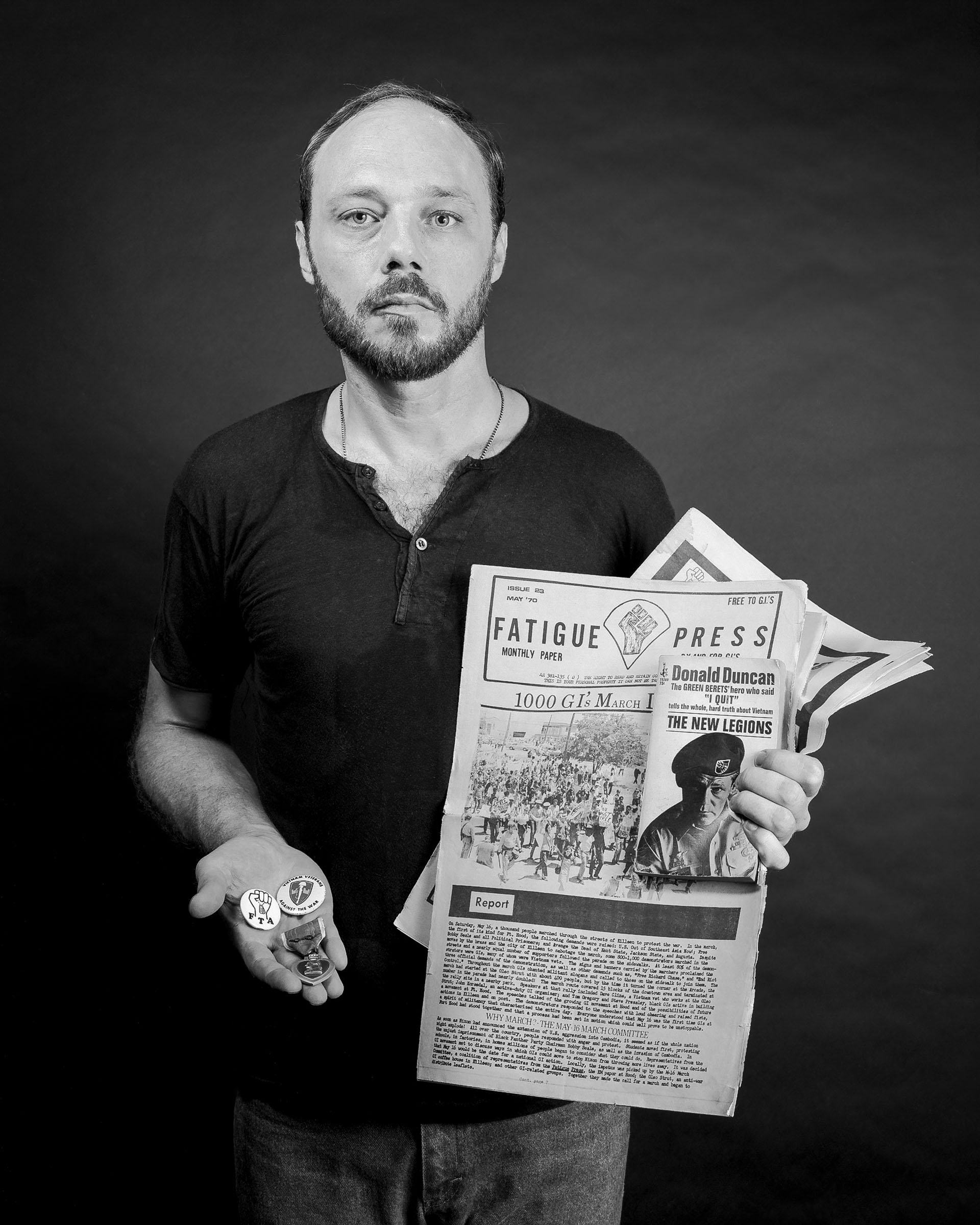
- Dave Cline: Drafted Army 1967-69. Served as a combat infantryman in Vietnam where he was wounded twice, receiving two Purple Hearts and a Bronze Star. Became active in the GI anti-war movement, helping publish Fatigue Press. Deceased.
- Hakim Abdul-Karim Gullahbemi: Member of “the Fort Hood 43,” the soldiers who staged a sit-in to resist being deployed to the ‘68 Chicago DNC for riot control. He appears in the documentary Sir! No Sir!. Gullahbemi was raised outside of the Charleston Area. He is the Minister of Adornment for the Gullah/Geechee Nation, designing its flag and other symbols.
Background and extra material:
- The Truth About My Trip to Hanoi, by Jane Fonda
- War Resisters League
- Radar school in Biloxi, Mississippi.
- The Black Power Movement
- The 1968 San Francisco Atmosphere of Activism
- Howard Presbyterian church in San Francisco.
- Nine for Peace
- Nine For Peace – Introduction
- Pamphlet about the Nine for Peace
Treasure Island Naval Station in the San Francisco Bay
Treasure Island Naval Station (in the San Francisco Bay) – Wikipedia
- Reveille
- In the military, “Reveille” is a bugle call sounded at sunrise to signal the beginning of the duty day. It’s accompanied by the raising of the flag and signifies the start of formations and activities.
- Fort Hood 43
- Sir No Sir
- Ludlow Massacre
Songs:
- “I Feel Like I’m Fixin’ to Die Rag” by Country Joe and the Fish — 1967
- Wilbert Harrison — “Drafted” — 1961
- We Shall Overcome, performed by Evangeline Barrosse, Gina Buck, Polina Cherezova, Jacob Jeffries, Jeremy Lindenfeld and Jack Stratton.
- Oliver (O.V.) Hirsch — “Bloody Ludlow” — 1977
- To read an article written for the song’s release, see page 4 of the December 1977 issue of Revolution Magazine.
- When he wrote and performed this song, Hirsch was a coal miner and member of the United Mine Workers of America (UMWA).
- The record is a fundraiser for the Miners’ Right to Strike Committee.
Listen to A Matter of Conscience:
Apple Podcasts
Spotify
Follow A Matter of Conscience:
Website: https://amatterofconscience.com/
Instagram
Tiktok:
Credits:
Producers and Hosts: Willa Seidenberg, Bill Short and Polina Cherezova
Associate Producer: Dylan Purvis
Sound Designer: Polina Cherezova
Music Arrangements: Danny Seidenberg
Fiscal Sponsor: The International Documentary Association
Other credits: Sir, No Sir!, NBC, KOVR-TV (Sacramento History Center), CBS, ABC
Special thanks to the Kazan McClain Partners Foundation

Transcript for Episode 6
William Short 00:08
Hello and welcome to A Matter of Conscience: GI Resistance During the Vietnam War. I’m Bill Short.
Willa Seidenberg 00:16
And I’m Willa Seidenberg. In this episode of A Matter of Conscience, you’ll hear how churches and chains made an anti-war splash in 1968
Music: Fixin’ to Die Rag 00:49
Willa Seidenberg 00:50
A warning: this episode contains profanity and descriptions of drug use.
Willa Seidenberg 01:08
In 1966, the war in Vietnam was coming home to young men and working-class families. On June 30, 1966, three draftees stationed at Fort Hood in Texas publicly refused their orders to fight in Vietnam. It was the earliest collective action against the war.
Willa Seidenberg 01:37
Dennis Mora was a Puerto Rican from Spanish Harlem. James Johnson, a Black soldier from the Bronx in New York. And David Samas, a white GI of Lithuanian and Italian heritage, who was from California and Chicago. They became known as the Fort Hood Three.
Willa Seidenberg 01:56
On the day they announced their refusals to go to Vietnam, Mora, Johnson, and Samas sued the federal government, arguing that the war was illegal and immoral. The Army charged them with refusing a direct order. The Fort Hood Three served 28 months of a three-year sentence at Fort Leavenworth prison, and their widely publicized protest inspired more soldiers to take action.
William Short 02:43
1968 was a momentous year in the United States and around the world.
News Report 02:48
Good evening. Dr. Martin Luther King, the apostle of nonviolence in the Civil Rights movement, has been shot to death in Memphis, Tennessee
News Report 02:58
Oh my God, Senator Kennedy has been shot.
News Report 03:07
Mr. Chairman, most delegates to this convention do not know that thousands of young people are being beaten in the streets of Chicago.
News Report 03:16
At almost midday, Eastern Time, NBC News projected Richard Nixon, the 37th president of the United States, when it became evident he had carried Illinois.
Willa Seidenberg 03:25
And in the war being waged halfway across the world in Vietnam, 1968 was a turning point.
News Report 03:32
Midnight their time, a band of Viet Cong raiders blew up a power installation and attacked two police stations in Saigon. Other small bands still roam the city.
News Report 03:41
In Saigon, they attacked Tan Son Nhut Air Base, the presidential palace, General Westmoreland’s headquarters and the American Embassy.
Willa Seidenberg 03:48
The Tet Offensive was unleashed on January 30, 1968. North Vietnamese and Viet Cong forces carried out a surprise attack throughout South Vietnam. The U.S. could claim a military victory at the end of the offensive, but the fierceness of the attack stunned the American public. They’d been led to believe the war was going well. Americans were seeing graphic images in the media of the fighting in Vietnam, and the feeling that the war was unwinnable gave a shot in the arm to the anti-war movement, especially among GIs.
Keith Mather 04:25
I felt very powerful, more powerful than I ever felt, ever doing anything. It was like the one time in my life people were listening to me. People were paying attention to me and not to get tripped up in that, but I was doing something I knew was right.
William Short 04:47
That’s Keith Mather, an Army veteran who was involved in two important actions in 1968: the Nine for Peace and the Presidio Mutiny. We interviewed Keith in 1990. At the time he was living in the idyllic California coastal town of Pacifica. Keith grew up mostly in the suburb of San Bruno in the San Francisco Bay Area. He was a typical teenager who just wanted to have a good time.
Keith Mather 05:18
Girls, cars, music, going to dances. I mean, that was what was happening.
William Short 05:24
Keith was older than most of his classmates. He’d lost a year being sick and flunked eighth grade.
Keith Mather 05:29
Because I was a punk, because I called the bus driver names and flipped off the science teacher the same day, and it was like too much.
William Short 05:37
By the time he finished high school, Keith was 20 years old, he hadn’t really thought much about Vietnam. His grades weren’t up to snuff, so he knew college was not in the cards for him. No college, no draft deferment.
Dave Cline 05:51
Goodbye, my darling, I have been drafted.
William Short 06:00
He got his draft notice and was sent to Fort Lewis in Washington State for basic training. It was 1967 and the war was heating up. Yet Keith and his fellow recruits didn’t think they would be sent to Vietnam.
Keith Mather 06:15
I think a lot of the guys thought they were going to get out before they got there. I’m going to Germany. I’ve got my school. I’m an engineer. I’m not going to go Vietnam. And when they handed out the MOSs, all these guys that we’re talking about, they weren’t going were the same MOS as I was. They were 11-B-10,
Willa Seidenberg 06:34
MOS means Military Occupational Specialist. It’s a way of categorizing the jobs that recruits are given after they complete basic training. The military assigns the MOS based on things like aptitude scores and what jobs the military needs most at that given point. During Vietnam, the military needed more and more infantry soldiers to fight. Keith was assigned 11-B-10 or small weapons infantry.
Keith Mather 07:06
I decided then that if I was going to be in the infantry, I was going to be very good as an infantryman. I was going to survive, be the best possible soldier I could possibly be and learn how to survive.
Willa Seidenberg 07:19
Keith’s survival strategy changed when he met some soldiers who had just returned from Vietnam. One of them really impressed him. He was tall, wearing really cool boots, and he gave off the feeling he was tough as nails.
Keith Mather 07:34
I said something about Vietnam. He said, kind of like offhandedly, under his breath, you didn’t want to go there. Just real cool, like that, plain and simple, you don’t want to go there.
Willa Seidenberg 07:44
And then there was another sign. His uncle was a career soldier. He’d served in a prestigious airborne unit during World War Two, Korea and Vietnam. He warned Keith not to go.
Keith Mather 07:57
He said, It’s not the same. It’s not like Korea. It’s not like the Second World War. It’s nothing like that. Better up going to jail, he said, it’s safer, too. He saw it. He recognized it. I think a lot of the lifers did.
William Short 08:10
In previous wars, there had been a defined objective, but the goal in Vietnam was murky and was often hard to tell who was the enemy. Despite the troubling signs about the war in Vietnam, Keith reported to Fort Lewis for Advanced Individual Training. He was sent to a company bound for Germany. But two weeks into his training, he came down with pneumonia. Keith went back to California to recuperate, and while he was recovering, he started taking psychedelic drugs and smoking marijuana. When it was time to return to Fort Lewis, he’d gone through a big transformation.
Keith Mather 08:52
I had an earring, I had a knitted tie. I had these black socks with a little crest on the heel, you know, and my brass was all gone. I gave it away at a party. I had joints in every pocket. I was just like, like, didn’t really care anymore.
William Short 09:10
The military gave him an Article 15 for possession of marijuana. An Article 15 is kind of like a misdemeanor charge in civilian courts. By the time he got back, everyone from his unit was gone, and so was any support system he had. And, he caught pneumonia again.
Keith Mather 09:28
Because I was made to stand in line outside the captain’s office to see him. I waited for like an hour in the rain. That’s all it took in that cold weather, and within a couple days, I had a hunt temperature 104.
William Short 09:41
While Keith was recovering in the base hospital, he took a wrong turn.
Keith Mather 09:45
And, I went into a ward that contains some amputee and burn victims. These young men, guys with no faces, guys with no chins, no arms, no legs. Guys crying, guys, just like out cold, blood-soaked sheets.
Willa Seidenberg 10:08
Seeing those injured young men scared Keith. And when other soldiers in his unit were getting their duty orders…
Keith Mather 10:16
They were reading Quang Tri, and all these names were coming up, and all these guys were wearing jungle boots. And it’s first jungle boots and M-16s I had seen. We had leather boots and M-14s up until that point. And the realization set in that these guys are going to Vietnam. You know, they’re not just going to go to Germany and suck up beer. They’re going to the war.
Willa Seidenberg 10:40
Keith figured Vietnam was probably in his future too.
Keith Mather 10:50
I just started realizing that I had better make some decisions that were going to affect my future or somebody else was going to.
Willa Seidenberg 10:58
Before the army could give him his duty assignment…
Keith Mather 11:01
I went on a sick call one day and put my civilian clothes on underneath my military clothes, went to a phone booth, called the cab, dropped my military clothes in the phone booth, stepped out of the phone booth with my civilian clothes, got into the cab, went to Seattle.
Willa Seidenberg 11:18
Keith was AWOL, Absent Without Leave, he took a bus back to San Bruno and went to stay at his cousin’s house. Keith was doing hard drugs. He’d migrated towards San Francisco and was feeling pretty fragile.
Keith Mather 11:35
Like a thin pane of glass, I was ready to shatter.
Willa Seidenberg 11:37
His parents were supportive, but they were worried about him. Keith had stopped going to church when he was 14, but his mother lived by Christian ethics.
Keith Mather 11:48
Do good to others, and you know, thou shalt not kill, and you know all those things you’re taught. It was always real important to my mother.
Willa Seidenberg 11:57
He couldn’t go home because the FBI was after him.
Keith Mather 12:01
My mother chased an FBI man out of the backyard with a hoe because he was in her backyard. And that’s not his backyard, that’s her backyard, and she didn’t really care what his reason was. He didn’t belong there. You know, I like that image. I really do.
William Short 12:20
His mother realized he needed help, and somehow she came up with a phone number for the War Resisters League, an organization that has been advocating against militarism and war since 1923.
Keith Mather 12:37
I met up with these people at the War Resisters League, and they introduced me to other veterans who were AWOL. A connection finally. All these people with short hair, were all AWOL. We’re all doing the same thing. It was fantastic.
William Short 12:53
One of the people he met was Oliver Hirsch.
Oliver Hirsch 12:56
I’m Oliver Hirsch. I was born October 13, 1946 in Versailles, France joined the Air Force. May 11, 1966 to avoid the draft.
William Short 13:11
Oliver joined the Air Force when he was thrown out of college for drunkenness and refusing to go to mandatory chapel services.
Oliver Hirsch 13:19
The Air Force was sort of like camp in a lot of ways, and I was more concerned about where I was going to get stationed and what I was going to end up doing. And as it turned out, I went to radar school in Biloxi, Mississippi.
William Short 13:35
After radar school, the Air Force stationed Oliver at a radar site in Montana.
Oliver Hirsch 13:40
And that’s where I came of age, was in Montana,
William Short 13:45
And it was the start of his political education.
Oliver Hirsch 13:47
We started getting dope, and we started getting political materials from the coast, and discussion raged. There’s been very few times in my life where life was so charged because minds were being changed and lives were being changed drastically by these arguments, these real political struggles going on.
William Short 14:12
Oliver and his friends didn’t know about the GI anti-war movement, but they were influenced by other movements of the time.
Oliver Hirsch 14:20
I literally credit the Black Power movement and the kids on campus. When I say saving my life, I don’t mean literally. I mean putting me in a position where I didn’t just become another goddamn American. Because had it not been for that, I wouldn’t have woken up.
Willa Seidenberg 14:38
Oliver put in for duty at a little radar site on Mount Umunhum near San Jose, California.
Oliver Hirsch 14:46
The closest I could get to San Francisco, and San Francisco is where I wanted to be.
Willa Seidenberg 15:06
By now, Oliver wanted out of the military, so one Friday night, he went to the officers’ club. He asked to see the commanding officer who’d been heavily drinking,
Oliver Hirsch 15:17
And I told the Major that the level of violence that I was being subjected to, and that the whole military represented got me the point where I could commit an act of violence to anybody without compunction. Those were my words. I rehearsed them for hours.
Willa Seidenberg 15:36
The major’s response was to send him off to Letterman General Army Hospital at the Presidio Army Base in San Francisco.
Oliver Hirsch 15:46
And when the door, which was about four inches thick, slam shut behind me, I figured, well, I don’t know if I’m out of the military, but I’m not going back there. I’ve done something here that has changed my future.
Willa Seidenberg 16:18
Oliver was in the psych ward, and it was there he got to meet GIs who’d been in Vietnam.
Oliver Hirsch 16:25
It was the first time that I really talked to anti-war GIs who were veterans of Vietnam. It confirmed everything I’d suspected and sort of solidified everything I wanted to do and everything I decided to do.
Willa Seidenberg 16:42
The day before Oliver was supposed to be sent back to active duty, he enlisted a friend to help him escape. Then he somehow convinced the guard to buzz him out of the ward.
Oliver Hirsch 16:54
I went outside, ran around the side of the building. The guy threw me my shoes, and I was off the base in my blue pajamas, which didn’t really make a big stir in San Francisco. Oh, a freak with short hair,
William Short 17:09
Oliver made contact with the War Resisters League, which sent him to a hippie commune, of all places, to figure out what he wanted to do.
Oliver Hirsch 17:17
Friend came and told me that there were a bunch of GIs who were in a church. Eight GIs who decided that they were going to take sanctuary in church, and they were going to try and make as big a stink as they could.
Keith Mather 17:31
And out of that idea came chains, connecting the arms of us to each other.
William Short 17:38
Here’s Keith Mather again.
Keith Mather 17:40
And then they said, Well, maybe we should put priests and ministers to each of these individuals representing the bonds between men as brothers, and also between the clergy and these AWOL servicemen, to be able to give them credibility, to be able to give them the support of the church, which is very powerful.
Oliver Hirsch 18:06
There were no illusions that we were going to jail. We didn’t know for how long, but I think there was a real spirit of, you know, whatever it took, and certainly buoyed by the breadth of the protests that we were involved in and everything that was going on.
William Short 18:29
On Monday afternoon, July 15, 1968, eight AWOL GIs started their protest at the Howard Presbyterian Church in San Francisco. Here’s Keith Mather reading from a pamphlet about the Nine for Peace.
Keith Mather 18:46
Eight young men publicly announced their resignations from the armed forces of the United States. Soon after beginning a 48-hour service of liberation and communion, the eight were joined by a ninth, Oliver Hirsch, and they soon became known as the Nine for Peace. Jack Robinson from the Marine Corps, Oliver Hirsch from the Air Force, Dale Herrin and Paul Howard from the Navy, and Chuck Jones, George Dounis, Keith Mather, James Seymour, and Steve (Sunny) Anderson from the Army.
News Report 19:12
These are soldiers, sailors, marines, and airmen, most of them Absent Without Leave from their bases. They’ve chained themselves symbolically to a group of Bay Area ministers to symbolize their resignation from the service and their resistance to the Vietnam War.
William Short 19:30
The next day, there was a bomb threat, and the group moved to St. Andrews United Presbyterian Church in Marin City. And then came the police.
William Short 19:40
The protesting soldiers were handcuffed and taken to Treasure Island Naval Station in the San Francisco Bay.
Oliver Hirsch 19:40
They gathered at the off-ramp off the Highway 101, you could see that they sort of had all come from San Francisco. Still have a picture in my mind of a photograph taken of these assholes in their uniform, very strait-laced with their bolt cutters. So they came in as people were singing hymns or repeating litanies of some sort or saying prayers and cut these chains and handcuffed us.
Oliver Hirsch 19:41
I had this vision of us all standing there with our hands up against a fence and our pants pulled down around our ankles for various amounts of physical abuse. And you know, just to let us know that while we might have enjoyed ourselves for the previous few days, our ass belonged to them at that point.
William Short 21:01
From there, the Nine were split off into prisons for their branches of service. Oliver was taken to Hamilton Air Force Base in Novato, California.
Willa Seidenberg 21:09
Meanwhile, as the Nine for Peace were awaiting their fates, a group of soldiers at Fort Hood in Texas were staging their own civil disobedience.
News Report 21:34
Forty-three soldiers, according to the army, refused to report for revelry one day in protest against duty in Chicago during the Democratic National Convention.
Keith Mather 21:44
The Democratic Convention was scheduled for that summer ’68.
News Report 21:48
Wonderful town of political conventions and anti-war demonstrations,
Keith Mather 21:53
And anti-war demonstrations, so they began having training for riot control.
Willa Seidenberg 21:57
That’s Dave Cline. He was stationed at Fort Hood after fighting in Vietnam where he was awarded two Purple Hearts and a Bronze Star.
Keith Mather 22:06
A lot of guys had just come back from ‘Nam, and they said, Why? We fought the Vietnamese; now they want you to fight the Americans. A lot of people identified with the demonstrators. We put together a meeting on the base. We met on a big ball field right in the middle of the base, and there must have been about 70 or 80 GIs there — Black guys, white guys, there was a lot of people.
Willa Seidenberg 22:30
The previous spring, soldiers had been sent to cities around the country when riots broke out following the assassination of Martin Luther King, many Black soldiers objected to being used against people in their own communities. The soldiers at Fort Hood came up with a plan to make stickers with a black fist and a peace symbol. They planned to put the stickers on their helmets as a sign of solidarity with the protesters. But after that big meeting on the ball field, many GIs were taken off the duty roster for riot control.
Willa Seidenberg 22:56
They told me I was taken off because I was a subversive.
Willa Seidenberg 23:13
The night before soldiers were to leave for Chicago, a group of Black GIs staged a sit-in. One of them was Halim Gullahbemi. Here he is in a clip from the documentary, Sir, No Sir!
Halim Gullahbemi 23:28
How can I go and commit genocide on my people, shoot my people. There were hundreds of Black GIs out in this parade field. Brothers came up and really started pouring it on in about, you know, discrimination and unfair treatment, not getting the rank needed, about what was happening with the war.
Halim Gullahbemi 23:48
All of a sudden, crack upside the head, you know, MPs all around us, man, they came at us with bayonets. I got cut, you know, I got hit right here with a bayonet. And then every now and then they’d open this formation up and group of MPs come in and grab a brother and take him back in the back and beat the shit out of him. You could hear him screaming in the back, you know.
Willa Seidenberg 23:48
A two-star general came to talk to the group. He told them he’d speak to his higher up and come back to them in the morning. The group slept there all night.
News Report 24:27
Six engineers will be the first of 43 soldiers to be tried at Fort Hood, Texas on charges of refusing to obey an officer.
Willa Seidenberg 24:36
Most of the Fort Hood 43 were court-martialed and given stockade sentences of three to six months. The case of the Fort Hood 43 may resonate today with National Guard and Marine troops who are being deployed to cities in the wake of immigration protests. Some soldiers have said they feel they’re being used as political pawns, especially service members from immigrant communities.
Music: This Little Light of Mine sung at May Day Rally 25:29
William Short 25:29
Now back to the Nine for Peace. Sometime toward the end of August 1968 Oliver and other inmates were supposed to be doing push-ups in the day area. When a sergeant came over and kicked Oliver in the chest.
Oliver Hirsch 25:46
I remember a lot of stripes and a lot of braid and shit. And he said, You’re Hirsch? And I said, Yeah. And he said, Come on, we gotta get you out of here. And my heart just sank. I thought, well, this is it. I said, What do you mean? I’m not going anywhere. He said, We got to get you out of here by six o’clock tonight. I said, I want to talk to my lawyer. He said, You don’t understand, we’ve got to get you out of the Air Force and off this base by six o’clock tonight.
William Short 26:17
Oliver was ordered to round up his belongings, and he had to sign a bunch of papers.
Oliver Hirsch 26:23
What I was signing was saying that I had no claim my GI life insurance.
William Short 26:28
Oliver received a bad conduct discharge, so he lost all of his veterans’ benefits. After his discharge, Oliver helped establish an organization in San Francisco to help soldiers resist deployment to Vietnam. It was called GI Help. As part of his political organizing, he worked in lumber mills and coal mines
Music: Bloody Ludlow 26:53
William Short 27:01
He wrote and performed a song called Bloody Ludlow. It’s about the 1914 Ludlow massacre, when Colorado National Guard and private security guards killed 21 striking coal miners.
Music: Bloody Ludlow 27:14
William Short 27:36
Oliver Hirsch later moved to New York City, where he founded Hirsch and Associates Fine Art Services. Sadly, Oliver died in January of 2007.
Music: Bloody Ludlow 27:47
William Short 28:12
For Keith Mather, the road after Nine for Peace wasn’t so easy.
Keith Mather 28:17
There was concern, and the ministers would say, you know, Keith, are going to probably take you to jail. Yeah, I guess you’re right. We were young. Those are the same people that the military wants to go to war no matter what we did, whether we went to the war or we fought against the war, we became victims of the war.
William Short 28:40
We’ll find out what happened when he was sent to the Presidio Army Base in San Francisco. Next time on A Matter of Conscience.
William Short 29:07
This podcast was independently produced with crowdsourced funds. We thank the dozens of people who donated, and you can join them by going to our website amatterofconscience.com, you can also see a glossary of terms and show notes for this episode.
Willa Seidenberg 29:24
This episode was written, edited and produced by Willa Seidenberg, along with Bill Short and Polina Cherezova. Dylan Purvis is the Associate Producer. Many thanks to Country Joe McDonald for giving us permission to use his song as our theme music. Music arrangements are by Danny Seidenberg. The version of We Shall Overcome in this episode was performed by Eva Barrosse, Gina Buck, Polina Cherezova, Jacob, Jeffries, Jeremy Lindenfeld, and Jack Stratton. The KVOR TV footage of the Nine for Peace action is courtesy of the Center for Sacramento history. Sound design is by Polina Cherezova. We thank the Kazan McClain Partners Foundation for their generous support. Our fiscal sponsor is the International Documentary Association. Thanks also to Denise Abrams, Rachel Antell of Sub Basement Archival, Bill Belmont, Sam Short, Susan Schnall and Veterans for Peace and David Zeiger. And finally, we want to give our appreciation to all the veterans who shared their stories with us.