
A MATTER OF CONSCIENCE: GI RESISTANCE DURING THE VIETNAM WAR
Bonus Episode: First Person with Peter Hagerty
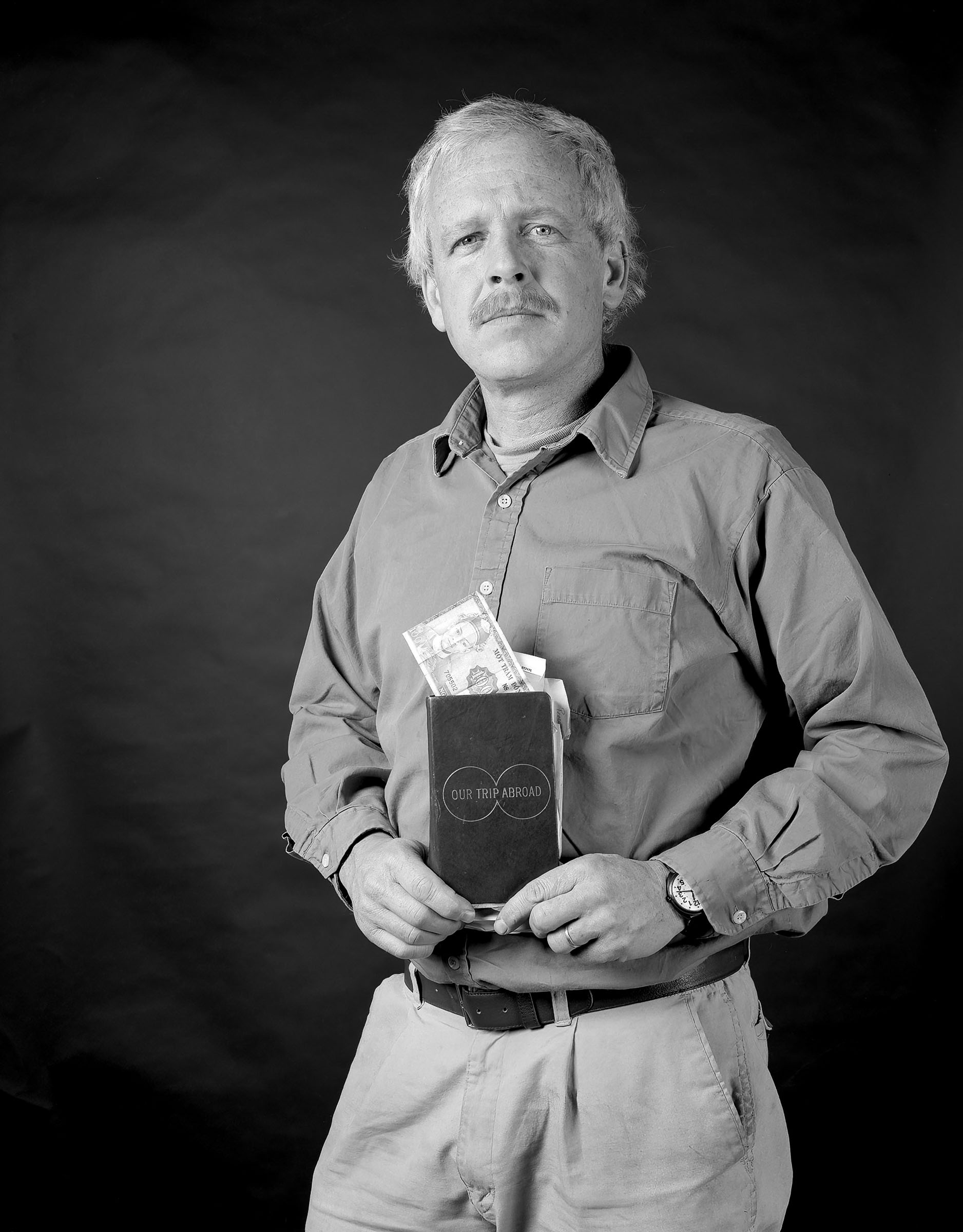
As part of A Matter of Conscience, we bring you bonus episodes featuring the first-person stories of the veterans we interviewed some 35 years ago. Peter Hagerty was interviewed in 1991. After entering the Navy in ‘68, he refused combat duty and later went to Vietnam as a legal aid worker to represent US servicemen, who were accused of crimes. Peter also tells the story of his first time meeting Viet Cong soldiers face to face, while he visited a monk on a remote island in the middle of the Mekong River.
Check out the show notes.
Guests/Subjects
Peter Hagerty: Harvard University ROTC, Navy 1968-69. Assigned to the USS Lloyd Thomas. Refused to signify forward gun mount as combat ready and refused to sail with the ship when ordered to the Gulf of Tonkin.
Background and extra material:
- Peter’s Website: https://www.petehagerty.com/
- Peter Hagerty Books:
- Prairie View A&M Insurrection
- Newsletter info about the incident for parents and guardians of students enrolled at Prairie View A&M: Guardian – April 1969 – Vol II No 3
- Texas A&M Newspaper article about the murder: The Battalion – April 1, 1969
- John Chafee – Wikipedia
- Lawyers Military Defense Committee – Wikipedia
- Peter set up this organization with lawyers Burke Marshall, Ramsey Clark, and some members of the Harvard Law School staff were on the board of directors.
- Their goal was to establish a law office in Saigon to give legal counsel to service men that were in Vietnam that were accused of committing a crime, and to give these men and women a real high quality legal defense team where the merits of the case could be argued.
Songs:
The music used is free and has no copyright. From the YouTube Audio Library and the Free Music Archive.
Listen to A Matter of Conscience:
Follow A Matter of Conscience:
Website:https://amatterofconscience.com/
Credits:
Producers and Hosts: Dylan Purvis, Willa Seidenberg, Bill Short and Polina Cherezova
Sound Designer:Polina Cherezova
Interns: Lizzy Liautaud and Dylan Ralls
Fiscal Sponsor: The International Documentary Association
Special thanks to the Kazan McLain Partners Foundation

Dylan Purvis 00:05
Hello and welcome to A Matter of Conscience: GI Resistance During the Vietnam War. I’m Dylan Purvis. This is a bonus episode showcasing the story of Peter Hagerty, a legal aid worker who helped many GI resisters stationed in Vietnam during the war. He was interviewed for A Matter of Conscience in 1991. You’ll hear about Hagerty’s stint in the U.S. Navy and what he did to get out of the service before he was sent to Vietnam. He also has a surprising story about the time he met the so-called enemy. By the way, you’ll hear Peter talk about some of his men “going over the hill.” That’s a reference to soldiers who go AWOL or desert, and JAG refers to the Judge Advocate General, the legal branch of the military. We have a full glossary on our website@amatterofconscience.com
Peter Hagerty 00:55
My name is Peter Hagerty. I was in the United States Navy as an ensign. I entered the Navy my junior year in college at Harvard University in a ROTC unit.
Archival Sound 01:07
Welcome to the army, Lieutenants. Congratulations.
Peter Hagerty 01:09
Upon graduation in ’68, went on active duty and stayed on active duty until I was discharged in November of 1969. Well, about two days before I graduated from Harvard, I told the ROTC that I wasn’t going to take my commission. I just had a change of heart, and they gave me this visitor’s pass for the Kittery Naval Prison. And they said, why don’t you go up and walk around? Because if you don’t take this commission, that’s where you’re going to be spending some time. So I took the pass, and I went up, walked around. In fact, they were just setting up a little department up there at the Kittery brig for officers, because, of course, they couldn’t have officers and enlisted men in the same quarters.
Peter Hagerty 01:54
I decided to accept my commission because what the Navy said is, we’ll make a deal with you. If you don’t rock the boat, we’ll send you to a duty station where you will never see combat. Prairie View A&M in Prairie View Texas, an all-Black college in East Texas. We need somebody down there to help the Navy counteract a racial discrimination problem they have. And so, they went to what they thought was a low-key, quiet college town in East Texas and set up a ROTC unit there, in which I was an instructor for a while. It sounded like that was a good compromise, and they were going to adhere to it. And I could think of worse places to be than East Texas.
Peter Hagerty 02:40
I remember walking down through the campus, and here was about 20 midshipmen, all-Black midshipmen, and they were in their summer whites. They had summer white hats on, white clothes, white shirt, white shoes, white socks. The whole nine yards, everything in white, except for their faces. And above them was this helicopter. CBS with Walter Cronkite filming a series for the evening news. They didn’t know squat about anything military, and they were just gotten into these uniforms and supposed to stand at attention with a gun while somebody photographed them.
Peter Hagerty 03:03
From the time I arrived till the time I left, there was an insurrection on the campus. And a football captain that stood up at homecoming and made a denouncement against the ROTC unit and against the Vietnam War. He was Black. Everybody in the camp was Black. He stood up, he said, you know, why should we make this fight in Vietnam, you know? And a Vietnam vet that was in the audience jumped up with a knife and stabbed and killed him right on stage. The place went nuts, and they went out on the highway, which is the highway that joins Houston with Austin, and they stopped cars, turned them over, and burned them. That just place went crazy.
Peter Hagerty 03:33
And so the ROTC activities were cut back, to say the least, and I was re-stationed to a destroyer. And this destroyer was in the Boston area. Then it was in Newport, Rhode Island. And I think my attitude even till then was, I’m going to play this as long as I can. You know, if I don’t have to go to jail, that’s cool, and if I don’t have to fight, I’m just going to kind of make as many compromises as possible. So I was compromising all over the place, until my orders finally came to go to the Tonkin Gulf on this destroyer. And I was asked to sign a chit saying that we were combat-ready. And I was charging 215-inch guns in the forward, these old things that were made in 1943. It was a [Fleet Rehabilitation and Modernization program] two destroyer that’d been converted from a smaller destroyer that cut the guts out of the middle of it and lengthened it, and it was a very poor welding job. And this boat was in miserable shape, and it had hairline cracks on the barrel of the forward guns. And I was the deck officer, so when we lined up all our coordinates and we aimed the guns, I was supposed to be standing up there with binoculars and saying, Yep, that’s it. You got the target, not the target plane. And I saw hairline cracks on the barrel.
Peter Hagerty 04:45
The barrel is supposed to be able to withstand an explosion of a projectile. These cracks showed me that the barrel wasn’t strong enough. So I went to the captain. I said, Hey, captain, this boat it’s not battle-ready. And he said, I don’t give a goddamn what it is, you sign that chit. And I said, No, I’m not gonna sign it. He just said, Oh, you, you’re just a goddamn agitator, and you’re just asking for trouble. And I said, well, as long as you’re hearing this, you might as well hear that. I’m not going at all. And he said, Well, I’ll tell you what, he said, Because you’re my first lieutenant, I’m going to give you a two-hour start on getting a lawyer before I court-martial you.
Peter Hagerty 05:17
So I left his office, and I walked to this navy JAG office. I walked in, and I said, I need a lawyer. I’m about to commit a crime. They said, Well, why don’t you come in here and see Lieutenant notable? So I walked into Lieutenant Lowell Noteboom’s office. He was looking for something like me in his life. He was a tremendous attorney, very principled human being. He just said, We can win this thing. We’re gonna fight this thing to the end. And so for six months, we fought the Navy on this. And what they did is they passed it up the chain of command. Nobody would deal with it. First, I just refused to go to Vietnam for no reason at all, you know. I just wasn’t gonna go. So, they had to charge me with disobeying direct order. And instead of charging me with that, they gave me a temporary duty assignment to another ship. And everybody’s What’s this guy doing here, you know, and all I do is sit around every day. I wouldn’t have any work.
Peter Hagerty 06:02
So they just signed me to the chaplain, you know. And the chaplain sent me out to talk to guys who are having trouble. And that’s just where I wanted to be, you know. And then the Navy said, Jesus Christ, we don’t want this guy over here, you know, send him somewhere else. And frankly, I was really terrified, because the thing was going higher and higher up the chain of command. Finally, it got to the guy who was second in command to Chafee, who was then Secretary of Navy. And Lowell got word, this marine was going to force the issue, and then he was going to come down with everything — disobeying a direct order, tyranny. Things are going to really happen fast, within a couple of weeks, and he needed some special time to work with me to build our defense.
Peter Hagerty 06:40
Well, that weekend, John Chaffee came to Newport for Newport Family Days, and there must have been 8,000 people in this big auditorium. You know, we were all in uniform. He gave his little spiel, and he seemed like a pretty reasonable guy. And afterwards they said, does anybody have any questions? So I grabbed a mic, and I said, Yes, Mr. Secretary Chafee, it’s great to have you here. I just want to know, what are you going to do about it when a naval officer, for the first time, refuses combat duty? And he said, Geez, I don’t know. I mean, it hasn’t happened yet. I said, Yes, it has. It happened six months ago when I refused to go on the Lloyd Thomas, and nobody’s dealt with me. And, geez, you know, I don’t know a thing about it. I said, I know you don’t know a thing about it, that’s why I’m telling you. You know, everybody’s getting real nervous.
Peter Hagerty 07:20
Two days later, I was out just like that. I was replaced by a basketball player from University of South Carolina who was subsequently killed in the Tonkin Gulf when our forward gun mount on our destroyer was self exploded doing aerial support, and seven of the men in my division were killed as well. I had a meeting with my division the night the ship was going to leave, and I just informed everybody I wasn’t going on board. And I said, Look, I can’t tell you not to go too because if I did, I’d be breaking all kinds of crimes. I just want you guys to know why I’m not going to be there tomorrow when this ship pulls out and goes under the bridge. That forward gun mount’s unsafe. I’ve done everything I can to stop the ship from going, and it’s going to go. And I just wish you all the best. And my division and I had a terrible relationship. I was this college kid and, you know, from an Ivy League college, and these guys were tough as nails. These were [unintelligible] that just were the dregs of the Navy. But I do think that they did respect that last thing that I did for was just to tell them what I was going to do. What I found out later was that the day I left the USS Lloyd Thomas, nine of my guys went over the hill.
Peter Hagerty 08:37
I think, a lot of perhaps, guilt that I felt about my class background, and felt that the only reason I was released from active duty and the case wasn’t fought and the Navy didn’t take me to court and hang me by the toes was because I was an officer and gone to a prestigious university. I subsequently became very involved in GI rights, in men that were AWOL and women that were related to men that were AWOL. Upon release from the Navy, I began a counseling service in Cambridge called Legal Aid Service Project to give legal support and moral support to soldiers that were either AWOL or had gone to Canada and wanted to return. And although we were harassed a certain amount by legal authorities, we were able to give counsel to more than 100,000 individuals over a period of three years.
Peter Hagerty 09:25
I then set up an organization called the Lawyers Military Defense Committee. It was a group of of lawyers here in the United States, and their goal was to establish a law office in Saigon to give legal counsel to service men that were in Vietnam that were accused of committing a crime, and to give these men and women a real, high-quality legal defense team where the merits of the case could be argued, as well as some political arguments that could not be raised by the military counsel.
Peter Hagerty 10:01
We went to Vietnam in the summer of 1970. I accompanied our first attorney there, and my job was basically to go out in the bush and to notify the GIs that we were there. And I remember the first time I landed at Tan Son Nhut Air Force Base. We flew in on a commercial airliner from Hong Kong, and I got out of the plane. It was a beautiful afternoon, and I started walking towards the airport from the airplane, all of a sudden, I heard thunder. And I thought, gee, that’s strange, you know, that there should be thunder. There were no thunder clouds in the air. And then some people around me started jogging towards the airport, and it turned out that there we were getting some fire from not so far away being lobbed in towards the airfield, and people were running out. And that was the first time I’d ever experienced anything in the way of gunfire.
Peter Hagerty 10:47
I realized for the first time how deep I was in and how ill-equipped I was, because in all my training in the Navy, I had never learned how to defend myself. I had come to Vietnam with no military equipment. I had long hair and a ponytail. I was wearing GI fatigues, just because they happened to be the things I got a hold of in Hong Kong to wear, from another GI friend of mine, and I frankly, felt very much like a fish out of water. And the attorney that was with me, several years my senior, he was a one of the gentlemen that had defended the Chicago Eight in that trial with Abby Hoffman and that group. But he didn’t seem to be completely aware of what was going on around him, and so he and I would kind of wander through the streets of Saigon trying to figure out what to do next. And I really found that I was all by myself. I had this terrifying experience of not being the guest of the American government, not being the guest of the Vietnamese people, and the Viet Cong or the North Vietnamese Army certainly had learned that we were there, but we were certainly persona non grata in this country.
Peter Hagerty 11:52
Two profound things happened. We had a staff of attorneys there, sometimes three, sometimes four, attorneys, and two paralegals, and a secretary. The first, I would guess 20 cases that we did were primarily first-degree murder cases. And our defendants were primarily men of color, either Spanish, Latin, Hispanic or Black from the south or from the urban ghettos. And most of the cases were alleged fragging, or, you know, point men blowing away their officers at nighttime with a gun. I don’t remember any case that we lost. The first case, Tyrone Peterson, the Black kid from Alabama, came in, you know, and everybody had seen him do it, and we got him off on a not guilty. And that’s just the way it kept going. And what it did, it forced the military to do a better job of administrating their legal process. They just couldn’t Jack people around anymore. They had to put together a case that was airtight. And if they didn’t, they knew they were going to lose it, and that was a good thing for everybody. That helped everybody out.
Peter Hagerty 12:54
You know, I had grown up in the 50s in a small New England town and had hid under the desks when the Russian bombers flew over, supposedly, and listened to the air raid signs and went to the air raid shelters. So I had a profound image when I went to Vietnam, even though I was sympathetic more to the North Vietnamese’s cause than to the Americans’ cause. I always had a fear of communism, and I always had a sense of what communists looked like, and I had never met a communist before I went to Vietnam or a Marxist or a peasant, for that matter.
Peter Hagerty 13:26
Well, one night on one of my sojourns to the Mekong we were on this island in the middle of the Mekong River, and I was with a French camera crew. They needed an audio person to do the microphones. I knew a little bit about tapes and mics, so they asked me if I’d come along and hold the mic. And we were interviewing this monk on this banana-shaped island on the middle of the Mekong river called the Coconut Monk, the Đạo Dừa, who had a sect of Buddhism called Cao Dai Buddhism. There’s a sect of Christianity and Buddhism together. And in the movie Apocalypse Now, there’s this kind of bizarre bridge scene with all kinds of shell fight, firefight going on at night. Well, this was supposedly near where this monk was.
Peter Hagerty 14:06
He lived on this tubular steel pagoda that was built out at the end of this island that the French built him out of culvert pipes. And he had about 80 monks living on the island with him. And he was a very special human being, apparently, in terms of Buddhists in Vietnam. On the second day we were there, I had real trouble sleeping on the island because we had no sleeping accommodations. We were just supposed to sleep outside on the planking. And one night, about two o’clock in the morning, a motorboat pulled up next to the island, and some men got out to come ashore to visit the monk. Now, the rule of the island was you weren’t supposed to have any weapons on the island. And I was there at two o’clock in the morning, and I noticed these eight or 10 guys in pajamas coming up the path towards me, and I was still wearing my fatigues, because even though my hair was long, I somehow got a little extra mileage out of having these army fatigues on.
Peter Hagerty 14:52
They came up and they saw the army fatigues, and they didn’t flinch at all. They just walked right up and just sat next to me, and I spoke French. So I said, you know, Ça va? And they said, Ça va bien. And they said, Vous-êtes Américain?. And I said, Oui, je suis Américain.. Who are you? And they smile. They say, they say, VC, nous sommes Viet Cong, n’est pas?
Peter Hagerty 15:17
Peter Hagerty 15:17
– And they turned around, they all smiled. And then there was this moment of just horrific fear that went through me, you know. And the guy says in English to me, how the Yankees this year? And they wanted to know about a particular pitcher and what his how he was doing. It was great. It just broke the ice. And I told him I didn’t know that much about pitching. And they laughed, and then we talked a little bit about where I came from. And we sat there for two-and-a-half, three hours talking. These guys just crowding around me, fascinated about American life. We were all about the same age. I guess maybe they were a couple of years younger than I was. These guys were all in R&R, and they had come all the way from the northern part of Laos all the way down to the Mekong River, which was a trip of about seven or eight hundred kilometers that they took, risking, great risk to their own lives. And they did this on their holiday. And then they came in from, up the Mekong in these little boats at night to meet with this monk. And they were going to get about four or five minutes with this monk, and then they were gonna turn around, go all the way home again. That was how they were spending this R&R, to have this religious experience with this monk. So that was the first time I had met the quote, the enemy in Vietnam.
Dylan Purvis 16:32
In 1974 Peter Haggerty and his wife Marty Tracy, moved to Porter, Maine in the foothills of the White Mountains, as part of the back-to-the-land movement, and started raising a small flock of sheep. In the 1980s, they founded Peace Fleece, an international business that blended wool from two historic enemies — Russia and the United States, a way to foster peace through trade. In Peter’s words, “Peace Fleece was a way for me to move beyond the pain of the 1960s Vietnam and the Cold War.” Today, their company works alongside local indigenous tribes of the Navajo Nation. Peter has written a few books, and we have links to his free eBooks in the show notes on our website. And we’ll have some photos taken by Bill Short in the early 1990s of the Island of the Coconut Monk. That’s all for this bonus episode of A Matter of Conscience: GI Resistance During the Vietnam War. Thanks for listening.
Dylan Purvis 17:26
If you like what you hear on this podcast, please subscribe, review, and recommend the show to your friends. Word of mouth really helps. Please visit our website, at amatterofconscience.com where you can see the show notes for all of our episodes. This episode was produced by Dylan Purvis, with help from Willa Seidenberg and Bill Short. Polina Cherezova did the sound design. And our biggest thanks go to Peter Hagerty and the veterans who shared their stories with us.