BONUS: Interview with John Boyko
This is a bonus episode of A Matter of Conscience: GI Resistance During the Vietnam War, featuring more of our interview with Canadian historian and author John Boyko, who wrote The Devil’s Trick: How Canada Fought the Vietnam War. You heard him in Episode 10: Leaving America Behind – Deserters and the War. This interview explores Canada’s complex and often contradictory role in the Vietnam War, detailing the country’s significant economic involvement in manufacturing and selling weapons to the U.S. military, while simultaneously becoming a refuge for over 40,000 American draft evaders and military deserters.
Guests/Subjects
- John Boyko: Author of eight books on Canadian history, with a ninth book forthcoming. See bio.
- Claire Culhane: Peace activist and prison reform advocate. Died in 1996.
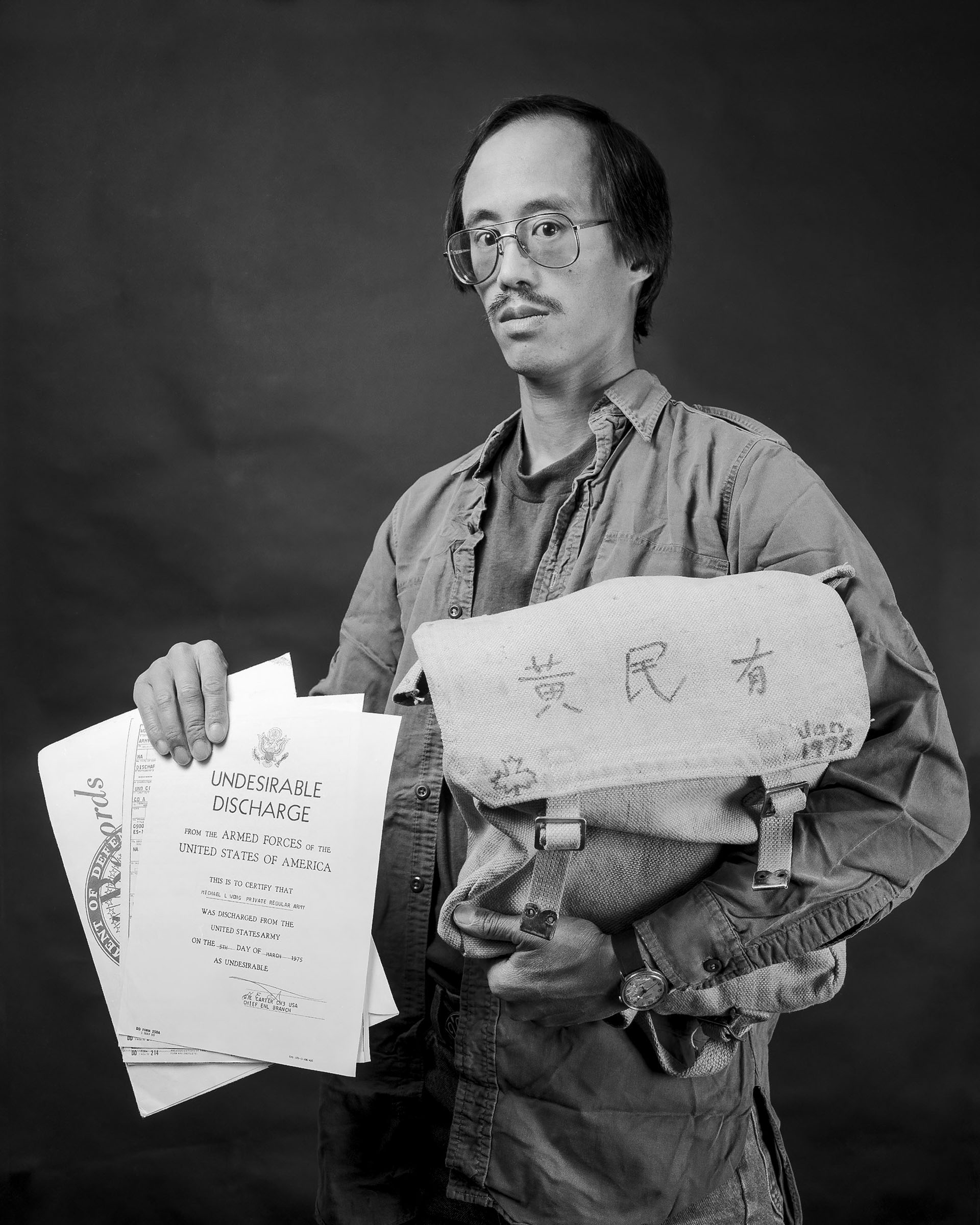
- Mike Wong: Drafted Army, 1969. Deserted to Canada. Returned to the U.S. in 1975. He is a retired social worker and a member of Veterans for Peace Board of Directors. Lives in the SF Bay Area.
Background and extra material
The Devil’s Trick: How Canada Fought the Vietnam War, by John Boyko. Knopf Canada, 2021.
Canadian Voice of Women for Peace
Manual For Draft Age Immigrants to Canada, by Mark Satin. Handbook for Americans who refused to serve as draftees in the Vietnam War and were considering immigrating to Canada. First published in 1968.
Canadian Prime Minister Lester B. Pearson.
Canadian Prime Minister Pierre Trudeau.
John Heintzelman, deserter from U.S. Air Force. His name was used by five York University students to test the Canadian immigration system for U.S. deserters in 1969.
Canada’s Immigration System, by the Council on Foreign Relations.
Listen to A Matter of Conscience:
Apple Podcasts
Follow A Matter of Conscience:
Website: https://amatterofconscience.com/
Credits:
Producers and Hosts: Willa Seidenberg and Bill Short
Associate Producer: Dylan Purvis
Music Arrangements: Danny Seidenberg
Fiscal Sponsor: The International Documentary Association
Special thanks to the Kazan McLain Partners Foundation



Bonus Episode: Interview with John Boyko
Willa Seidenberg 00:09
Hello and welcome to a bonus episode of A Matter of Conscience: GI Resistance During the Vietnam War. I’m Willa Seidenberg. In this bonus episode, we’re bringing you more of our interview with John Boyko, the author of The Devil’s Trick: How Canada Fought the Vietnam War. You heard from him in Episode 10 about deserters. Boyko tells us that some 20,000 Canadians volunteered to join Americans fighting in Vietnam even though their country was not fighting that war. And he identifies three major periods when Americans moved north to Canada. One was during the American Revolution, which he calls the first U.S. civil war. Next was the war between the Union and the Confederacy. And finally, during the Vietnam War. Bill Short and I interviewed John Boyko, and we wanted to bring more of it to you.
John Boyko 01:18
Hello. My name is John Boyko. I am a Canadian historian and author. I live in a village of Lakefield, which is, if you draw a line, between Toronto and Ottawa. I live out in the country, and I’ve written nine books focusing on Canadian history and politics. And my latest was called The Devil’s Trick: How Canada Fought the Vietnam War. I became interested in Canada’s role in the Vietnam War when I was doing research for the previous book, which was regarding President Kennedy and his relationships with Canada, which were not always good. And so, I spent a lot of time in the library in Boston, the Kennedy Library. I noticed that almost every time that President Kennedy was speaking with the Canadian Prime Minister, either Diefenbaker or Pearson, the Vietnam War came up. Now I knew a little bit about the Vietnam War and Canada’s role through draft dodgers and evaders and deserters, and other things, but that led me to want to learn more. And when I began to learn more, I learned that Canada was intricately involved in the Vietnam War from the beginning of the American involvement in the 1940s and ’50s right up until past the end of the Americans leaving in the 1970s. Over 40,000 Americans moved north and evading the war in one way or another and settled in Canada. Almost all remained in Canada.
John Boyko 02:44
And I learned that while they were moving north, about 20,000 Canadians were moving south to sign up and fight for the American forces, and about 170 Canadians are on that great slash of marble in Washington on the Vietnam Veterans Memorial. So, the Canadians were involved in that way. They were involved in an economic way, in that about $30 billion a year of arms were manufactured in Canada and sold to the Pentagon for use in Vietnam — everything from the Green Berets that were made in Winnipeg, the guidance systems, tanks, weaponry, Agent Orange was manufactured in Canada. So Canada’s involvement was intricate. It was controversial with Canadians at the time, and it remains controversial with Canadians now.
Willa Seidenberg 03:41
Could you talk a little bit about the Underground Railroad?
John Boyko 03:46
The United States and Canada, while we’re separate nations — and I don’t care what anybody says, we will never be the 51st state — but we have always had an interesting relationship. The American revolution, in that war, where about a third of the Americans were rebels, with Jefferson and Washington, and the rest, and a third were neutral, another third were loyalists and wanted to remain loyal to the King. During and after the war, about 46,000 Americans moved north and settled in Canada and created what is now New Brunswick. And really bumped the population in Nova Scotia and created what is now Ontario, essentially from these 46,000 that came. So that was the first big movement north.
The second big movement North was the Underground Railroad, which we all know was neither underground nor a railroad. And again, about 40,000 fugitive slaves left the southern states. And after the Fugitive Slave Law was passed, many of the northern states, as well, and settled in Canada. And many of them stayed, and many of them were part of the 40,000 Canadians that fought in the American Civil War, most for the Union. And many of the deserters from the Southern army that either deserted from the Southern army or escaped from Northern prisoner of war camps. And many northern deserters also came north and hid in Canada. There was a hill along the main New Brunswick border that was renamed the Skedaddle Ridge because so many of the deserters and draft dodgers were there. So, in the Vietnam War, it wasn’t anything new. It was one more chapter in that same book of people who were resisting a war in the United States and escaping to the freedom that they enjoyed in Canada.
Willa Seidenberg 05:46
You alluded to it earlier, but I’d like to talk about the Canadian public’s attitudes toward both the war and the draft evaders and deserters that were kind of flooding into Canada during the Vietnam War.
John Boyko 06:04
We all look back on the Vietnam War now and say, Oh, so many people were against it. There was protests on the streets, but we know that it was Eisenhower and then Kennedy, and then Johnson took over after the tragic assassination. But even when Johnson was putting so many troops directly into Vietnam, as opposed to the advisors and military and economic support that came before, there was still not a whole lot of people protesting against the war. And it was the same in Canada. There were a lot of people who were not protesting against the war because they thought it was their war. Americans are at it again. Let them do whatever they’re doing. Leave us alone. But at about the same time as the anti-war movement was picking up steam in the United States, it was picking up steam in Canada as well. The first cross Canada national organization that was beginning to protest against the war was called the Voice of Women, and it was a women’s organization that was for anti-nuclear weapons, anti-war in general, and anti-Vietnam War in particular. There was a woman named Claire Culhane, who was a nurse administrator in a hospital in Montreal, who signed up with external affairs in Canada and went to a Canadian-made, Canadian-staffed Hospital in South Vietnam. There were five Canadian hospitals in South Vietnam, and all paid for by the Canadian government, staffed by Canadian doctors and nurses. She was going to be there for a year, but she left not because of the horror of the war, but because of the hypocrisy of the war.
Willa Seidenberg 07:56
Here’s Claire Culhane speaking with the oral historian Studs Terkel.
Archival: Claire Culhane 08:01
When the time came, I actually probably made the most agonizing decision I’ve ever made in my life, and that was to leave. When I realized that my very presence in the hospital working was to give support to the American presence there, reached a point where I couldn’t even discharge my responsibilities, that medical supplies would arrive, and before I get in the jeep to go and get them, they would have, quote, disappeared. And nothing disappears in Vietnam, with a billion-dollar black market industry.
John Boyko 08:30
When she found out that many of the medical records that she was keeping were being given to the CIA and used for their Phoenix program to be taking out people in the villages who were suspected of being Viet Cong, or Viet Cong sympathizers.
Willa Seidenberg 08:45
The Phoenix program was run by the CIA from 1968 to 1972. It was launched to suppress activity by the National Liberation Front known as the Viet Cong. They were allied with the North Vietnamese government. The Phoenix program used assassination, torture, and brutal interrogation tactics, and it didn’t always distinguish between Viet Cong combatants and civilians who may have been neutral.
John Boyko 09:17
She found out about many of the weapons, Asian origin, napalm that were being dropped on the villages that were being treated in the hospital were made in Canada. And so she left after six months, came back, joined the Voice of Women, and began a protest movement across Canada, saying, How can we at the same time as we are saying we are such good people, where you’re building hospitals, be selling the weapons that are filling those hospitals. And so it was Claire Culhane and the Voice of Women, and then a number of universities, like in the United States, that began to stand against the war. And as more and more people in Canada became aware of the hypocrisy of the war, there were protests against the companies that were making napalm, that were making Agent Orange and were making this weaponry, as well as the Canadians, who were still signing up to go down and fight for the war. So, it had a different kind of twist than the American protests, but they were just as feverish at times, not as violent, but they were certainly as dedicated to the cause.
Archival: Claire Culhane 10:23
There are people to whom it’s become a whole new way of life, even as it is amongst young people to help each other. And there are families that you’ve only to call them in the middle of the night and say, well, you know, we’ve got a young boy here, and he’s got a wife and a baby. Can you put them up for a couple of nights till we find a place? And people are doing this. And I’m sure people who have never, ever thought of doing this sort of thing before.
Willa Seidenberg 10:55
And did opposition to the war in Canada divide generationally?
John Boyko 11:01
It divided generationally, and it divided ideologically, just like in the United States as well, because there were many people who had been grown up in Canada, like in the United States, to believe in all that the Cold War was about, and that is that the greatest threat to us, and what was the communist hordes that were going to come and get us, and many of the Canadians who fought and left Canada voluntarily went to the United States and signed up and went and fought as marines and airmen in the Vietnam War. One of the reasons they said was that we have been taught to hate communists, to fight communists, and the Canadians are not at war. We weren’t at war with anybody throughout the 1960s so we could join the Canadian Army, but we’re going to be stationed in some base in Germany or something as a NATO force. We could do that, but that’s not directly confronting and fighting communists. So, therefore, the only way we can go fight communists is go join up for the American army and go get the communists that we’ve been told to hate. In fact, the general who would be the equivalent to your Joint Chiefs of Staff, his son joined the American forces, fought in the Vietnam War as a Marine, and was killed in Vietnam. So, picture your Joint Chiefs of Staff’s son joining a foreign army and being killed in a foreign war. And when asked about it, our Joint Chiefs of Staff chief said, I am proud of my son. He went and he fought and died to fight the communists.
William Short 12:36
What was the attitude of the general population toward the American draft resisters and evaders, given the kind of complexity that you just laid out for the public there?
John Boyko 12:50
When the numbers started to increase in 1966, ’67 especially, when more and more of the draft dodgers and the deserters began to come north, there was a number of organizations that were created. And these were war resister organizations that would be in big cities like Toronto or Montreal or Vancouver, and they would be in little towns. War resisters that would come up here, would find them. They would advertise, and they would help them find work, find a job, find wherever they had to be, find housing, and just equate them to, it’s not the United States now. You can’t carry your gun and just the cultural things that were Canadian and not American. And so there was a number of those organizations all over Canada. Many were supported by or housed near universities. Many were supported by church groups. There was a group called the Canadian Council of Churches that was all different kind, Catholic and Protestant and Jewish, Muslim, that got together and they gathered money from all of their churches and supported a number of these organizations in cities, towns all across Canada. The biggest one in Canada was in Toronto, and it was called the Toronto Anti-Draft Program. It was set up by a couple of University of Toronto profs, and they had a number of lawyers that were working pro bono with the people had legal issues. They had a number of things that they help people with.
John Boyko 14:22
And there was a guy there, he wasn’t a draft dodger, he was just living in Canada. He wrote a small book called The Manual for Draft Age Immigrants to Canada and it was basic, here’s what Canada is, and it also listed all of these organizations with phone numbers, advice as to how to come across the border. He said, cut your hair, cut your beard, don’t drive a motorcycle. Be polite. And just how to get over the border, and advice as to how to find jobs and housing and all the rest. There were 65,000 copies that were sold, not just in Canada, because when people would arrive, they would be given one of these books, but they were sold all over the United States as well. And so in that way, you can see that there was a great desire to help these young people that were coming north. And a lot of Canadians remember it that way, us nice Canadians that stereotype. We were helping these young people get away from possible death and away from a war that they didn’t support.
John Boyko 15:31
But there was a number of people that were not so supportive of them. One group that was not supportive, ironically, were the people who are not in the pulpit, but in the pews. They did a number of surveys three years in a row, ’67, ’68 and ’69, and in each of these surveys that the various churches did through the Canadian Council of Churches, they found that the vast majority of the priests, the ministers, the rabbis at the front of the church were in support of the money and efforts, logistical support being given to the draft dodgers. The vast majority of the people attending churches were against it. Why are you spending our money to help them? So while it looks on the surface like there was great support., you dig a little deeper, and there was not. The generational divide, especially 1968, 9, 1970 was seen in the way that young people were acting, rebelling against authority, the way they were dressed, the way they wore their hair that was a act of absolute rebellion. They were listening to this crazy music, and they were maybe doing drugs and, God knows what else. And so therefore a lot of Canadian parents and a lot of Canadian politicians therefore glommed on to this. It’s those damn American young kids that are coming up and turning our kids into these dangerous hippies. If we could stop the Americans coming north, our young people would maybe remain respectful and listen to Frank Sinatra or whatever, they wouldn’t be going down this road. But it’s not the first time, and my God, with everything that you guys are going through right now. It’s not the last time that we’re going to blame any problems we’ve got on immigrants coming over the border.
William Short 17:27
Would you say it was about 50-50, in support and then in opposition.
John Boyko 17:33
It was different depending on what poll you look at in what year and in what region of the country, but the majority of Canadians, at one point, it was 68% were against the draft dodgers coming up. But as the war went on, we in Canada were getting not as much, but we were getting the same images on our television screens as the Americans were getting on theirs, and as more and more Canadians began to see the horrors of the war and the futility of the war, then those numbers of accepting those draft dodgers changed.
Willa Seidenberg 18:14
That leads me to wanting to ask you about the Canadian government and how its policies changed over the course of the war.
John Boyko 18:23
Well, actually, it didn’t change a whole lot before Pierre Trudeau. The Prime Minister was a guy named Lester Pearson. Lester Pearson won the Nobel Peace Prize for taking to the UN the solution to the Suez Crisis in 1957. So he was very much a man who believed that peace was not only something to which we should aspire, but it was possible if reasonable people got in a room and talked reasonably. But that said he supported the economic advantage that Canada was having the weaponry and everything else that was being sold to the Americans to be shipped. He spoke against the war only one time, blatantly. In 1965 he was offered a an award of some type in Temple University in Philadelphia. And so he went down and he made a speech, and in that speech, he praised President Johnson for fighting against communists, because we were a part of NORAD. We still are. We’re part of NATO. Still are. Part of the UN. Still are. So Canada was involved with these multinational organizations trying to further the cause of peace and prosperity in the world. But he said, I do not support Johnson’s bombing of civilians, the mining of harbors. The killing of innocent civilians is never a road to a peaceful solution to any conflict. By the time he left the stage, there was already a phone call waiting for him, and he was invited to lunch the next day at Camp David. At lunch, he sat there while President Johnson sat at the end of the table screaming, dropping F bombs into the phone at [Robert] McNamara, the Secretary of State. At the end of it, he pointed at Pearson and said, Come with me. They went out onto a patio outside. Johnson grabbed our prime minister by the lapels, pushed him against the wall, and said, I read your speech. Not only was that speech bullshit, but you said it in America. How dare you come, and he lifted him off the ground, come and piss on my parade, dropped him and left the room. I think we could say that was a low point in Canadian-American relations.
John Boyko 21:02
What did Pearson do after that? He didn’t do a whole lot. He was a peaceful man. He took it as he had just witnessed the full Johnson, if you’ve read anything about Lyndon Johnson, and when he returned, nothing changed. That is, we continued to accept draft dodgers north into Canada, people who were on our border patrol, those people were told that there is no law against draft dodgers coming forward if they have their draft card in their pocket. We’re not going to ask to see it. We’re not going to ask, Are you evading the draft? There was a point system that was developed in the late 1960s, like, Do you speak English or French? Have you got employment? Are you educated? Like the typical questions you would ask. If you made 50 points out of 100 you were in. None of those questions had anything to do with your thoughts on the war or draft dodgers or anything else. But the Border Patrol people were told, but use your discretion, even if they pass the 50 points. So most of the draft evaders were let in, but if they were a deserter, a number of these border patrol people asked that question, Are you a member of the American military? Yes, well, then wait a minute. That led to a whole bunch of other questions, and it became clear that deserters were being turned back. There was a number of York University students, York University’s in Toronto, and a number of the students got a real person. His name was John Heintzelman, and they made up fake ID and fake passport for John Heintzelman. Then they went to five border crossings, and they had way over the 50 points, and he got turned down all five times. Then they went back, and they were John Heintzelman, who was not a deserter. Exactly the same guy, but not a deserter. Five different border points, and he got let in all five times. So these York University students proved that while the Canadians did not have a law to keep deserters out by allowing the border agents to use their discretion, we were keeping deserters out.
Willa Seidenberg 23:24
A year later, in 1970, three deserters from California were turned over to immigration by a constable in the Royal Canadian Mounted Police. An immigration inspector named K. A. Smith took the three across the border and handed them over to military police. The judge assigned to investigate the incident concluded that the RCMP should have known that no one is, “subject to arrest in Canada for desertion from the U.S. Armed Forces.” A few months later, another deserter was recruited to try to catch K.A. Smith in the act of illegally denying entry. Mike Wong is one of the deserters we interviewed for A Matter of Conscience. He teamed up with a Canadian law student.
Mike Wong 24:15
Went down through the American side using false ID. And you had to have a cover story too, and you had to memorize this cover story. So, I went down through the American side again, came back up again, and got K.A. Smith, and he didn’t want to accept me. He wanted to reject me. And so the Canadian law student got into it, and an argument ensued, in which he brought another of his fellow officers, so that was two on two, and we argued for three hours. And man, I was so scared. We’re having this argument about my life, and I really didn’t know what was going to happen. And then finally he said, Okay, well, why don’t you step out of the office for a minute. I need to talk to my fellow officers. So we stepped out of office, and the Canadian law student made a phone call to the Committee to Aid American War Objectors, telling them what was going on and saying that if he was going to deport me, we were going to have to have help, which meant that they were going to have to drive down immediately with a whole bunch of people and have, like an impromptu demonstration. And then they called us back in the office, and they told me that they were going to give me landed immigrant status, and, man, I was shaking.
Willa Seidenberg 25:51
The Voice of Women, the Council of Churches, and many other organizations spoke out against the way border agents were denying entry to deserters.
John Boyko 26:01
And so a law was proposed that would take that discretion away and say you can’t ask those questions. You can’t ask if they’re deserters. You can’t ask, they have to be let in. But now Pierre Trudeau has been elected in 1968, and President Nixon was elected 1968 as well. In early 1969, Trudeau went down to Washington, and before he enacted the law, he wanted to say to Nixon, are you going to be okay with this? And so, Trudeau did not ask that bluntly, but he hinted at the number of draft dodgers that were coming north. And Nixon shrugged, let it go. Didn’t even want to talk about it. So Trudeau came back north and said, enact the law, and away it went. So therefore, beginning in 1969 all of these war resister organizations, all the towns, the city, started noticing way more deserters coming north. But it was interesting, a number of the church organizations from which they got a lot of their funds said, If you help deserters, we’re withdrawing our financial support. And so a number of the war resister organizations either did not help deserters or told them shut up about being a deserter. Do not tell anyone you’re a deserter. Just say you’re an American here ready to start a new life.
William Short 27:31
You think there were events in the war, like big events like the My Lai massacre. Do you think that changed people’s attitudes in Canada against the war?
John Boyko 27:42
Yeah, it’s the first televised war, and so therefore it’s the first time that the war was in people’s living rooms, night after night after night. And so it affected Canadians just as much as Americans. And so more and more Canadians, as more and more veterans were coming home, all these Canadians that were coming home with the same PTSD and the same emotional problems that the American veterans were coming with. And so there were them with their friends and their families. And so people began to talk about the horrors of the war, I mean what they saw was happening to their brothers or fathers or next-door neighbors, so that affected the anti-war movement as well. And the trick is in the United States, while the help that the American government gave to the veterans for the PTSD and other issues, the ghastly wounds and loss of limbs and other things, was solely inadequate. In Canada, it was absent. The government did nothing to help the thousands of Canadians that came back, either with physical or emotional wounds, because the Canadian government washed their hands of it, said, This is not Canada’s war. You were a mercenary fighting in a foreign war, so we owe you no support.
William Short 29:01
Was there a veteran anti-war movement in Canada? Were there any vets who came back that got involved?
John Boyko 29:06
They were absolutely involved, for all of the reasons that all of the veterans in the United States became involved as well, because nobody could talk about the war better than those veterans that came back. There was no national group, but there were groups around and there were some that became quite powerful, but not as it was in the States. But the anti-war movement in the United States was end the war. The anti-war movement in Canada was, end Canada’s involvement in the war. I mentioned Claire Culhane. She came back and she led a great protest movement across Canada, inspired many to get on the streets and to write letters and to do the rest. She had held a ten-day fast outside the parliament buildings in Ottawa. Many people from around the world took notice of what was going on, and a number of cabinet ministers from the Trudeau Government came out and spoke with her. One very powerful. Minister came out, and they began a discussion that turned into a debate that turned into a screaming match. And the cabinet minister pointed at her and said, Do you want to be the one that tells 130,000 Canadians that we are ending our building of weaponry for the Americans, that they are now out of work? And there it was. We had the principle that we were against the war, but we had the profit that we were making from the war.
William Short 30:30
Do you have a take on the kind of demographics of the draft resisters and deserters?
John Boyko 30:36
Most of the draft dodgers that came north were white, and most were university-educated. They were either already graduated or they were in university and leaving, and especially once the draft deferral ended, they had to come north too. And many of them were white, because in the 1960s,, the vast majority of university and college students were white men. The deserters, on the other hand, great number of them were Black, because a great number of the people that were drafted into the war were drafted on a class and race basis. So, when the great numbers of deserters began to come north, a great many of them were Black, where the many of the others had been white.
William Short 31:26
Were the people of color who came north, were they received differently than white deserters?
John Boyko 31:34
I found nothing of that, and I looked for it because I thought, well, maybe that’s what, maybe is the racial thing, which is why so many of the people were against the deserters, but I could find nothing about that. But race in Canada is different than in race in the United States.
Willa Seidenberg 31:51
Could you talk a little bit about how they fit into the towns and cities that they immigrated to like were they involved in the political life? Were they involved in the social life of the places where they had settled down?
William Short 32:10
Yeah, how well were they assimilated?
John Boyko 32:12
Yeah, they were assimilated quickly and easily. In all of Canadian immigration history, there’s never been a group that has been so well educated, and that has suddenly come forward in such great numbers, and that makes a difference. Most, if not all, spoke English. That helps. The Canadian culture and the United States culture is different, but it’s not so dissimilar that you can’t adjust quickly and easily enough. The education level made a difference, because they were able to get jobs more easily than someone who doesn’t have an educational background.
John Boyko 32:50
One of the things that really affected Canada, and there was a resistance against, is a number of the people who had their university college education interrupted applied for and entered Canadian universities. A number of people who had PhDs became university professors. There was a great movement in Canadian universities against the draft dodgers that came up and were entering the universities, because how dare these people come up and take spots for Canadian kids. And how dare these American profs come up and begin teaching, because all that they are going to do, it was said, is bring the American perspective to whatever they are teaching at a time when there was a great swelling of Canadian patriotism and nationalism. 1967 was Canada’s 100th birthday, and the 100th birthday celebrations were focused in Montreal. They’re the world exposition, Expo 67, in which thousands and thousands of people came from all around the world. And we became more proud of being Canadian and at the same time, all these Americans start showing up in our universities and American University profs. So that’s another thing that was happening at exactly the same time.
Willa Seidenberg 34:13
So, you mentioned Claire Culhane, but a lot of other women, and including women who came north with partners had a big influence on the anti-war movement in Canada, right?
John Boyko 34:26
Yeah. I mentioned the voice of women, yeah. And there was a lot of women who came north. Everybody knows Margaret Atwood, probably the most famous Canadian author. She was studying at university in the United States, and her husband, at the time, received his draft notice. Back home to Toronto, they came. So they’re are a couple of famous cases, but there’s many, many cases of others. When I was researching the book, I was speaking with a friend, and he said his parents were from the States, and when they began to have children, and these children were under 10 years old, but they knew that if this war continues and it looked like it was going to continue for a long time, these guys are going to get drafted. Up they came. And so there were lots and lots of families, Americans who came north who were not counted as draft dodgers, but it is estimated to be in the thousands of people who came because they had kids who were becoming ready to be drafted. So we got to get them the hell out of there.
John Boyko 35:31
I live in a village of Lakefield. There’s 3,000 people. There’s a guy who runs a local used bookstore here, and he’s originally from Australia. And he said the reason that he is in Canada is because when his older brother turned 17 and he was 15, his mom said, We got to get out of here, because Australia had the draft, and Australia was sending drafted young people to Vietnam. Now he’s not counted as a draft dodger, but he’s here as much as the same reasons why the draft dodgers were here. So when we say there were 40,000 draft dodgers, we got to double or triple that number that are in Canada right now because of the Vietnam War.
John Boyko 36:12
The book that I wrote The Devil’s Trick, it talks about this is a friend of mine that I’d known for years and years. We’d go for walks in the woods together. Really good guy. And we were out for a walk in the woods, and he asked me, So, what book you’re writing now? And I said, I’m writing a book about Canada and the Vietnam War. He said, Really, did you know I’m a draft dodger? No. And so what I do in the book is, is there where there are six elements of Canada’s involvement in the Vietnam War. So for each of those six, I have one person who sort of acts as a guide to lead us into that part of the story. Claire Culhane is one of them. And this guy’s name is Joe Erickson, and he told me a story that was interesting in that he wasn’t married to this woman at the time, girlfriend, but when he came up, he was riding this old, rickety car and went up at the border and crossed from Minnesota up, and they asked him all kinds of questions. Didn’t ask his girlfriend one single question, didn’t ask her anything, just a woman. And so I thought that was interesting. I wonder if that was just Joe’s experience, but it was not. Apparently, almost every woman that came with a man, young man, weren’t asked the question at all. So how many of those women are not counted as draft dodgers? But they’re here too.
Willa Seidenberg 37:35
So when the United States offered amnesty to draft dodgers, how did that affect the people who had been living in Canada?
John Boyko 37:44
I did read a number of news crews in like Niagara Falls and and Buffalo, Seattle, were sent up to the border, and they wanted to get interviews with the hordes of Americans that would suddenly be coming back. And were sorely disappointed, because there was hardly any that did. The vast majority, and I have heard numbers from 80 to 90 to 95 and it’s, it’s guesses — everybody’s just guessing — stayed and are still here. They remained, that Canada was just fine with them, and they wanted no part of the country that they had turned their back on.
William Short 38:23
What would you say is the legacy of this movement of American deserters and draft resisters into Canada?
John Boyko 38:32
Canadians have a different way of thinking about immigration than Americans do. In the United States, immigrants are called immigrants. Here, they’re called new Canadians. It’s not to say there’s not a whole lot of Canadians that are against refugees and against immigrants. Of course there are. But the vast majority of Canadians look with pride at the fact that we helped so many young Americans who didn’t want to fight in the war to come north. And many people look with _____, look with pride too, that when the war was over, there was a great number of people Vietnam, especially Vietnam, but Cambodia and Laos and Thailand especially, that when the Communists took over all of Vietnam, many people had to leave, and Canada welcomed thousands of what we call boat people, because they escaped on boats and had horrific experiences coming here. Canadian government set up a system in the post-Vietnam War to help those people escaping the communists. And the way they did it is they said that organizations of at least five people, could be a church group, could be a bunch of neighbors. You get together, you put together the money and logistical support for a refugee, and then we will match and support one more. We will support with money, we will do English As A Second Language programs and housing programs and all of that kind of stuff. But the matching of a group of five with one we will match it meant that thousands of refugees from Vietnam came to Canada. That system was used years later, when Syria was blowing up and Syrian refugees came. The Canadian government dusted that off and said, We’re going to use the same system that we use to help after the Vietnam War. It happened when Ukraine blew up. We are going to use the same system to help people. And there are many countries in the world, Norway, Sweden, all those countries and number of others that use the Canadian system that Canadians invented during the Vietnam War. So when you’re talking about the legacy, that’s another legacy of the Vietnam War that is linked to let’s help people get away from the results of this war, be them draft dodgers or the refugees suffering from the results of the war. So a lot of Canadians take pride in that.
William Short 41:05
Do you think, in hindsight, a lot of Canadians change their mind about the draft resisters and evaders? I know in the United States, you know, a lot of people in hindsight say, Oh, I was opposed to the war, when, in fact, at the time, they could care less, or they were in favor of the war.
John Boyko 41:22
There’s a great book that is winning awards, written by a Canadian journalist who’s now living in the United States. Someday, everyone will have always been against this, is the title of the book. [Actual name is One Day, Everyone Will Have Been Against This by Omar El Akkad.] Now it’s about Palestine. Someday, everyone will have always been against the Vietnam War. Well, they weren’t, but now it’s more fashionable to be against it. And Canadians, of course, I supported the draft dodgers coming of course, I supported the refugees coming from Vietnam. Well, of course you do now.
Willa Seidenberg 41:56
Well, thank you so much. This job has been fascinating.
Willa Seidenberg 42:07
Thank you for listening to this bonus episode of A Matter of Conscience: GI Resistance During the Vietnam War. If you like what you’ve heard, please give us a review and tell others about it, and please visit our website for more episodes and for show notes: amatterofconscience.com. This episode was produced by Willa Seidenberg, with help from Bill Short and Dylan Purvis. Music arrangements are by Danny Seidenberg.