

Bonus Episode: Alan Klein
As part of A Matter of Conscience, we bring you bonus episodes featuring the first-person stories of the veterans we interviewed some 35 years ago. We begin with Air Force veteran Alan Klein, who was sent to the brig for going AWOL (Absent Without Leave) in protest of the war. Alan’s story of foot-dragging within the military speaks to some of the more pervasive resistance that took place during the Vietnam War.
Note: this episode contains profanity.
Professor Klein has spent his career examining the intersection of culture, politics and sport. His research has taken him to study baseball in the Dominican Republic, Mexico and other far flung sites; bodybuilders in southern California; and Lakota Indian basketballers on Pine Ridge Indian Reservation. He has published six books and dozens of articles and is currently working on a book based on the Lakota project.
https://cssh.northeastern.edu/faculty/alan-klein
Publications by Alan Klein:
Books by Alan Klein
- Little Big Men: Bodybuilding Subculture and Gender Construction: An anthropological study of the bodybuilding subculture, focusing on masculinity.
- Growing the Game: The Globalization of Major League Baseball: Explores the international expansion of baseball and its economic and cultural impact.
- Baseball on the Border: A Tale of Two Laredos: Examines the cultural dynamics of baseball in the U.S.-Mexican border region.
- Dominican Baseball: New Pride, Old Prejudice: A look at the relationship between Major League Baseball and the Dominican Republic’s baseball culture and talent.
- Lakota Hoops: Life and Basketball on Pine Ridge Indian Reservation: Documents the role of basketball in Lakota life on the Pine Ridge Indian Reservation, highlighting its connection to tradition and community identity.
- Sugarball: The American Game, the Dominican Dream: Another book that examines the American game and the Dominican baseball experience.
Links to Alan’s Books


https://play.google.com/store/info/name/Alan_Klein?id=05wv51x
Listen to A Matter of Conscience:
Follow A Matter of Conscience:
Credits:
Producer and Host: Polina Cherezova
Additional Producers: Willa Seidenberg and Bill Short
Interviewers: Willa Seidenberg and Bill Short
Sound Designer: Polina Cherezova
Music Arrangements and Performance: Danny Seidenberg
Fiscal Sponsor: The International Documentary Association
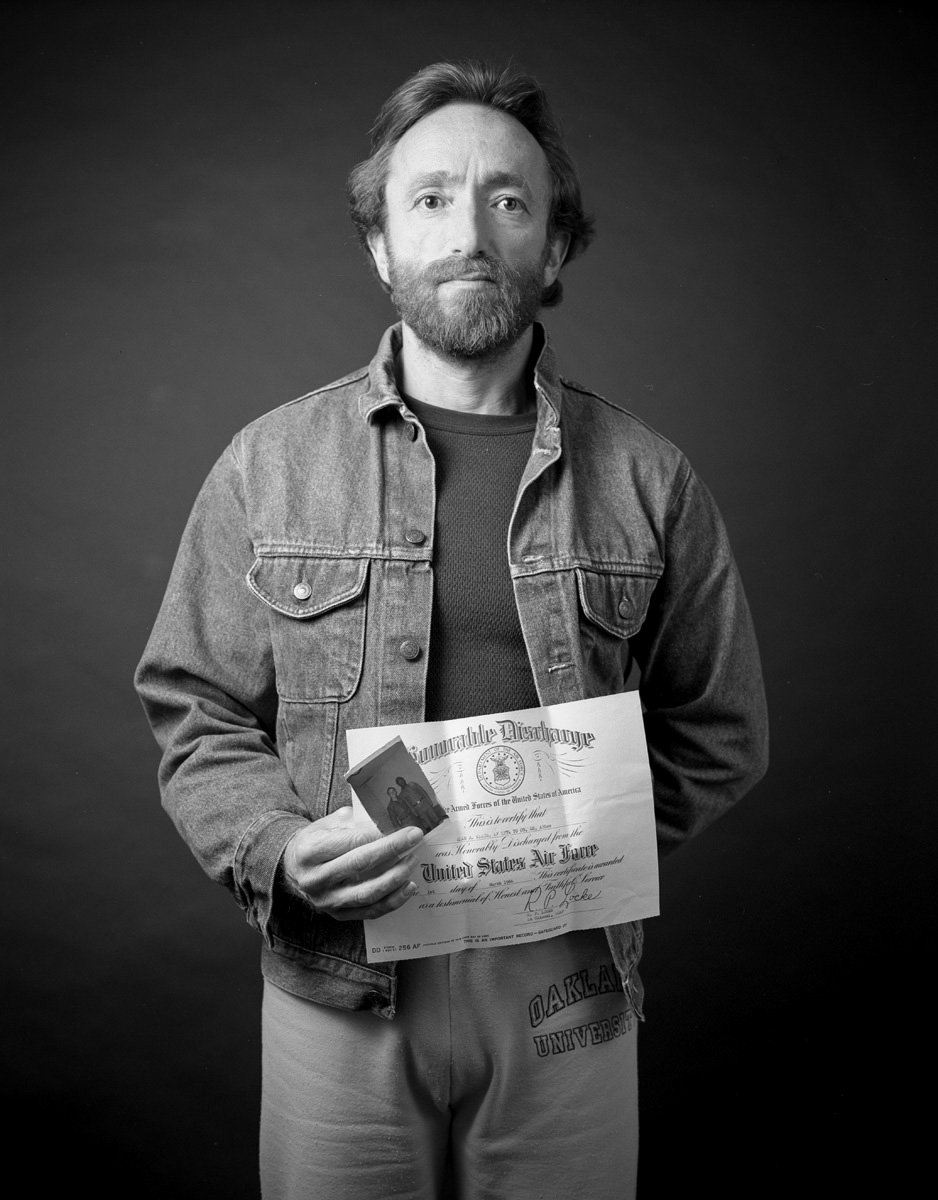
Alan Klein
Polina Cherezova 00:07
Hello and welcome to A Matter of Conscience: GI Resistance During the Vietnam War. I’m Polina
Cherezova. This is a bonus episode diving deeper into the story of Alan Klein, one of the former military
resisters you may remember hearing from in a previous episode. Alan enlisted in the Air Force to avoid
the draft. He was interviewed for A Matter of Conscience in 1989. In this episode, we’ll hear how Alan
ended up in the military and what led him to engage in first small, then larger acts of resistance on
Bunker Hill Air Force Base in Peru, Indiana. And a warning: this episode contains profanity and
descriptions of violence.
Alan Klein 00:52
I was born in Germany in March 1946 to parents who were survivors from the camps. All my relatives
were victims of World War II. The ideas about war that I had were maybe different than what an
average American kid had, because I grew up thinking, just as it might have been the lot of a normal kid
to go into the military, I remember thinking it was my lot to go into the camps. It wasn’t until I was a kid,
later on, we got to the United States when I was about five, that I was exposed to the influences of the
time. Everybody was doing Westerns, and I was a cowboy all the time, and Davy Crockett was popular,
and I never wanted to be an Indian. My mother remembers taking me to movies, and when the Indians
were getting killed, I would burst into tears. I was nothing but trouble. That I was. I was thrown out of
every school I was ever in, and I was thrown out of, certainly, every Hebrew school I was ever in. The
stories are almost legendary. Where that anger came from, that ability to refuse, it was never
channeled, and it certainly wasn’t directed to the U.S. until I was in the service.
Alan Klein 02:15
I had just flunked out of State University of New York at Buffalo for the second time. I couldn’t get into
school anywhere, so I wound up going to a business school in Buffalo, which was, in fact, draft-exempt.
And I remember going my first day and adding long columns of numbers. And I said, I just can’t imagine
doing this for two years. So I just walked out. I lasted one day. Interestingly, the draft board was right
across the street, and they were drafting into the Marines. I remember that scared the hell out of me. I
went in in January ’66. Things turned around real quickly once I got in there,
Alan Klein 03:14
I couldn’t believe that it was just happening to me, and there was a guy next to me, and he said, You
know, I’m getting out of here. And I said, No, nobody gets out of here. And he said, Yeah, I’ll get out of
here. And he proceeded to get out just by opening his mouth and talking like a wise ass. The group I
was assigned to seemed to me, in retrospect, made up of largely of people who are marginal and
misfits. We had very few really gung-ho guys,
Alan Klein 03:47
But I remember sitting around many, many evenings just talking about what this really meant for all of
us and putting it in the context of larger issues. I remember I used to go home on weekends and get the
East Village Other, which was a radical alternative paper at the time, and bringing it back, and almost
like contraband, you know, passing it amongst us guys. And then I remember bringing Dylan albums
back, the early Dylan, which was very, you know, politically inflammatory, socially, at least. It was the
first time an idea ever filtered through my brain. Very clearly and very quickly those messages suddenly
rooted in me, partly because I felt I was imprisoned, and partly because the primary incident that
happened on one of my trips home.
Alan Klein 04:40
I was in O’Hare Airport, and we were waiting for a military standby thing, and this guy comes by, and
he’s got his hand right on the counter there. And I looked at it, and it was sort of doughy, pudgy hand,
and it was all pinkish. And then I just happened to glance up his sleeve and saw that patch of his from
the Airborne and then only when we started talking, and I realized he was Black. It was in his voice
from Yazoo, Mississippi, and he was Black, but you couldn’t tell. He says I’m 17 years old. He said I
can’t take a piss in half the bathrooms that I go to when I go home. Jim Crowism was pretty alive in
Mississippi, and I remember, I was just dumbstruck by it. What got me most, I guess, was that he was
17, and I didn’t even know. I couldn’t tell age, and I couldn’t tell color. He had been pretty much
denuded of all that, and he had to go through the rest of his life like that.
Alan Klein 05:49
From that point on, it was never the same again. I came back following the end of the weekend, and I
announced to my friends, I said, as far as I’m concerned, from here on in, I’m opposed to the war every
way I’m going to fuck up this place as bad as I can. I’m not going to Vietnam. They said, Yeah, me too.
Me too. And we decided that what we could best do, is to destroy to the best of our ability, without
being too flagrant about it, the efficiency of our outfit. And we could do this on a variety of levels. We
started by little things. We started dressing like shit. We wanted to make sure that nobody in our little
sector, and our circle of influence was growing, would ever dress right, so we could ever pass
inspection. What would it be like to be an officer going down the ranks, inspecting your men, and none
of them could get their gig lines straighten. You know, gave a shit about anything.
Alan Klein 06:55
We started with poor job performance. We started fucking up on the job. We started damaging things
on the job, you know, little things wasn’t too overt. I remember one night we sat down, we had just
come back from talking to our girlfriends, and we sat down, and my friend Bill said, you know, man we
could really mess up a lot of people, if we just got people to go AWOL (Absent Without Leave). So we
developed this scam, and we would just hang around by the phone booth, you know. One time we were
sitting there and this guy comes out. He was just ecstatic. He just talked to his girlfriend. I said, you
know, so you talk, everything’s good at home. He said, Yeah. I said, Well, that’s good boy, because you
know Bill over here, Bill’s looking real sad. He thought everything was good. But boy, I tell you, he just
got off that phone. He found out from a friend of his that she was chipping on him. I remember, the
word, she was chipping on him. She was cheating on him. In one month period of time, we got about
seven or eight guys in our barracks who just had to go home and check. They didn’t believe what was
going on on the phone, so they had to run home and check. And of course, it was AWOL.
Alan Klein 08:17
Everything we did was designed to be messed up, sabotaged or basically deemed done by
incompetence. And we didn’t know anything beyond our base. We didn’t realize, up until much later,
how many people were doing all these little acts of conscience. Finally, in the fall of that year, at ’66 we
decided that we would go AWOL ourselves. I had no sense of anybody, anybody at all, doing what we
were doing. I had no idea. All I knew was we had to do something.
Alan Klein 08:58
We developed a fairly concrete kind of notion about what we wanted to do. We actually left the base,
and we decided the only place we could go where we wouldn’t be detected was Harlem. So we knew
we’d get an Article 15, maybe a little time. Every time we’d get within 15 miles of the base, we’d turn
around and leave. We got back and we turned ourselves over to our officer, and he asked us questions.
I remember, if you promise not to leave, we will just confine you to barracks, you know. And the other
guys said, Absolutely, you know, absolutely. And I said, Fuck you, you know. I said, not only do I
promise not to leave, I think I’m gonna leave right out that door. That was the end of it. I was in jail.
Alan Klein 09:49
I found myself in the brig, and I remember the next morning when it suddenly dawned on me. I said,
holy shit. You know I’m in this cell, and all they allowed me with me was that little bag I was carrying
with my stuff in it. You know, my father had always told me that when I went in the service, tell him to
tell everybody I’m Orthodox, because you simply don’t know when you can use it. It might be to your
advantage. And since nobody knows what Orthodox Judaism is, anyway, you could tell them anything.
Alan Klein 10:24
As I wake up that morning in the brig, suddenly, you know, everything becomes clear to me, and I was
trying to figure out what the hell I should do, and I didn’t want you caught in that lie of Orthodox
Judaism now, so I had to go the full nine yards. So in my bag I had these, they’re called phylacteries,
but they’re Orthodox Jews wear them. So I quickly whipped the shit on. I didn’t have time to do the
ceremonial way. Just whipped it all around like that, threw it on my head. And as the guys came in to
check in on me and to give me some food, I was sitting there mumbling some mumbo jumbo anything,
and the guy said, these fucking Southerners, they go, Holy Fuck Jim, he’s trying to commit suicide and
they grab me — they thought I was trying to commit suicide. They grab me, and they start ripping off all
this shit. And I started screaming, You can’t do this. What about my right to religion, to practice religion?
They took my bootstraps. They took my belt. I had to shit with these guys around, they wouldn’t leave
me alone.
Alan Klein 11:37
Later on, when I was being processed for release, they brought a major in, a Jewish major in from the
Second Air Force to determine whether I was really bullshitting or not. You know he was going to give
me the Jewish test. Well, this was like winter of ’66, and he goes, Well, what are you going to do for
Passover? Wait a minute. Wait a minute. This is the test? Do I know when Passover is? Of course, it’s
the wrong season. I said, This is really some test.Alan Klein 12:09
They didn’t want to put me close to anybody. They had deemed that I was really socially sort of
dangerous, politically a little bit dangerous. One night, two of the APs (Air Police), they were a little bit
fucked up, and they came in and they just called, started calling me a commie, Jew, faggot, and they
said they were gonna blow my brains out, say I was trying to escape. And they were trying to get me,
but, you know, I was really pretty far gone by that time. So, I’d start getting belligerent with them, and
they pulled a gun on me, but that didn’t work. I knew they weren’t going to do anything anyway. That
was the easier part to deal with.
Alan Klein 12:46
You know, what was more difficult was what my lieutenant did to me when I got out of the stockade and
into the barracks. What he would do is he would like start playing with me and say, Well, you know, I
just talked to somebody. It looks real good. Looks like you’re going to be out within a matter of a week,
you know. And, like, I would start getting really up, right? And I’d wait, and it’d be like, you know, a day
and a half before I was supposed to, you know, hear about this, this week period that had gone by, you
know. And he did this a couple of times. He’d come back, and he’s, you know, I’m sorry. Really, I
shouldn’t have spoken out of turn like that. But it’s fallen apart, you’re just going to get sent back to
back to active duty. And what he wanted me to do was he wanted me to bolt again, because then he
can get me on something more serious.
Alan Klein 13:31
Finally, I realized that they were going to let me go just because they stopped harassing me. The
lieutenant would do these little games with me, and his friends and his buddies would all come around
me while I was eating, and say clay and clean and started playing with my name stuff like that. But I got
one of them just about two or three weeks before I left. I got them drunk. That was the last fight I got
into. I beat the fuck out of him.
Alan Klein 14:07
I got out, I immediately made a beeline for the university and took all the political courses I could,
because then I was insatiable. I was very caught up in trying to be accepted by the university
community at the same time as I was trying to deny ever being a part of the military, but you can’t deny
that, because it had changed me. It’s an odd place to be. It was a very uncomfortable place to be.
Alan Klein 14:42
Just before I was being released, I had heard that the reason I was being let out was because we got in
this directive that came down in the Second Air Force. It said all the people who committed the
following offenses would hereby be just dismissed. And so, it dawned on me and a couple of other guys
that, you know, and somebody else told us that there were thousands and thousands of guys who were
doing time, and it was costing the military a lot of money. And then, for the first time, I realized that all
this shit that was going on in this isolated bullshit little base over here in the middle of Indiana was
really connected to something larger; that I was not by myself, that all this shit that was going on with
me was going on with other people in one form or another. You know, it’s really interesting in
retrospect, to think that I was part of something larger, unbeknownst to me, unknowing I was just
operating in a vacuum, but I wasn’t alone at all. It was like a lot of people were doing it.
Polina Cherezova 15:42
Alan Klein received his PhD in cultural anthropology at the State University of New York at Buffalo. He
studies the intersection of culture, politics, and sports. We have a list of books he has authored on our
website, amatterofconscience.com. He is a professor emeritus in anthropology at Northeastern
University in Boston.
16:20
That’s all for this bonus episode of A Matter of Conscience: GI Resistance During the Vietnam War.
Thanks for listening. If you like what you hear on this podcast, please subscribe, review, and
recommend the show to your friends. Word of mouth really helps. Please visit our website at:
amatterofconscience.com where you can see show notes for all of our episodes. This episode was
produced by Polina Chereizova, with help from Willa Seidenberg and Bill Short. Original music
arrangements are by Danny Seidenberg. And our biggest thanks go to Alan Klein and the other
veterans who shared their stories with us.