Episode 14: A Ferocious Place: Long Binh Jail
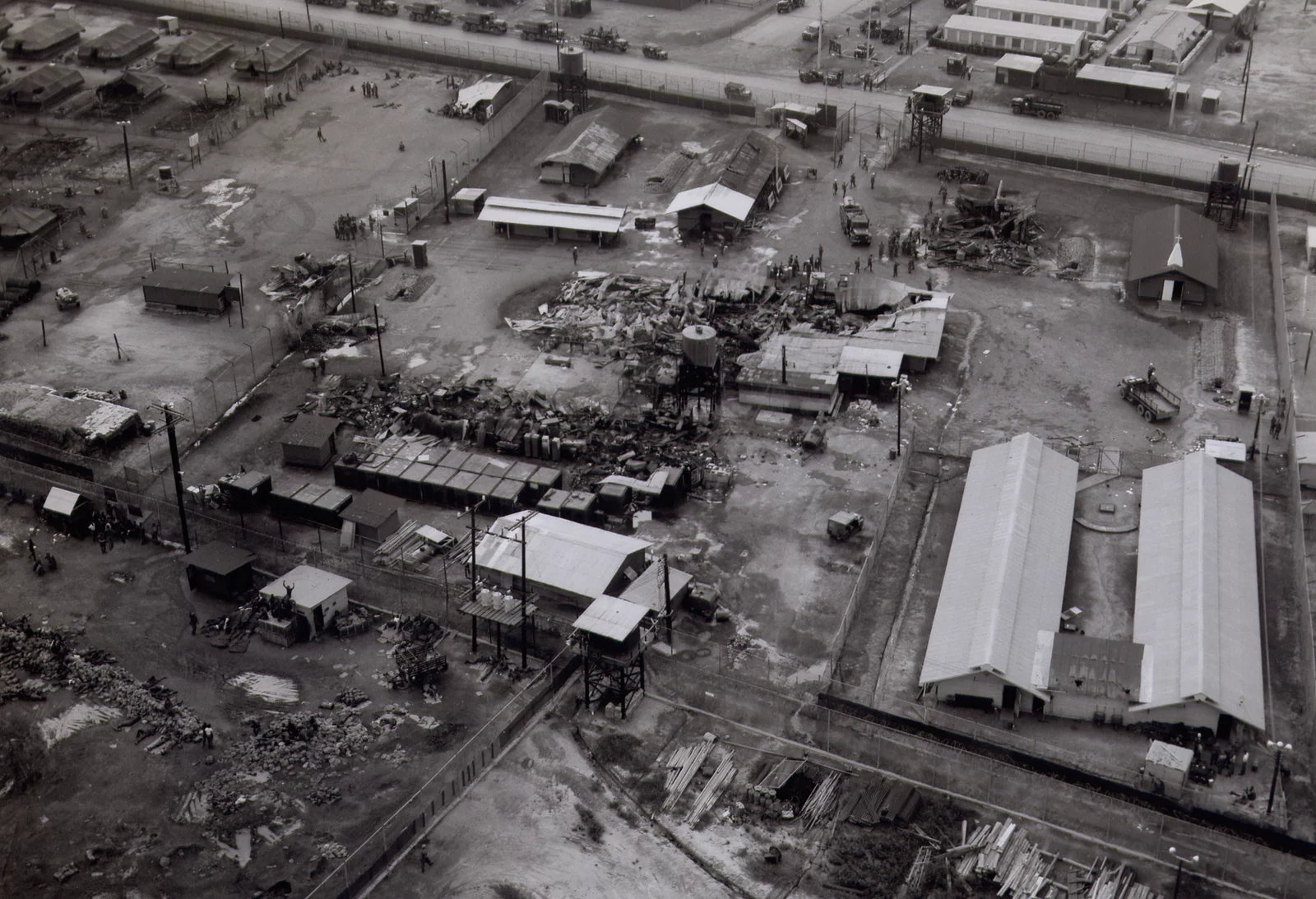
Long Binh Jail — nicknamed LBJ — was the U.S. Army’s largest prison in Vietnam, and many soldiers feared it more than the battlefield. Overcrowded, brutal, and seething with racial tension, it held men imprisoned for resisting an increasingly unpopular war — going AWOL, defying orders, refusing to fight. In the summer of 1968, that tension exploded. Black inmates rose up, overwhelmed the guards, and took control of the stockade.
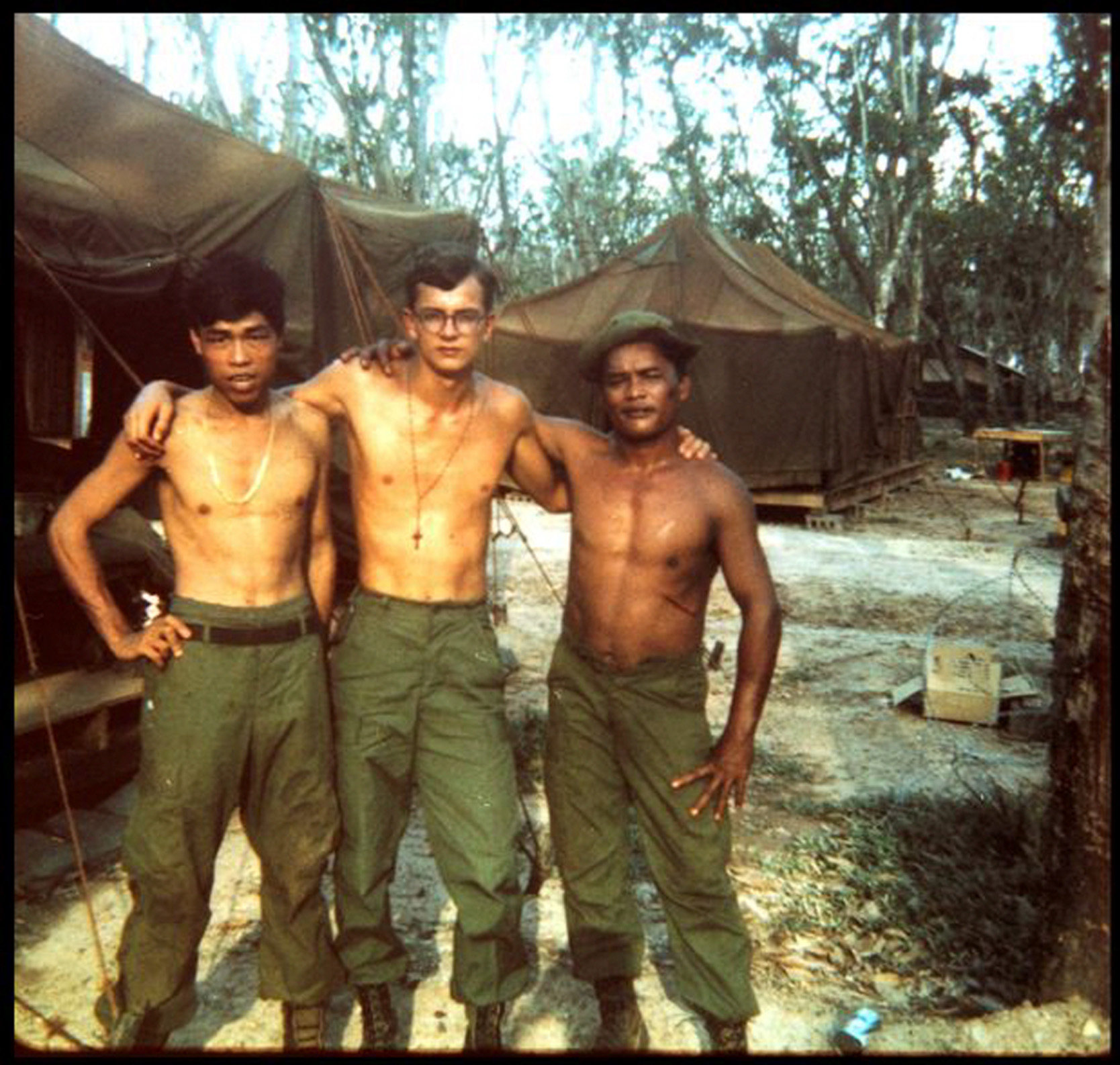
In this episode of A Matter of Conscience, we go inside LBJ — through the voices of two veterans imprisoned in the stockade. You’ll hear what it meant to arrive at the stockade, survive the conex boxes baking in 105-degree heat, navigate the racial fault lines that divided the prison, and still find moments of defiance, humor, and humanity. One of those veterans is our own Bill Short, who was imprisoned there in 1969.
Guests/Subjects
- Richard Valentine: Enlisted Army 1968-72. Served in Vietnam from 1968-70 as a door gunner with two assault helicopter companies. After Vietnam, worked with FTA GI newspaper at Ft. Knox, Kentucky.
- Dave Hettick: Enlisted Army 1969. Served in Vietnam at the hospital at Long Binh Air Base. After Vietnam, worked on Bragg Briefs, GI newspaper at Ft. Bragg, NC.
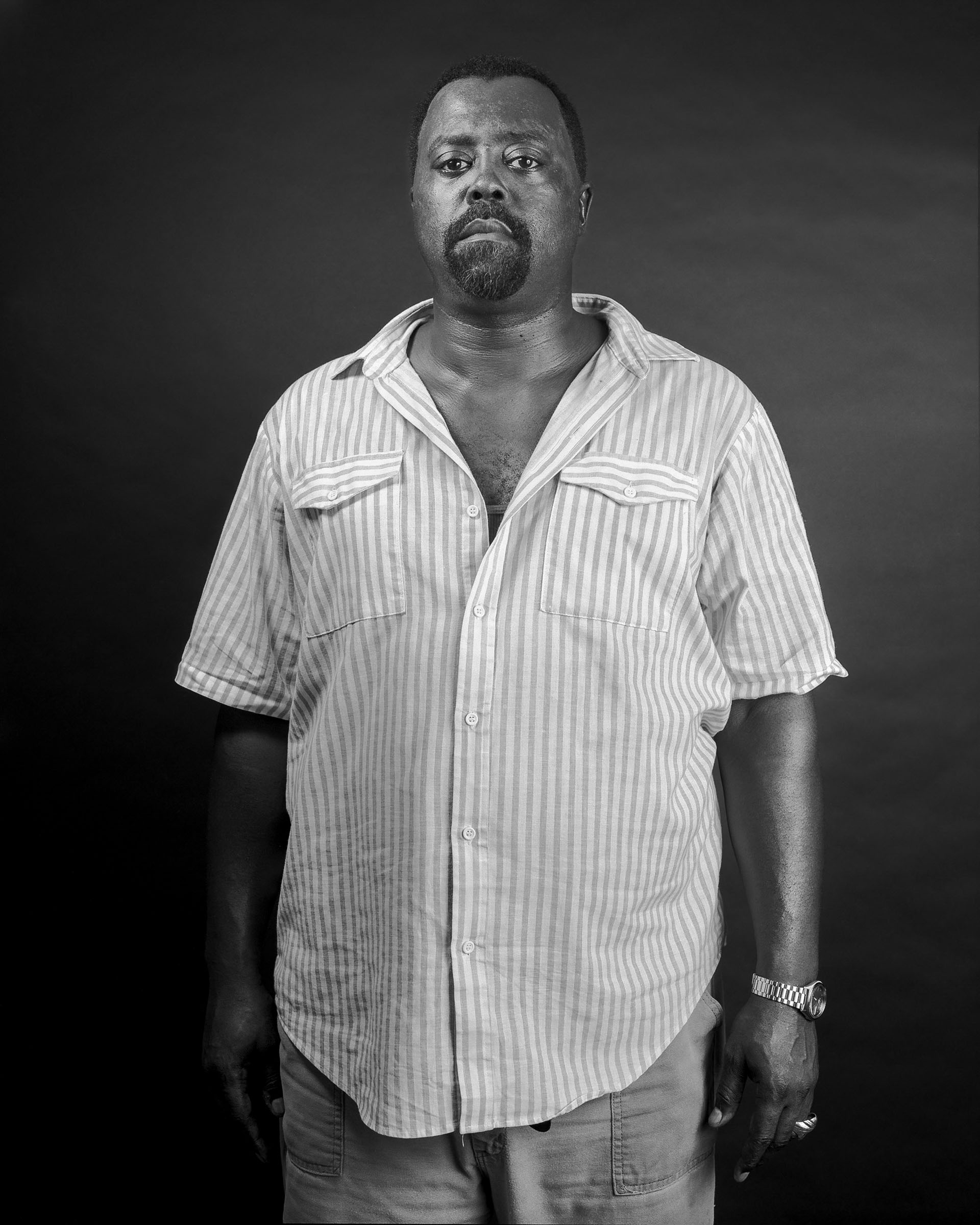
- Greg Payton: Drafted Army 1967-69. Served in a supply unit in Long BInh Air Base in Vietnam. Received three courts-martial for a variety of charges, including AWOL, assault and disrespect to an officer, and imprisoned in Long Binh Jail. Involved in the 1968 prison riot at LBJ.
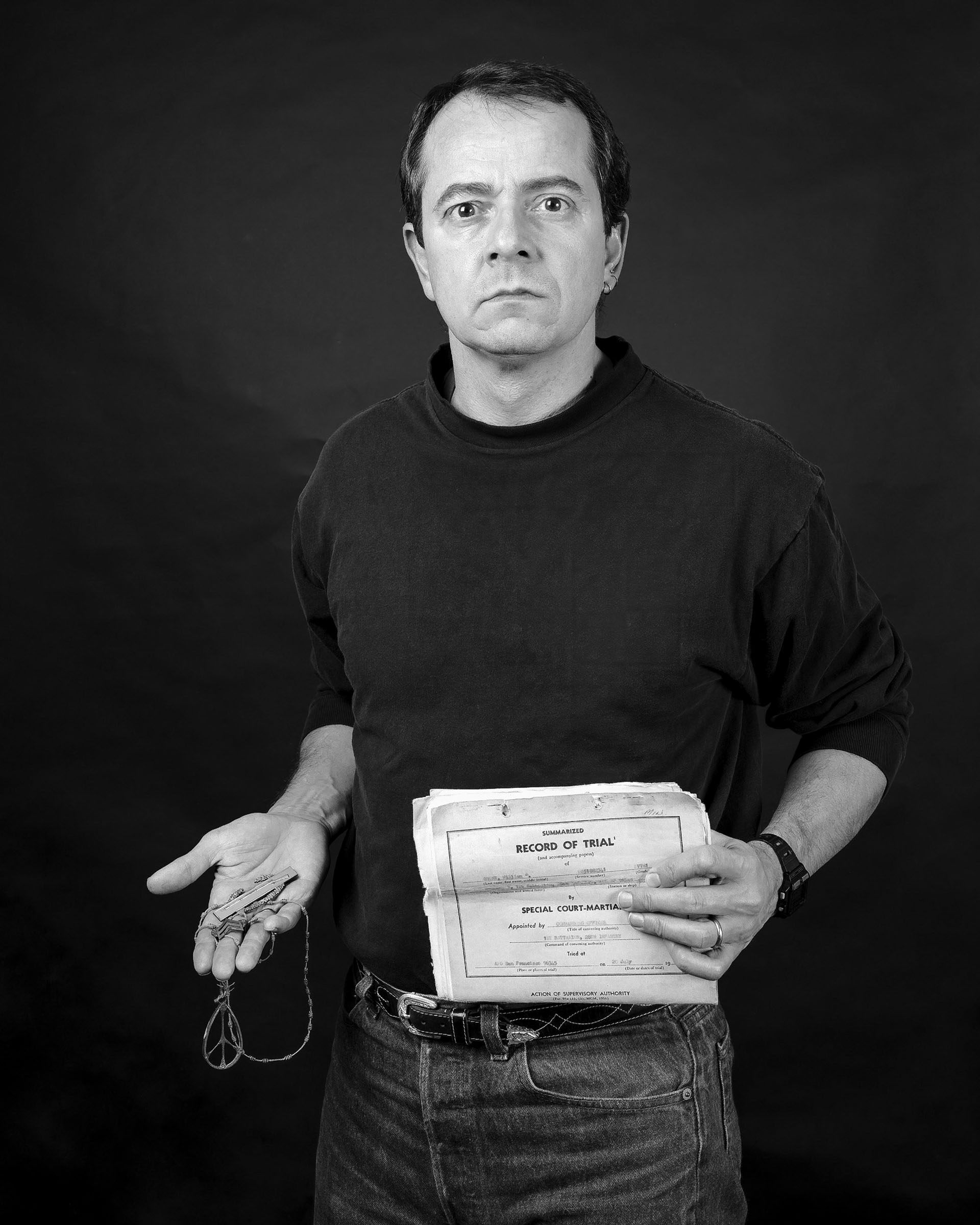
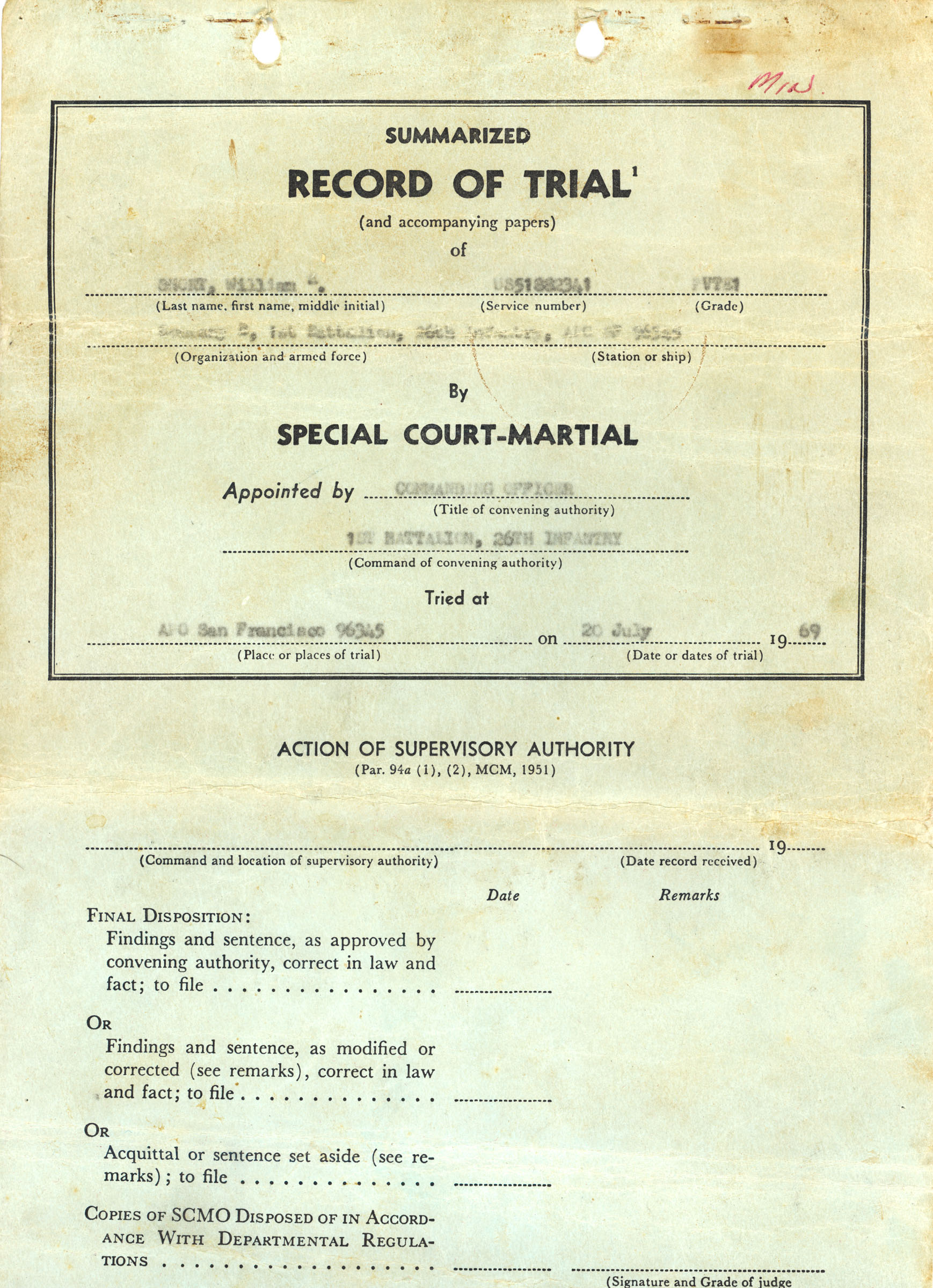
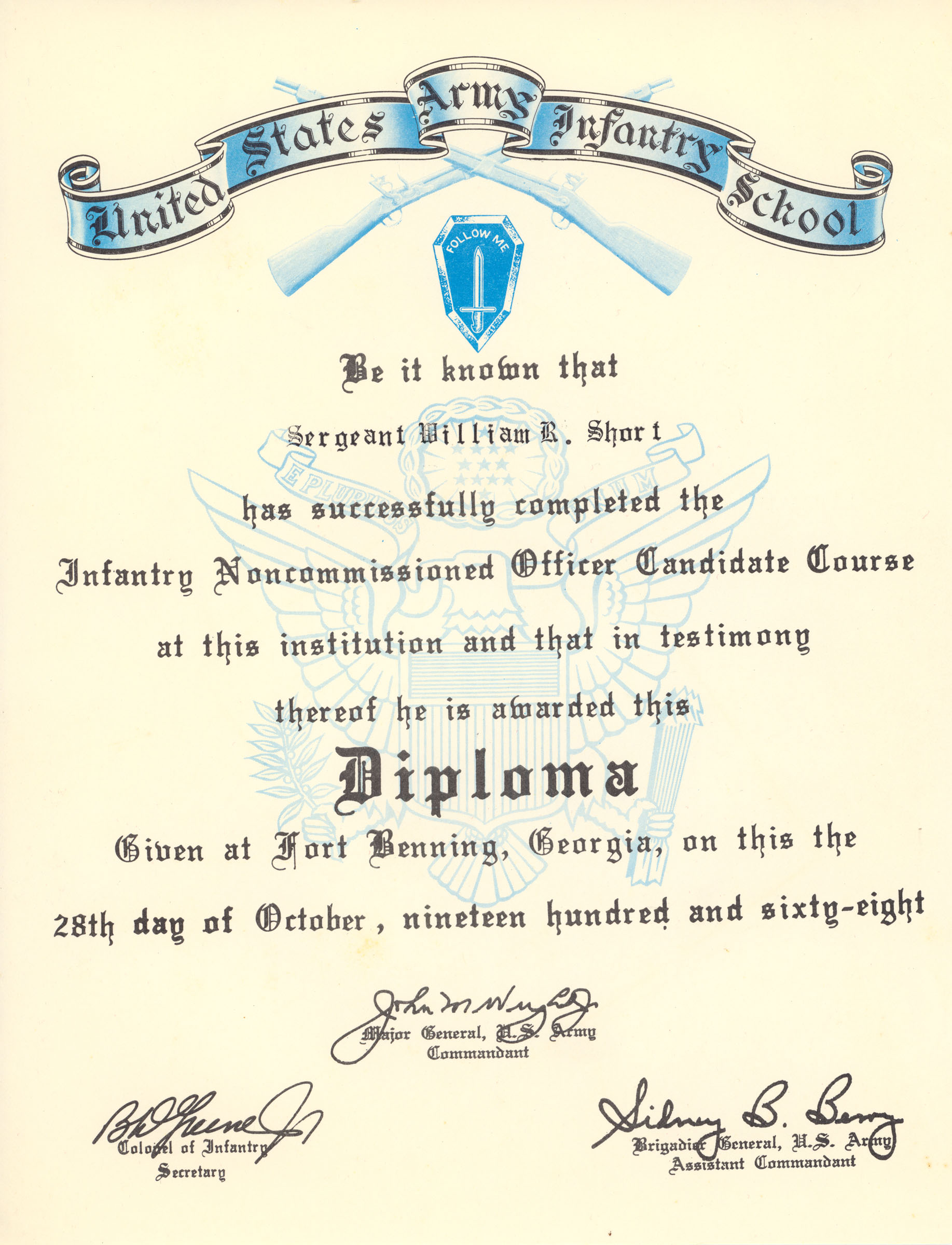
- Bill Short: Drafted Army 1969. Served in Vietnam in Alpha Company, 1st/26th Infantry, 1st Infantry Division. Served time in Long Binh Jail for refusing the go on combat operations.
- Seth Kershner: Seth Kershner received his Ph.D. at the University of Massachusetts studying Vietnam-era social movements in the United States. His dissertation, GIs in Jail, details resistance and activism by soldiers in military prisons during the Vietnam War. He is co-author (with Scott Harding and Chuck Howlett) of Breaking the War Habit: The Debate over Militarism in American Education.
- Sarah Kramer: Story editor, audio producer, and sound artist based in New York City. Adjunct professor at New York University’s Arthur L. Carter Journalism Institute.
Background and extra material:
- Long Binh Jail: An Oral History of Vietnam’s Notorious U.S. Military Prison by Cecil B. Currey. Potomac Books, 1999.
- Prisoners of War, Radio Diaries story on LBJ Uprising, produced by Sarah Kramer.
- President Lyndon B. Johnson, “Why We Are in Vietnam” Press conference, July 28, 1965 – Video
- Long Bình Jail – Wikipedia
- Reporting on the Incarceration of Black Marines William Harvey and Ahmad (George) Daniels
- Aug. 29, 1968: Prisoner-led Uprising at Long Binh Jail in Vietnam – Zinn Education Project
- Armed Forces Vietnam Network
Songs:
- “I-Feel-Like-I’m-Fixin’-to-Die Rag” – Country Joe McDonald – 1967
- Soldier We love You – Rita Martinson – 1971 (FTA Documentary)
- The Caine Mutiny March by Max Steiner
- Additional music arrangement by Andrew Patinkin
- Other music arrangements are by Danny Seidenberg
Listen to A Matter of Conscience:
Apple Podcasts
Spotify
Buzzsprout
Follow A Matter of Conscience:
Website:https://amatterofconscience.com/ Instagram
Tiktok
Credits:
Producers and Hosts: Willa Seidenberg and Bill Short
Associate Producer: Polina Cherezova and Dylan Purvis Interns: Lizzy Liautaud and Dylan Ralls Sound Designer: Polina Cherezova
Music Arrangements: Andrew Patinkin, Danny Seidenberg
Fiscal Sponsor: The International Documentary Association
Special thanks to the Kazan McClain Partners Foundation. Thanks also to Denise Abrams, Bill Belmont, Sam Short, and David Zeiger.




Ep14 Transcript
Bill Short 00:09
Hello, and welcome to A Matter of Conscience: GI Resistance During the Vietnam War.
Bill Short 00:53
I’m Bill Short,
Willa Seidenberg 00:54
And I’m Willa Seidenberg.
Voices 00:58
Pressure cooker, torture chamber, brutal, overcrowded, notorious, racist, abusive, drug-infested.
Willa Seidenberg 01:05
These are descriptions of the U.S. Army stockade in Vietnam, known as Long Binh Jail, or LBJ for short.
Archival Sound: President Lyndon B. Johnson 01:14
This is a different kind of war.
Willa Seidenberg 01:18
It was always a source of great amusement that the nickname of the biggest prison in Vietnam shared initials with the president who deepened U.S. involvement in Southeast Asia.
Bill Short 01:30
The formal name of the jail was the United States Army Vietnam Installation Stockade at Long Binh. It opened in 1965 and it quickly gained a reputation among soldiers as a fearsome place.
Richard Valentine 01:44
I wasn’t going to LBJ. I knew people that had been to LBJ.
Bill Short 01:48
This is Richard Valentine, an Army veteran who was sent to Vietnam in 1968.
Richard Valentine 01:55
You know, I had a better chance in the field than in LBJ. I think everyone did. I mean, doing a year in the army was a lot better deal than doing a month or three months in LBJ.
Dave Hettick 02:12
Every once in a while, I would be on a detail to escort somebody over to LBJ.
Bill Short 02:16
Dave Hettick worked at a hospital in Long Binh, across the street from the prison.
Dave Hettick 02:21
That was quite a scene over there. It was very intense. The MPs were extremely hostile, and you could just feel it was like a siege mentality there.
Seth Kershner 02:30
It was for sure a feared place, and this was even drummed into you in basic.
Seth Kershner 02:35
I’m Seth Kershner. I’m a recent PhD at University of Massachusetts.
Bill Short 02:40
Seth Kershner’s dissertation is called GIs in Jail. It looks at what happened to anti-war soldiers when their actions landed them in prison.
Seth Kershner 02:50
The purpose of the military prison system was really to deter wrongdoing, to punish dissent, and I think it made good sense to tolerate, to some degree, some of the harsh measures guards took against men who were confined, as a way to spread this bad reputation. The fact is, through oral histories, through different kinds of sources, even inspector general reports from the army, you do see a picture of brutality that was largely unchecked. It wasn’t practiced by all guards, but it was tolerated when it did happen. So these kinds of brutal practices made it very difficult for prisoners to collectively do anything about the conditions of their confinement.
Willa Seidenberg 03:42
Before 1969 soldiers who took acts of resistance against the war in Vietnam received harsh sentences. Our previous episodes have looked at some high-profile cases, like Howard Levy, an army doctor who refused to train Green Berets in dermatology, or the Presidio 27, a group of inmates at the Presidio stockade who staged a sit-down strike to protest conditions in the jail. Black servicemen received especially severe sentences. In 1968, marines William Harvey and George Daniels were court-martialed and sentenced to hard labor at the Portsmouth Naval Shipyard in Maine. George now goes by the name Ahmad Daniels. He spoke to the podcast Courage to Resist in 2019.
George “Ahmad” Daniels 04:36
I began to realize at that point what the military was most frightened of. They know how to handle a rapist, they know how to handle someone who kills and mutilates the body, but they don’t know how to deal with somebody who’s an independent thinker. That just just messes up their damn plan.
Willa Seidenberg 04:54
Harvey and Daniels got sentences of six and ten years just for advising other Black soldiers not to fight in what they considered a white man’s war. After a swell of public support, their convictions were overturned in 1970.
MUSIC: “Soldier We Love You” by Rita Martinson 05:11
They locked you up in their stockades. Yeah, they locked you up because they’re afraid that you would rap and spread the word, but you can’t jail truths that will be heard.
Bill Short 05:27
The Navy and the Marines call their jails brigs. The Army refers to them as stockades. The two biggest detention centers for American soldiers in Vietnam were the Marine brig in Da Nang and LBJ.
Seth Kershner 05:40
At its peak in ’69 the military had 15,000 of its own sailors, soldiers, and marines confined in this global network of prisons. We need to remember that they were confined for offenses that had no analog in the civilian sector. They were confined for going AWOL, for deserting. Those offenses simply don’t exist in civilian life, and yet they were doing hard time in many cases.
Bill Short 06:08
The military justice system prioritizes order and discipline. It might encompass some crimes you’d find in civilian court systems. But, as Seth mentioned, many are unique to the military, like mutiny, disrespect toward a superior officer, failure to obey a lawful order, and going absent without leave or AWOL. The decision to bring charges is up to the commanding officer, and there are no juries of your peers. They’re made up of military judges and commissioned officers.
Willa Seidenberg 06:45
In this episode of A Matter of Conscience, we’ll hear from two veterans who served time in LBJ. Be warned that you’ll hear profanity and descriptions of drug use in this episode. One of the veterans who spent time in the notorious LBJ stockade was Bill Short.
Bill Short 07:04
Yeah, I was in prison there twice in 1969, once in May and June, and then again in July and August. I was released from that prison in September of 1969.,
Willa Seidenberg 07:16
In the 1990s, military historian Cecil B. Currey did a series of oral histories with former guards, prisoners, and administrators of the prison. His book is called Long Binh Jail: An Oral History of Vietnam’s Notorious U.S. Military Prison. It’s a key source of information about LBJ. The stockade was built to hold 400 men. By the middle of 1968, there were 719 men housed in the prison. That’s almost double what it was built to hold.
Bill Short 07:53
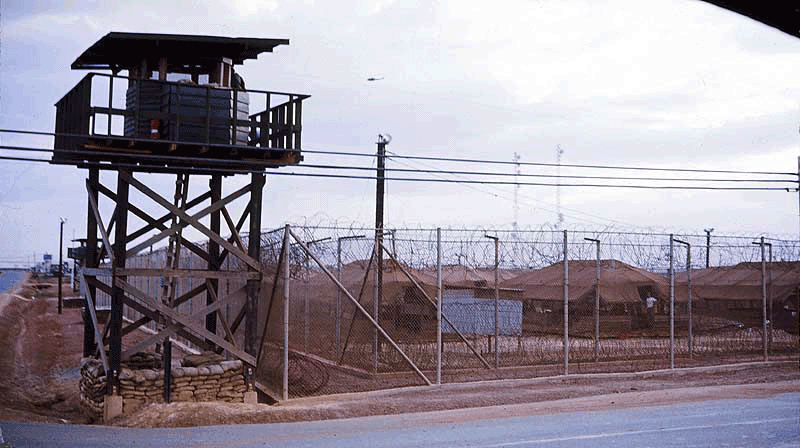
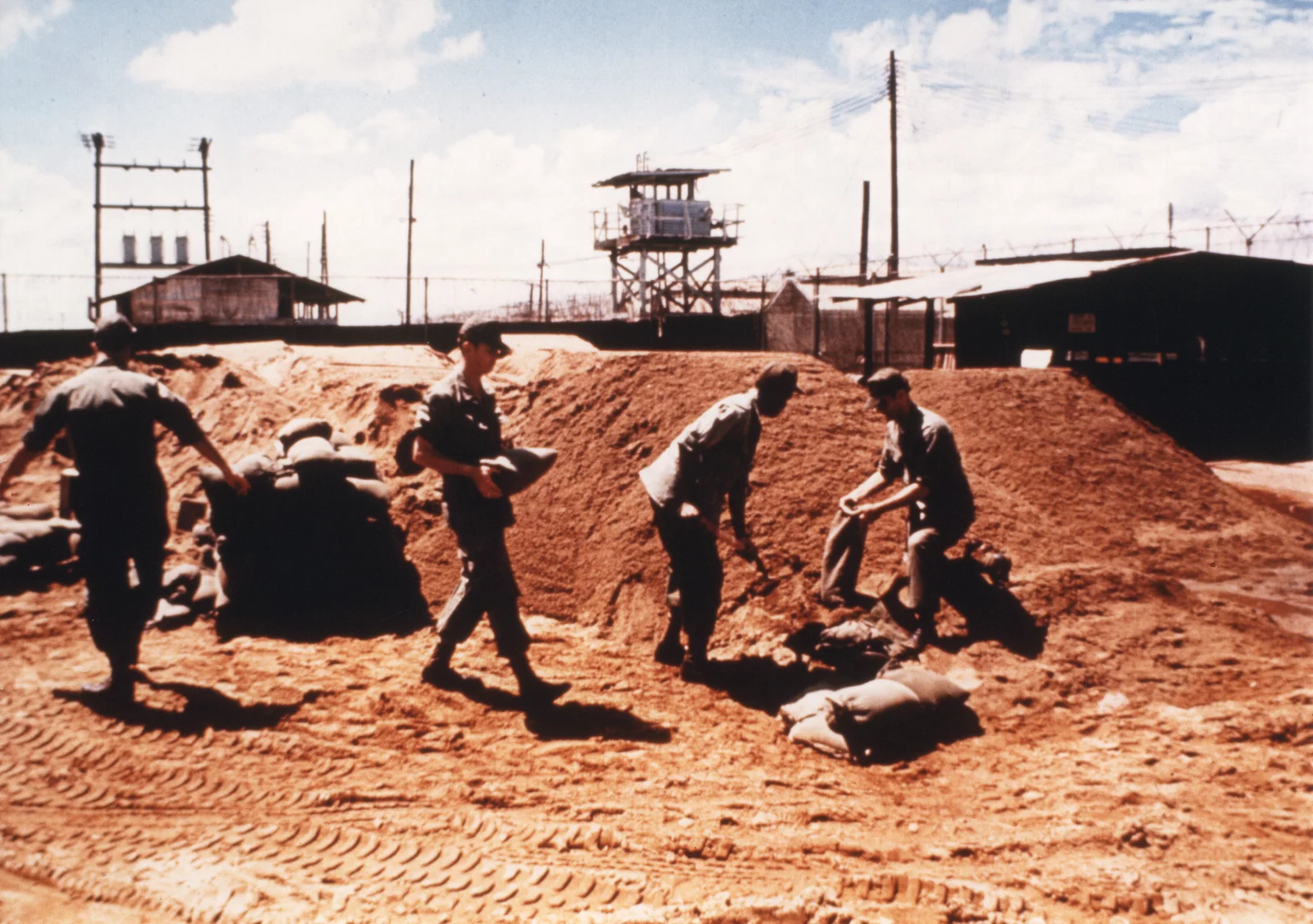
It’s this big compound that’s surrounded by chain link fence, and it’s covered with canvas, so you can’t see in, and it’s painted silver. We actually nicknamed it Silver City. And on top of that, there are three fences, and in between each fence, there are rolls of concertina wire. Concertina wire is like barbed wire, but instead of having barbs, it has razor blades on it. Then there are guard towers all around with armed guards with machine guns in the towers to keep the prisoners in.
Willa Seidenberg 08:27
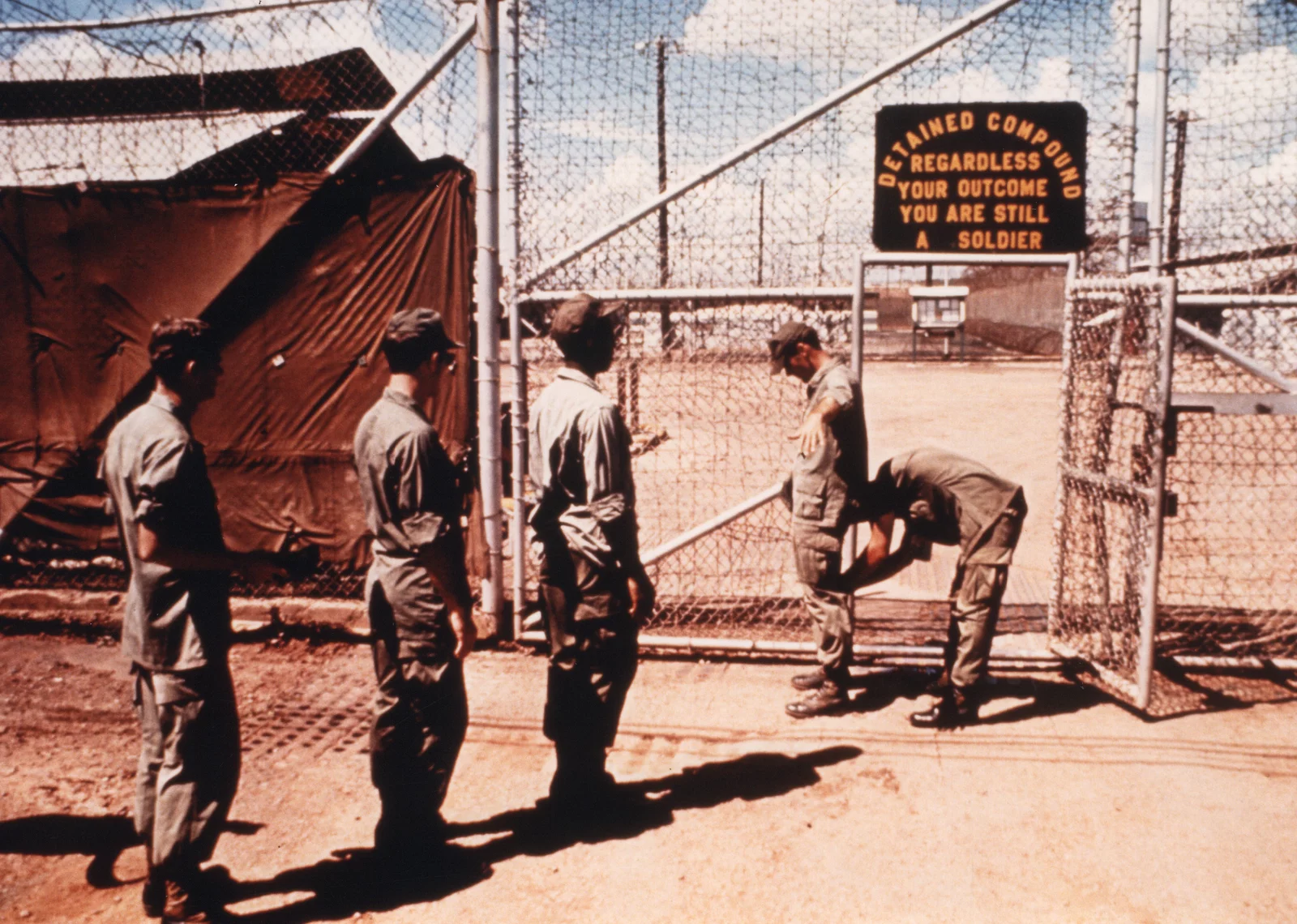
When a prisoner arrived at LBJ, the first thing prison guards would do was strip him naked.
Bill Short 08:34
And then they stand you at the position of attention, and three or four guards will walk around and look you over. And then they bend you over and they say bend over and spread your cheeks, so you have to bend over so they can look up your ass to make sure you don’t have contraband stuffed up your ass. It’s really for dehumanizing and harassment.
Willa Seidenberg 08:53
The prisoners were then given fatigues that identified them as inmates.
Bill Short 08:58
If somebody saw you in jungle fatigues that had a yellow band on the leg or on the arm, they’d know that that was somebody who had been in LBJ.
Willa Seidenberg 09:08
Most soldiers in jails were imprisoned for going AWOL or deserting. Many were also locked up for drug offenses and minor military disobedience. Bill was sent for refusing to go on combat operations,
Bill Short 09:24
And I think the army’s thinking was that I would go there and be so freaked out by being there for that 30 days that I would come back and agree to go back out on combat.
Willa Seidenberg 09:34
Bill refused to go back on patrol a second time, and the army sent him back to LBJ, but that’s another story. LBJ had compounds with different tiers of security. When a soldier first arrived, he would be assigned a work detail in the most strict compound.
Bill Short 09:52
The first work detail you’re assigned to is this compound called Big Red, because the soil there is kind of reddish in color, it’s a big pit. You spend 12 hours a day filling sandbags, and the sandbags are then delivered to bunkers around the military bases for reinforcement.
Willa Seidenberg 10:11
The prisoners would be filling sandbags in the hot sun. Temperatures would often climb well over 100 degrees. If prisoners behaved, they would graduate to less restrictive compounds.
Bill Short 10:25
Greg Payton was sent to LBJ in 1968 on multiple charges. They included going AWOL, assault, disrespect for an officer, and misappropriation of government funds.
Greg Payton 10:37
After I’d been in the stockade for about two or three months, I made it to minimum security. Everything was pretty easy for me by that time, easy work situation, and all that kind of.. I didn’t have to go to Big Red.
Bill Short 10:49
Throughout LBJ’s existence, Black soldiers far outnumbered white GIs.
Greg Payton 10:53
It was all these Black people and all these brothers. That blew my mind, that like 90% maybe even more than that was Black young 18, 22 year old young Black guys, and they were in for various different things. Nothing really real serious, more like disobeying orders than anything else.
Seth Kershner 11:11
If you’re a Black GI, you have a greater chance of getting a non-judicial punishment, an Article 15. If you do get court-martialed and get sentenced, you’re going to have a longer prison sentence.
Bill Short 11:22
Again, Seth Kershner.
Seth Kershner 11:24
If you were a Black prisoner espousing and vocal about racism in society, if you were vocal about racism, period, you would be put in AdSeg (Administrative Segregation), which is a slightly less harsh form of solitary confinement.
Bill Short 11:38
Greg Payton says there were cliques in the stockade, and they each had their own leaders.
Greg Payton 11:42
I was pretty good with everybody, basically, you know what I’m saying. But there was a group of people that I sort of like was with on a regular basis, and it was, so you know, my homeboys. This is more of a survival thing, and letting people know, man, we were disenchanted the way we were treated.
Bill Short 11:58
The brothers would all stick together, and then the Chicanos, they would all stick together, and then the white guys would all stick together. And I didn’t fit with any of them, because a lot of the white guys were crackers, Peckerwoods, you know, southern guys. They called themselves the Popeyes, and they all wore their hats differently, it’s kind of like a way to identify you.
Willa Seidenberg 12:22
The living conditions at LBJ were bad. Racial tensions were incredibly high, and there were allegations of brutality by the guards. Most guards were not trained to work in a corrections facility. Seth Kershner says many of them didn’t want to work in the stockade, and they took their frustrations out on the prisoners.
Seth Kershner 12:43
The inspector general did verify that there were cases of unauthorized force being used by guards against prisoners, including what you would describe today as waterboarding. Prisoners would be brought in as punishment into the shower area, and their heads would be forced under these nozzles and simulate drowning.
Willa Seidenberg 13:04
Long Binh was not designed for prisoners serving sentences longer than six months. There wasn’t much in the way of rehabilitation. It was all about confinement, punishment, and psychological harassment. There were plenty of drugs around, and that led to constant fights and lots of unrest. In July of 1968, Lieutenant Colonel Vernon Johnson took over command of the prison. He had a doctorate in penology. That’s the study of prison management and prisoner rehabilitation. Most of the guards didn’t like him, they thought he was too liberal. One MP even complained he let the inmates run the jail.
Bill Short 13:58
Drugs had long been a problem at the stockade, and in early August, Johnson put in place a policy that triggered what was to come. It required guards to strip-search a prisoner when he came back from work detail or court appearances. Many prisoners saw the policy change as escalating the humiliation they were already experiencing, and the strip searches made it harder for prisoners to bring in drugs. Some of the inmates may have been going through drug withdrawal, putting them further on edge. The atmosphere in Vietnam mirrored what was happening at home. The assassination of Dr. Martin Luther King in 1968 and the resulting riots fueled anger and resentment among Black soldiers.
Archival News Report 14:41
The Defense Department’s reports indicate that if the communications gap between Blacks and whites is not closed soon, growing racial conflict in the military forces will reach explosive proportions within a year’s time. And from what I’ve seen, that’s a conservative estimate.
Bill Short 14:58
On August 16. 1968, a fight at the Marine Brig in Da Nang turned into a riot. And at LBJ, Black inmates were becoming increasingly angry and defiant.
Greg Payton 15:10
Some guys got together, and they said they were going to have a riot in the stockade. And I was down, you know, yeah, man, yeah, but I didn’t believe them. I really didn’t believe them, and I had a work detail, I used to bring in kerosene to burn the feces. And they asked me to bring in an extra can of kerosene, like every other day, and all this kind of stuff, you know. So they couldn’t see the build up.
Bill Short 15:35
The prisoners spent several months preparing for their revolt, and just before midnight on August 29, 1968 they took action.
Archival News Report 15:43
This is the CBS Evening News with Walter Cronkite. Good evening. There was a riot with racial overtones at the largest U.S. servicemen’s stockade in Vietnam.
Greg Payton 15:53
It all took place one night, man, midnight. I actually slept through the beginning of it. It started in minimum security, but they went to maximum security and broke the locks and let everybody out. And they picked 12 o’clock because that’s when the guards changed, and most of the guards were eating in the mess, or they had a light guard crew on at that time. I don’t know how they did it, but they broke the lock, let everybody out of maximum security.
Seth Kershner 16:20
What allowed the facility to fall into the hands of the prisoners was a fight in medium security compound. And when the guards responded to that fight, prisoners overpowered the guards, took their keys, unlocked the other parts of medium security compound, ran across the exercise yard to the other parts of the stockade, and were attacking guards, attacking prisoners. And almost all of these prisoners were Black, so they were yelling, “Kill the Chucks,” which was this term used to describe white soldiers at the time.
Greg Payton 16:57
They started burning the hooches, and it was a lot of chaos. A lot of people got hurt. I do remember seeing white guys, in particular, getting beat up with bunk adapters.
Bill Short 17:07
Bunk adapters are heavy-duty steel poles that increase the height of bunk beds. The prisoners were also armed with shovels, broomsticks, and knives.
Seth Kershner 17:16
Colonel Johnson, the progressive, thinking he could reason with these men, enters the compound without a weapon and tries to talk with them, and is violently assaulted, and actually I believe he had to be medevac out of the country, and was very brutally hurt.
Radio Diaries 17:32
I was a highest ranking Black officer at the stockade.
Bill Short 17:36
This is an excerpt from a story by Radio Diaries, which marked the 50th anniversary of the uprising in 2018.
Radio Diaries 17:43
So I just went in and tried to get them to calm down. I was surrounded by about a hundred inmates. I think I talked to them for a good 15, 20 minutes, but then I heard two or three of them saying you oughta kill the Uncle Tom. They stopped listening to what I was saying, so I left. They opened the gate and let me out.
Sarah Kramer 18:13
It was a struggle to get him to agree to an interview.
Bill Short 18:16
Sarah Kramer produced the Radio Diaries story on the uprising. She says this Black officer was one of only a few at LBJ. He would only agree to an interview if Radio Diaries did not use his name.
Sarah Kramer 18:31
His whole career had been in the military, and he definitely did not want to come across as criticizing the military, and he was wary of journalists.
Bill Short 18:40
The Radio Diaries story also featured Larry Kimbrough. He was an MP at Long Binh Jail during the violence.
Radio Diaries 18:47
I saw six to eight prisoners running toward me. They threw me to the ground, started kicking, and pummeled me with fists.
Sarah Kramer 18:56
Definitely, I felt in interviewing him that the trauma of the experience was still very much present for him. Speaking to the military police and officers, they were really scared too, and they knew how messed up the situation was at that stockade. Like, it was a complete disaster for everybody involved.
Willa Seidenberg 19:20
Order was restored when the 720th Military Police Battalion was brought in and surrounded the jail. But for at least three weeks, a group of 12 Black inmates held control of one section of the stockade. The military reported that Edward Haskett, a white inmate, had been beaten to death by Black prisoners, and that dozens of inmates and guards were injured. But Seth Kershner’s research calls into question the official death count. One MP told historian Cecil Currey that when they were brought in to help retake the prison, they used bayonets to attack the rioters, and that he knew of at least three prisoners who died. Currey doesn’t give it much attention in his book. And then there was an army social worker who was stationed at LBJ. Seth uncovered a 1970 journal article the social worker wrote, accusing the army of covering up the number of deaths.
Seth Kershner 20:23
He estimates, based on his own research, that a dozen died. He doesn’t distinguish between deaths by guards during the retaking and deaths by prisoners against prisoners.
Willa Seidenberg 20:34
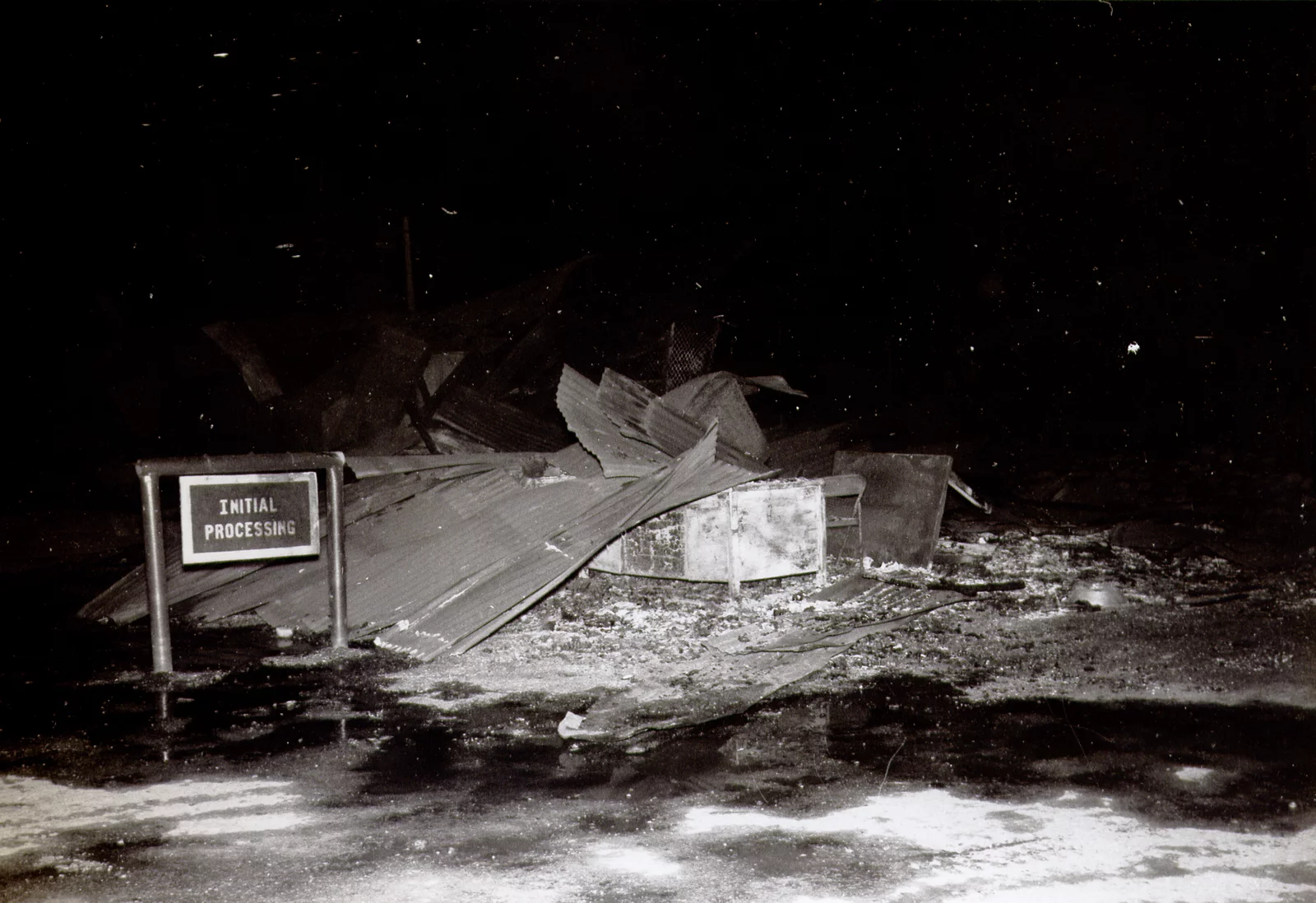
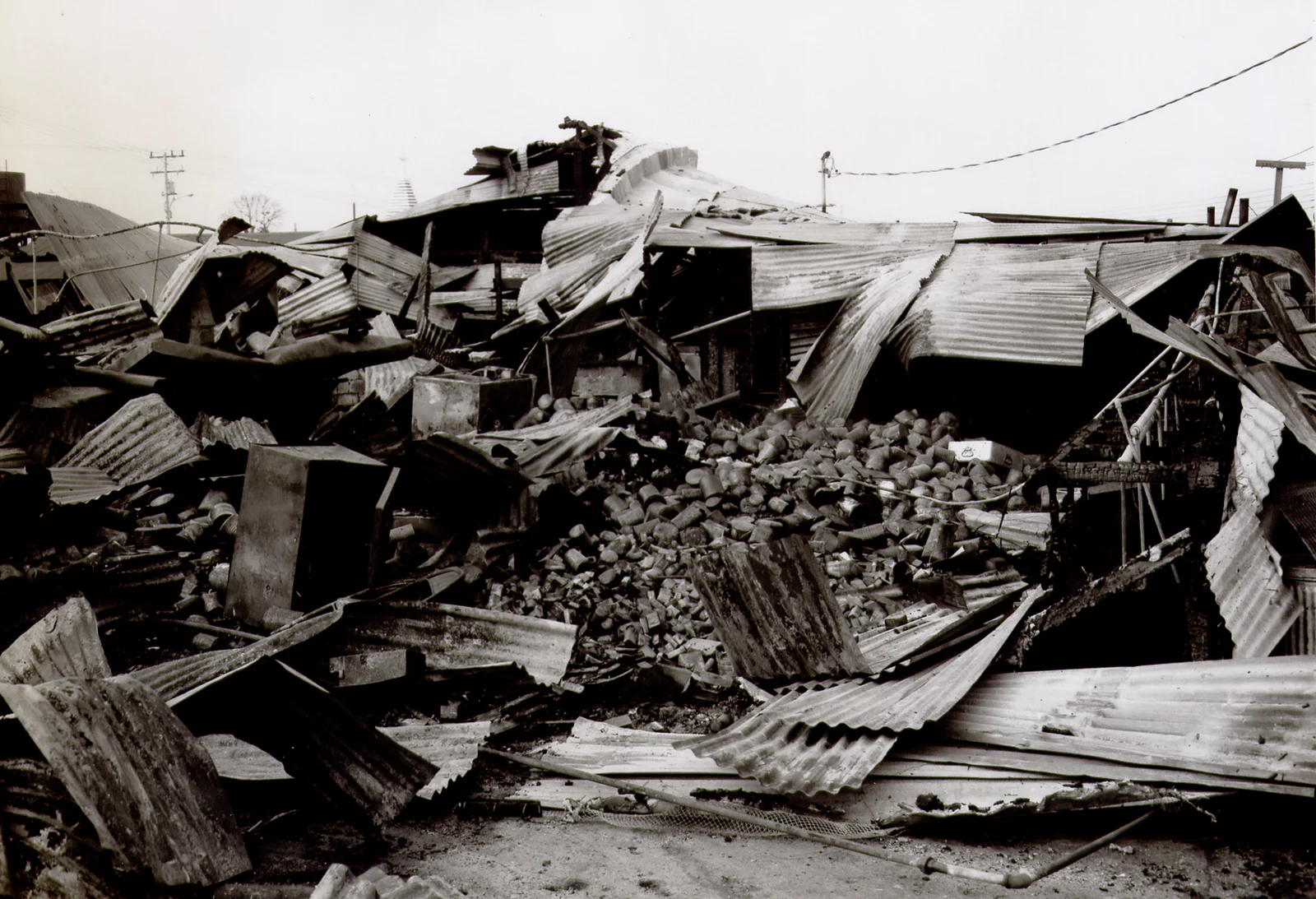
Six inmates accused of starting the riot were charged with murder or conspiracy to commit murder. Much of the stockade was burned down during the rioting. Lieutenant Colonel Ivan Nelson took over in September and went about trying to whip the place in shape. He took away some prisoner privileges, so the inmates nicknamed him Ivan the Terrible. His successor called him Captain Queeg, the Humphrey Bogart character from the film The Caine Mutiny.
FILM: The Caine Mutiny 21:13
I don’t know what lies have been sworn to win this court, but I’d like to set you straight on this matter right here and now. A key definitely did exist, you
Willa Seidenberg 21:32
Nelson made extensive use of conex boxes for discipline.
Bill Short 21:37
Conexes were these six-by-six-by-six metal shipping containers they had turned into cells, and they were all bolted together, and under this slanted tin roof. And then in the front of them there was a chain link front with a cell door and a little slot where they would slide food underneath to you. You know, they’re sitting out in the hot sun. They have a roof over them, but it’s a metal roof, you know. It’s 95 degrees and 95% humidity.
Willa Seidenberg 22:09
One MP told Cecil Currey that it didn’t take a lot of time in a conex for a prisoner to get religion. Bill was put in a conex because of something he did on a work detail when he was reinforcing concrete on a bunker.
Bill Short 22:25
And I drew a peace sign in wet cement, and one of the guards saw me. So they threw me in the conexes for three days. Prisoners were stripped down to their underwear when they were put in the conex. There was nowhere to sit except the metal floor, and then at night they give you an army blanket, this scratchy green blanket, and you just wrap up in it and sleep on the floor. You don’t think of 70-degree weather being chilly until you have to sleep in it with just a blanket on a cold metal floor, and when you’re in something that’s in a box that’s like 100, 105 degrees, and then it drops down to 70 degrees, you shiver.
Willa Seidenberg 23:15
The prisoners weren’t allowed to talk to each other; they would just sit in the conex, baking in the sun all day long.
Bill Short 23:23
Occasionally they’ll take you out to do what they call exercise, and you’re barefoot, you’re basically just in your shorts. And they would take you out to this area where they have these big chunks of gravel, and they would make you do push-ups on the gravel.
Willa Seidenberg 23:42
The guards would give prisoners in the conex box a cigarette break, but they had to chant for it.
Bill Short 23:49
They’d say, “Cigarette time,” and then everybody would bang, bang, bang, bang, bang on the floor of the cells, these metal floors, and we’d yell, “Let the hump jump, let the hump jump.” Camel cigarettes are nicknamed humps because they have a camel on the cover.
Willa Seidenberg 24:06
The only cigarettes they allowed in the stockade were Camels, Pall Malls, or Lucky Strikes. Those cigarettes didn’t have filters, something that had been used in the riot the year before.
Bill Short 24:19
The rioters took the filters off the cigarettes and would soak them and jam them into locks to jam the locks. The rumor was that they would also take the filters and fluff them up and stick them up their nose to work as makeshift gas masks, when the rioters were gassed by the guards for riot control,
Willa Seidenberg 24:39
The prisoners were allowed three packs of cigarettes a week when they were in the general population, but in the conex they only got three cigarettes a day. That posed a problem for inmates like Bill, who usually smoked a full pack of cigarettes every day. So the prisoners figured out a way to make their cigarettes last longer.
Bill Short 25:02
They’d go down and give everybody a cigarette and light it, because you know, of course, you can’t have a lighter or matches when you’re in this cell. You couldn’t see the guy next to you, but you could reach out the slot where they would slide a tray of food through. Three guys in a row would share one cigarette. One guy would flip the cigarette over to the next guy on the ground, and you reach out and get it. You take a couple drags and flip it to the next guy. Then, when it got down to a very short stub, you’d light your cigarette and repeat the process. That way, you could not only extend the length of time you could smoke, you would also have a way of kind of communicating to the prisoners on either side.
Willa Seidenberg 25:45
Outside the conaxes, the prisoners also shared an abundance of drugs.
Bill Short 25:50
It was easy to get drugs in the compound. All you had to do was say, “I can’t take it anymore”, and they’d say, “Want a binoctal?’ Binoctals were these antidepressants French drugs that were rampant, they were everywhere. So they would give you downers just to keep you calm. So, what you do is, you go to get your meds, and they have to watch you take them. So, what we would do is, we’d put it under our tongue, and they’d say, “Open your mouth and show us them.” We’d show them that we’d swallowed the pill, but it’s actually under our tongue, so then you take it back and hide it in your bunk. So on Sunday night, we were allowed to listen to an hour, or maybe two hours, of rock music.
Archival Sound 26:32
This is Radio 99.9 A F E N-F M. This is Love, and I’m Brother John.
Bill Short 26:40
So what we’d do is we’d save up all these binoctals and take them all on Sunday night and get completely fucked up. We would take them during music hour.
Willa Seidenberg 26:58
Anyone who knows Bill has been regaled with tales of his time in LBJ. Here’s one of his favorite stories.
Bill Short 27:06
There was a guy who was a medic in my compound who was beaten up by some guards, and they broke his arm, so they put a makeshift cast on his arm. So he went back to his company to get court-martialed. When he came back, he had a new cast on, and his medic friends back in his company put a little present in the cast, little vial of opium. When he got back, he broke it open and got that little vial of opium out. Wasn’t uncommon to see guys passing around a cigarette. We’d take a stick that we’d find on the ground, take this sticky opium and spread it on a cigarette, and then wrap the cigarette in toilet paper, so you couldn’t see the black tar from the opium, and we’d stand off to the side somewhere, three or four of us stand over there and pass that cigarette around with the opium on it, and get stoned at 6 o’clock in the morning before we’d go on work detail.
Willa Seidenberg 28:03
The prisoners found other ways to entertain themselves. One was to go to church on Sunday, so they didn’t have to go on work detail. Another form of entertainment was what they called the Stockade Shuffle.
Bill Short 28:16
They turned the DNC, the drilling ceremony, into a dance. So it’d be like 30 guys walking around being called cadenced by these Black guards to kind of a soulful cadence, to kind of a dance. There are ways that you plant your foot and make a left or right hand turn. But when a stockade shuffle, what you do is you plant your foot, drag your other one, dip your hip, and glide and slide to the left or the right and slap the side of your leg when you do that, so we’re like doing this as basically a dance.
Willa Seidenberg 29:18
As bad as LBJ was, there was a silver lining. Most people in the prison that summer of 1969 were short timers who didn’t have much time left to serve in the army. With an overcrowded stockade and an unpopular war, the military was drumming people out of the service just as fast as it could.
Bill Short 29:40
When I was getting my evening drugs, one of the guards that was giving it to me said, you know, I don’t understand how you can go through all this whole prison, hee said, you always have a smile. Why do you always have a smile on your face? I said, because I’m going home and you’re going to be still here.
Bill Short 30:01
The riot at LBJ in 1968 didn’t receive much in the way of media coverage. Researcher Seth Kershner says the lack of information was by design.
Seth Kershner 30:28
Stock eight officials across the army, but especially at LBJ, were very averse to any kind of publicity. Because of this secrecy around the institution, LBJ, the part of the story about how the retaking went down has been obscured until now.
Bill Short 30:45
Seth’s dissertation has brought an alternate version of the riot’s aftermath to light. But it’s also clear that timing played a role. This was the summer of 1968, a turbulent time in America. The violence at the stockade broke out just as protesters were being attacked on the streets of an American city.
Archival News Report 31:06
Good evening from Chicago. The Democratic convention begins in this international amphitheater.
Bill Short 31:16
Thousands of anti-war protesters filled the streets of Chicago outside the convention center, where Chicago police fired tear gas and brutally beat protesters. One report later called it a police riot. The unrest at LBJ was given a mention in Time magazine a week after the riot. The magazine wrote:
Quote 31:36
For all the riot’s viciousness, the inmates offered no grievances to explain their outbreak beyond the normal gripes of prison life. In that they were less articulate than the prisoners of the Marine brig at Da Nang, who rioted briefly three weeks ago.
Willa Seidenberg 31:51
What the Time magazine commentary failed to understand is that complaints over subpar food, petty rules, and disciplinary measures were evidence of a problem much, much deeper. Often, soldiers lacked sophistication or an understanding of the historical or political roots of the conflict, but they could see that the working class and people of color were being used as cannon fodder in what they came to see as an immoral war. Radio producer Sarah Kramer sees parallels between LBJ and today’s prisons.
Sarah Kramer 32:27
There were a disproportionate number of African Americans in Long Binh Jail. African Americans were disproportionately punished in Vietnam, and that’s true to this day in the United States, that African Americans are disproportionately incarcerated and punished. That’s a sad truth, but that is our situation.
Willa Seidenberg 32:52
The actions that soldiers took during the Vietnam War remind us of the power and importance of dissent in our society. Here’s Seth Kershner again.
Seth Kershner 33:03
It just again illustrates the ability of a small group of people, through their activism, carry out and build movements that can have a long-lasting impact. In the case of the army, their correctional system really was reformed and stockades were closed. Things did improve, and I think that’s something we shouldn’t lose sight of when we were thinking about today, how authoritarian movements seemed to be on the rise, and so forth. But I think the Vietnam era teaches us there is a possibility of forcing change, and often in nonviolent ways.
Bill Short 33:38
Long Binh Jail operated until 1973 when the U.S. turned the entire base over to the South Vietnamese government. Today, the site of the largest American base in Vietnam is an industrial and commercial zone with a techno park, factories, and shopping centers. The Radio Diaries story produced by Sarah Kramer, is a rare bit of reporting on the LBJ riot. We’ll have a link to the full story on our website.
Bill Short 34:10
This podcast is independently produced with crowdsourced funds. We thank the dozens of people who donated, and you can join them by going to our website, A matterofconscience.com You can also see a glossary of terms and show notes for this episode and others. If you like what you hear in this podcast, please give us a review and let others know about it.
Willa Seidenberg 34:36
This episode was written, edited, and produced by Willa Seidenberg, with help from Bill Short. Polina Cherezova is the sound designer, and the associate producer is Dylan Purvis. Many thanks to the late Country Joe McDonald for permission to use his song as our theme music. Additional music in this episode is by Andrew Patinkin. And Danny Seidenberg, we thank the Kazan McClain Partners Foundation for their generous support. Our fiscal sponsor is the International Documentary Association. Thanks also to Denise Abrams, Bill Belmont, Victor Figueroa, Rebecca Haggerty, Jack Lerner, Lizzie Liataud, Jeremy Lindenfield, Sam Short, and David Zeiger. And as always, our gratitude to all the veterans who shared their stories with us.